'Stand with your people or die': Israel hunts down regime's security officials with Iranian citizen's help
Israel’s intelligence and military are shifting tactics as the situation in Iran changes





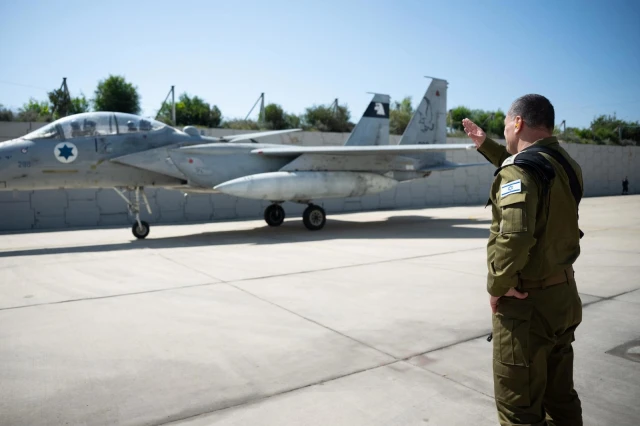
The killing of Iran’s National Security Council secretary, Ali Larijani, and Basij militia head Gholamreza Soleimani on Monday night represents a significant shift in the tactics of the Iran war.
Israeli intelligence discovered Larijani was gathering with other officials at a hideout on the outskirts of Tehran, enabling his elimination. This operation reflected Israel’s strategy of meticulous intelligence gathering, leveraging both advanced capabilities and an already established network of assets operating inside Iran.
However, the elimination of Larijani and Soleimani also resulted from human intelligence provided by ordinary Iranians, not pre-established sources.
While Israeli intelligence officials had been attempting to track Larijani over the days leading up to his killing, valuable intelligence received from residents of Tehran 'over the past 24 hours' proved critical to his elimination, an Israeli official told Iran International. Those Iranian residents were able to contact Israeli officials through a secure channel established by Israel after the outbreak of the war.
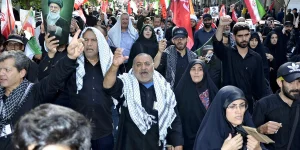
"In recent days, Larijani had behaved arrogantly, appearing frequently in public (including at Quds Day rallies), engaging with both local and international media, and thereby exposing himself to public view, which ultimately led to his identification," the official said.
A similar situation happened with Soleimani.
This intelligence provided the critical opportunity to remove two men responsible for the deaths of so many Iranians during the protests in late December and January.
Like Larijani, Soleimani was gathered with other officials outside of the normal government structures. Soleimani and his deputies were reportedly meeting in a tent in a wooded area of Tehran, which the Israeli Air Force (IAF) struck, killing them.
The fact that critical intelligence came from the Iranian public is part of a strategy that Israel had hoped to achieve in its fight against a deeply entrenched regime.
Israeli intelligence had already identified a pattern of security officials moving from government buildings to civilian areas, targeting several in schoolyards, sports stadiums, and even an electric company building.
Now, Israel’s intelligence is moving to a new strategy; on the one hand, gathering intelligence from Iranian citizens, and, on the other, attempting to convince security personnel to switch sides.
The Wall Street Journal reported that Israel’s Mossad has even begun directly contacting some of the security officers, threatening them if they take action against the people in the event of another popular uprising.
The WSJ cited a conversation from a call between a senior Iranian police commander and a Mossad agent: “Can you hear me?” the Mossad agent asks in Farsi.
“We know everything about you. You are on our blacklist, and we have all the information about you,” he continued.
“OK,” the commander says in the recording.
“I called to warn you in advance that you should stand with your people’s side,” the Mossad agent says. “And if you will not do that, your destiny will be as your leader. Do you hear me?”
“Brother, I swear on the Quran, I’m not your enemy,” the commander responds. “I’m a dead man already. Just please come help us.”
That strategy, and access to intelligence submitted by Iranians angered over their treatment at the hands of the regime, have led to another shift in Israel’s tactics. At the same time as the Larijani assassination was being confirmed by the Iranian regime, Israel’s Channel 12 broke the news of a significant change in Israel's strike authorization procedures for the Iran war.
According to the news report, Prime Minister Benjamin Netanyahu and Defense Minister Israel Katz instructed the IDF that there would no longer be a need for prior authorization to eliminate senior Iranian or Hezbollah officials in time-critical situations.
When solid intelligence confirms the presence of senior Iranian or Hezbollah officials, prior authorization allows immediate action without waiting for approval from the political echelon. This directive is significant, removing the lengthy chain of military and political approvals that could otherwise delay or block an operational opportunity.
A senior official told Ynet News that the pace of intelligence in this conflict requires action within minutes, or a target could no longer be available.
“From the moment the information comes in, you have to move quickly. There is no time to wait for approvals,” he stated. “The goal is to deepen the achievements. There is pre-approval for every operation – if it’s immediate, strike.”
The change in authorization comes as the Iranian regime is reeling from multiple high-level assassination strikes, meant to dismantle and destroy the leadership structure. While Prime Minister Netanyahu and the IDF have emphasized that Israel’s primary goal is not regime change, they have also stated their intention to create conditions that could enable the Iranian people to challenge and potentially overthrow the government.
A senior Israeli official told Channel 12, “We are aiming for a certain point in terms of time when we will call on the masses to go out.”
You might also like to read this: