Inside look into US-Israel strategic alliance confronting the Iranian threat


IDF Brigadier General (res.) Amir Avivi, founder and chairman of the Israel Defense and Security Forum (IDSF) recently spoke with ALL ISRAEL NEWS. Avivi has 30 years of experience in military leadership, national security, and counter terrorism. Among his associates are senior Israeli leaders and officers, focused on strengthening Israel’s national security, and providing strategic assessments to the Israeli government.
Here are excerpts from that interview, highlighting Israel’s historic and strategic military partnership, with the United States, in confronting the existential threat of the Iranian regime.
Carrie Hart: After the ceasefire in 2025, between Israel and Hamas in Gaza, and Israel and Hezbollah in Lebanon, what caused you to think that the U.S. and Israel were going to embark on a strong military alliance vis-à-vis Iran?
General Avivi: We know that the Iranian regime strategy throughout the years was to have strategic depth, and the strategic depth was their proxies – Hamas, Hezbollah, and the Houthi’s. When we degraded Hamas; with the success we achieved in fighting Hezbollah, and killing their leader; and the pagers incident; it was clear that once Iran lost the strategic depth, and Hamas and Hezbollah were not effective anymore, Iran would make a run for nuclear weapons. They believed that to defend their regime, it’s either that they have very effective proxies, or they need a nuclear weapon.
There was an understanding that we were entering a race. It’s either Israel attacks first and stops them from becoming nuclear, or they are going to become nuclear.
Hart: Israel was doing everything it could to try and stop that process, saying that when the Iranians would enrich to a certain level, it was time to do something. What made Israeli leaders change their minds that it definitely had to happen in June 2025?
Avivi: In that moment it was obvious that they were going to run towards nuclear weapons. We knew that they were moving from enrichment towards weaponizing a bomb, or several bombs, and that we had to stop it. We had to attack. When Israeli Prime Minister Benjamin Netanyahu said to U.S. President Donald Trump, that we are going to attack in Iran, the U.S. said “You guys do whatever you need to do to defend yourselves. We don’t think it’s really possible.”
When Israel launched that (June) attack, and in two days controlled Iranian skies, this gave an understanding to the U.S. that this can be done, that Israel has the ability, that the regime is not as strong as they thought. Strong, but not stronger than us. This is what motivated President Trump to join with the strategic bombers and destroy the nuclear sites.

Hart: After the ceasefire was signed, Netanyahu made an announcement which most of the media did not report. What was that message said by Netanyahu that was going to change the course of history?
Avivi: Netanyahu said we signed the ceasefire with Lebanon. And, now we are moving the center of gravity from Lebanon to Iran. I immediately understood what it meant, but the media was so busy with the hostages and Gaza that they didn’t even listen to what he said. But, he said it!
I was interested in how Israel was going to prepare, and I spoke with some of the leaders of the military industries. I really understood that the whole Israeli defense establishment had moved towards preparing for an attack with Iran. I was also in touch with the Chief of Staff. I remember on several occasions, in the media, when they were saying that there won’t be any attack, and the U.S. is not going to agree, and I said, “No, you are wrong.”
Hart: When the Israeli Defense Ministry began to prepare for this significant mission, can you describe some of the preparations?
Avivi: Israel operated in Iran as if it was operating in Gaza or Lebanon. This required very unique technologies to be able to operate above Iranian skies, as if you are operating a few miles from home. It’s very complicated. So, unique technologies were developed. Also, the ability to detect and destroy all the air defenses of Iran takes a unique capability. It’s not easy at all.
Hart: How will these technologies impact the next generation and give Israel a big strategic advantage on the battlefield?
Avivi: Israel developed cutting edge technology that has not only impacted this war, its going to impact the future. It enabled Israel to achieve a huge success in the 12-Day War, and it is enabling Israel to really move now, with the U.S., towards a decisive win against this rogue regime.
This was a huge effort by the military industries with the Ministry of Defense, with the army, with the air force and intelligence, and the Mossad. Everybody worked together, united, towards a clear mission… that is to stop Iran from becoming nuclear and save Israel from an existential threat.
Hart: Regarding Israel’s advanced technologies, this is giving Israel a strategic advantage in air defense, yes?
Avivi: How do you detect a ballistic missile; how do you detect a launcher; how do you know where the air defenses are? These are very special capabilities that Israel developed for this moment. The 12-Day War changed everything because, first, it gave an understanding to the U.S., we can win. We can deal with Iran. Secondly, it broke the deterrence of the Iranian regime, also internally. The only reason why the people arose the way they did was because of the 12-Day War.
Of course, there were many problems, a lack of water and electricity, but they understood the regime is weak, and so did the Europeans who reinstated sanctions. This Israeli attack on Iran changed everything.
Hart: Why did Israel do a pre-emptive strike in June? And, tell us how quickly Israel was able to gain superiority in the skies.
Avivi: Only in a pre-emptive attack can you surprise and achieve maximum impact. Also, it was because they (the Iranian regime) were weeks from assembling a weapon and we had to stop this. Israel managed to understand where these air defense units were, which was very complicated to do, and then built the right technologies to attack them.
Hart: What made the U.S. join Israel’s efforts to decimate Iran’s nuclear capabilities? Did Israel need the military assistance of the U.S.? Why didn’t Israel go it alone? What did the U.S. provide… the bunker-buster bombs?
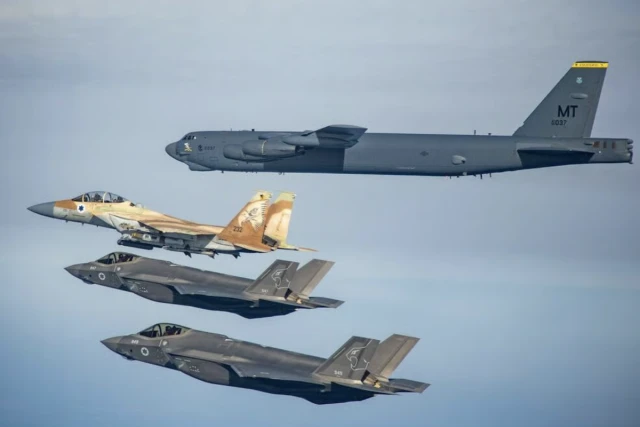
Avivi: Israel doesn’t have strategic bombers. It doesn’t have heavy munitions. The bunker busters are what the U.S. has. So, the ability to convince President Trump to bring the strategic bombers, and attack these nuclear sites which are deep underground, this was very important. Without this American attack, Israel would have had to deal with this completely differently, but this was more effective and simpler.
Hart: Should the war have ended in 12 days? It seems that there were statements by the U.S. that Iran’s nuclear capabilities were obliterated. Later, it was reported that this wasn’t true.
Avivi: These sites were destroyed, but the Iranians have a huge industry, nuclear and ballistic, and they started planning in other sites, deeply underground. They managed to hide parts of the enriched uranium, and they started renewing the production of ballistic missiles. Because they were obsessive about rebuilding everything and attacking Israel, there was an understanding that if we don’t attack now, we might not be able to attack in the future.
Hart: So, the U.S. and Israel immediately started preparing together, for this current war, right after the June 2025 conflict, correct? Can you explain in detail what was involved?
Avivi: When there was a clear understanding that the regime was running towards rebuilding their nuclear capabilities and ballistic missiles, Israel and the U.S. concluded that there was an historic opportunity to dismantle all these capabilities and create the terms for a change of regime. There was a long process of planning, Israel and the U.S. together, of huge amounts (sic) of targets, in order to completely dismantle the capability of this regime to endanger anybody. It was a large amount of targets that needed to be dealt with.
Hart: During that time there was a great delay; a six-week delay. From the time that the demonstrations were happening, Trump said, “help is coming your way.” People thought it was going to happen quickly, and it didn’t. In fact, they were debating whether Trump was going to do anything or not. Was that delay to get all the U.S. military power over to the Middle East?
Avivi: Yes, it was crucial, and even now the U.S. is bringing more power. Force protection from one side of the globe to the other is very complicated. It takes a long time. A month-and-a-half is a short time to accumulate these capabilities. From decision to action, for a country like the U.S., it takes time.
Hart: But, you were always sure that the U.S. was going to do it? They weren’t going to just bring the weapons here, go into a diplomatic process, and do nothing? It was costing the U.S. hundreds of thousands of dollars an hour just to bring the fighter jets over.
Avivi: To me, it was crystal clear there would be an attack. In January, I said they will fight, shoulder-to-shoulder.
Hart: You talked about the extreme way that the Iranian regime was acting; almost suicidal in their actions. There is a system that goes beyond who is in charge…
Avivi: With the U.S., we are dismantling the system, all parts of the system – the Basij forces; the revolutionary guards, the leadership; we are targeting everything this regime has. In the negotiations, the Iranians didn’t agree to anything. And, we saw them rebuilding their capabilities, so it was obvious that if we wait, we will not be able to hit them anymore. We had to attack. The 12-Day war was a pinpointed operation. It had very limited goals.
This war is to bring down the regime. A completely different scenario. There are many implications and opportunities following this war. Israel and the U.S. are suppressing Iran’s capabilities to shoot anything. The Straits of Hormuz will be completely under American control. When these two things happen, its “game over,” and it will happen!