A French soldier killed in Iraq: Why is Paris criticizing Israel?
French diplomacy - Consistency or a double standard?

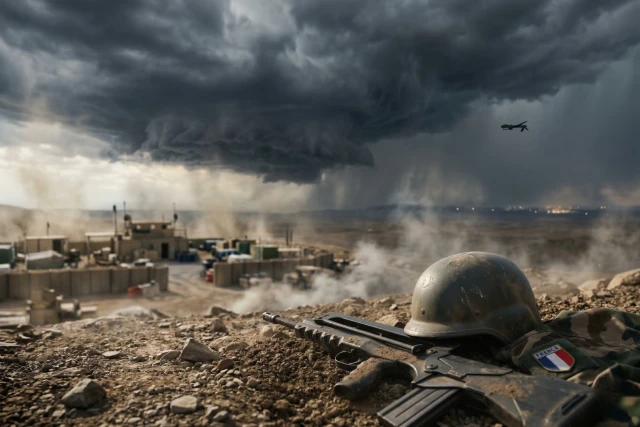
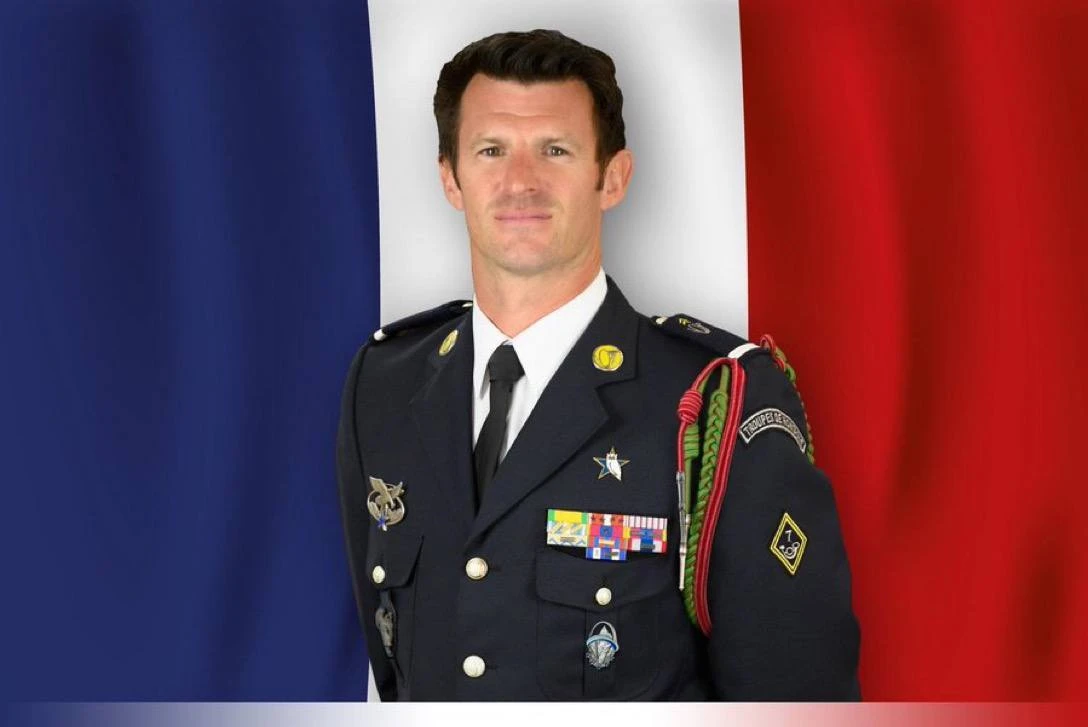
This morning, France mourns a soldier fallen as the conflict against Iran expands: Chief Warrant Officer Arnaud Frion of the 7th Alpine Infantry Battalion. He was killed by a drone strike on a Franco-Kurdish base near Erbil in northern Iraq, according to official statements from President Macron and the French military.
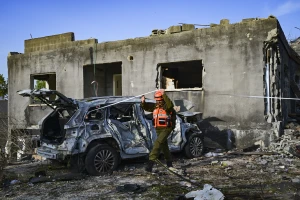
Six other soldiers were wounded in these attacks, which were claimed by pro-Iranian militias under the banner of the "Islamic Resistance in Iraq." These strikes are not random; they are a direct retaliation to the Allied offensive aimed at degrading Iranian military infrastructure. French troops, deployed since 2015 to train the Peshmerga in the fight against ISIS, now find themselves on the front lines of Tehran’s vengeance.
Meanwhile, in Paris, diplomacy is playing an ambiguous tune. Emmanuel Macron has deployed the aircraft carrier Charles de Gaulle to the Eastern Mediterranean, yet he has characterized the preemptive strikes by Washington and Jerusalem as being "outside the framework of international law." The Elysée Palace describes this as "walking a tightrope." The result is tragic: the remains of a French soldier are repatriated to France, while Paris points a finger at the very allies attempting to dismantle the networks that just struck French forces.
This appears to be a diplomacy divided in the face of a singular threat. We must face reality: French troops in Erbil and Makhmour are carrying out a pure counter-terrorism mission. They train the Peshmerga, Kurdish fighters whose name means "those who face death", who serve as the final rampart against the return of ISIS.
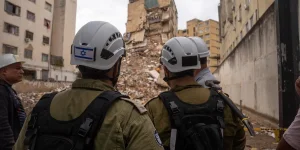
However, the shadow of Tehran looms over every drone that flies above their heads. Iran’s proxies are not merely threatening Israel; they are destabilizing the entire region and directly targeting Western interests. Israel claims to be currently "ahead of its objectives" in destroying the command centers that fuel Hezbollah and these same militias in Iraq. Criticizing the Jewish state while it decapitates the "octopus" whose tentacles are striking French soldiers is a perilous contradiction.
Proverbs 11:14 warns: "Where there is no guidance, a people falls, but in an abundance of counselors there is safety." By isolating itself from its allies through selective criticism, France risks leaving its soldiers without clear protection against Iranian expansionism.
There is an undeniable link between hatred abroad and hatred at home. With approximately 450,000 Jews living in France, a record number of antisemitic acts has been reached. The French government seeks to criminalize radical anti-Zionism, conscious that the desire to destroy Israel is the engine of this hate. Yet, on the diplomatic front, Paris lambastes the Jewish state instead of supporting its struggle against the regime that finances this deadly ideology worldwide.
The paramount question remains: "Is this a matter of international law, or a pure double standard?" Iran starves its own people, arms militias that kill European soldiers, and terrorizes the Middle East while threatening the global economy. If Israel strikes preventatively to forestall a nuclear apocalypse, is it truly "illegal"? For believers, Psalm 82:3-4 is unequivocal: "Give justice to the weak and the fatherless... deliver them from the hand of the wicked." Iran embodies that "wicked" actor for both France and Israel.
The Book of Esther (4:14) issues a solemn warning: if the world remains silent now, "relief and deliverance will rise... from another place, but you and your father's house will perish." Can France afford to divide the Allied camp at the very moment its own Chasseurs Alpins (Alpine Hunters) are falling to Iranian drones?
The question is brutal: Is France a reliable ally bleeding alongside Israel, or a distant critic whose hesitations only serve to embolden Tehran?
You might also like to read this: