Why Islam failed to take root in Iran



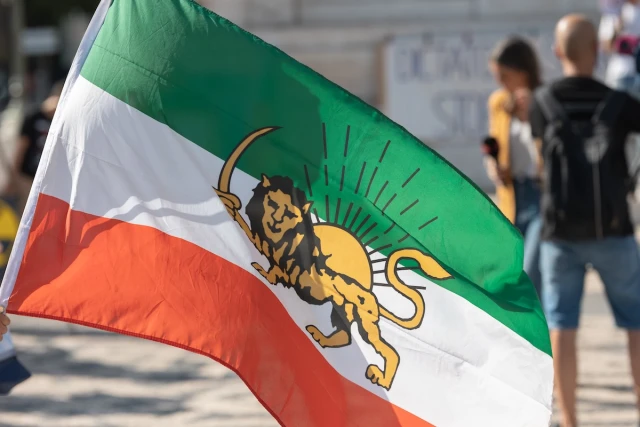
Inspired in part by the ideological framework of the Muslim Brotherhood, Ruhollah Khomeini—the founder of the Islamic Republic—sought not merely to create an Islamic culture but to construct a fully Islamized society. The 1979 revolution aimed to reshape the Iranian nation from the ground up.
To achieve this objective, the regime reorganized the entire education system—from elementary school through the university level—to reflect an Islamic curriculum. The media was seized and repurposed to promote the ideological worldview of the new state, while censorship protocols were implemented and later extended into the digital age.
Even infrastructure became a tool of indoctrination. Electricity was expanded to smaller towns and villages not only as a development project but also to ensure that television broadcasts and religious programming could reach every corner of the country.
Yet four decades later the result has been the opposite of what the revolution intended.
Iran today is experiencing a profound cultural shift marked by mass de-Islamization. Public trust in the clerical establishment has eroded, and growing segments of society reject not only the ruling clergy but also the religious framework that legitimizes their authority. Christianity is widely reported to be growing rapidly, Zoroastrianism—the pre-Islamic faith of ancient Persia—has experienced a revival, and atheism and agnosticism are increasingly common among younger generations.
Several structural factors explain why the project of Islamization ultimately failed.
First, Iran possesses a deep civilizational identity that predates Islam by millennia. The arrival of Islam did not erase Persian civilization; it layered itself upon it. Beneath the Islamic veneer, the memory of Iran’s ancient identity remained alive.
Persian language, literature, philosophy, and historical consciousness continued to shape Iranian society. Historians often describe this dynamic as cycles of “Persianization,” in which external systems are gradually absorbed and reshaped by Iran’s underlying civilizational character.
This civilizational memory re-emerged dramatically after the death of Mahsa Amini in 2022, when protests erupted across the country and large numbers of Iranians flocked to Persepolis—the ceremonial capital of the Achaemenid Empire—to reconnect with their pre-Islamic heritage.
Second, Iranian nationalism proved stronger than Islamist universalism.
Iran historically functioned as an imperial civilization that governed vast territories through strong political cohesion and a powerful sense of national identity. Khomeini’s revolutionary ideology attempted to subordinate that identity to the concept of the Islamic Ummah, a transnational religious community.
For many Iranians, however, this required abandoning their civilizational heritage. The attempt to redefine Iranian identity primarily in Islamic terms collided with a deeply rooted sense of national pride. In the end, Iranian nationalism proved stronger than ideological Islamism.
Third, technological and social change opened Iranian society to the world.
Satellite television, the internet, and global communications exposed the younger, post-revolutionary generation to life beyond Iran’s ideological isolation. A growing middle class gained access to travel, global culture, and new ideas.
Many began to see Iran not as a revolutionary outpost but as one of the world’s oldest continuous civilizations—one that should be building modern global cities comparable to London, Paris, Shanghai, or Tokyo rather than remaining locked within a revolutionary ideological framework centered on the cult of the Mahdi.
Fourth, the imposition of religion ignited a deeper spiritual search.
Initial exposure to the Bible often came through the Iranian diaspora, as families living abroad shared the Scriptures with relatives inside the country. As curiosity grew, organized ministries and distribution networks began importing Bibles into Iran, and by many accounts they struggled to keep up with the demand.
Among a population historically drawn to poetry, philosophy, and spiritual inquiry, these encounters opened new theological debates. As alternative ideas spread, the ideological foundations that once united Islamism and revolutionary Marxism within Iran’s revolutionary narrative began to weaken.
The result has been a diversification of belief systems across Iranian society: renewed interest in Zoroastrianism, the rise of agnosticism and atheism, more moderate forms of Islam, and the growth of Christianity.
Ironically, while these ideologies have weakened inside Iran, elements of Islam and revolutionary Marxism have gained influence in parts of the West—often through academic institutions and activist networks influenced by similar ideological currents.
Iran’s experience offers an important lesson.
Societies confronting ideological radicalism cannot defeat it solely through political or security measures. They must also reconnect with their own civilizational foundations.
For the West, this means rediscovering the civilizational framework that shaped its institutions in the first place. The biblical worldview that influenced Western law, philosophy, and moral reasoning helped produce a culture that values freedom of conscience, open debate, and the right of individuals to question authority.
These principles allowed Western societies to cultivate intellectual pluralism rather than enforce ideological conformity.
The Iranian experience suggests that ideological systems—whether Islamic or Marxist—lose their grip when people rediscover both their civilizational identity and the freedom to think, debate, and question.
A living, informed Christianity combined with the protection of freedom of conscience may therefore prove one of the most powerful cultural antidotes to ideological authoritarianism.
This article originally appeared on the Ideological Defense Institute and is reposted with permission.
You might also like to read this: