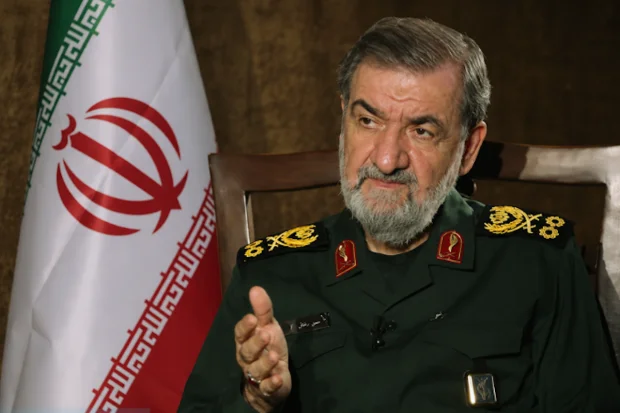









ANALYSIS As Iran threatens Israel, US Congress debates whether to tie President Trump's hands
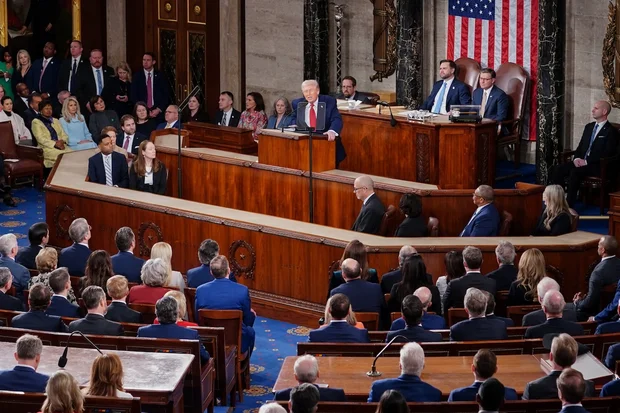
Congress is gearing up for a showdown this week over U.S. President Donald Trump’s military actions in Iran. The burning question: who chooses when America goes into battle? The U.S. Constitution is at the center of it all.
On one side, you’ve got lawmakers arguing that the president, under Article II, must be able to move fast, especially when dealing with a regime like Iran. On the other hand, you have members insisting that Article I makes it crystal clear: Congress declares war and controls the purse strings.
Missouri Congressman Mark Alford gives deference to the president. “The President has a solemn and constitutional duty to protect Americans and the homeland as commander-in-chief,” Alford told ALL ISRAEL NEWS. “In today’s dangerous world, that requires the authority to initiate limited strikes at a moment’s notice, authority which Article II of the Constitution clearly provides and that has been used by presidents of both parties for decades. At the same time, Congress maintains sole authority over full declarations of war.”
That’s the tension in one paragraph.
This week, the House and Senate are on track to vote on war powers resolutions aimed at limiting Trump’s ability to conduct the Iran campaign. The Senate is expected to vote on Wednesday, the House on Thursday, and both chambers are getting briefed by top administration officials.
I believe the likely outcome is that these resolutions are going to fail, however, that doesn’t mean the debate goes away. More on that in a moment.
It’s all a bit of a tricky constitutional question. Congressman Burgess Owens of Utah told ALL ISRAEL NEWS that it’s been a multi-layered approach. “Article I gives Congress the power to declare war and power of the purse,” Congressman Owens says. “Article II makes the president commander-in-chief. Our Constitution therefore grants shared but distinctively different responsibilities.”
Shared, but different. That’s the key phrase. Owens went further.
“Congress controls the funding for sustained military engagements. The president retains the authority to respond to emerging threats to America, as with the U.S.-targeted military actions in Venezuela and Iran. In fast-moving crises, the president must be able to act decisively to defend American security, while Congress exercises its oversight role responsibly,” he said.
This is essentially the pro-Trump argument in a nutshell. Limited strikes? Yes. Defensive action? Yes. Long-term war? That’s where Congress steps in.
And Owens doesn’t mince words about where he stands: “I’m thankful for a president who understands his Constitutional responsibilities and whose recent military actions have made America and the free world a safer place.”
The crux of the constitutional arguments centers on the War Powers Resolution of 1973. Passed in the aftermath of Vietnam over then-President Richard Nixon’s veto, it was designed to claw back congressional authority. It requires the president to notify Congress within 48 hours of deploying troops and limits unauthorized military engagement to 60 days, with a possible 30-day withdrawal period.
But here’s the catch: no president from either party has ever fully accepted it as constitutional and it’s an issue that the Supreme Court has never definitively ruled on. “The War Powers Resolution of 1973 presents thorny constitutional questions that should be adjudicated by the Supreme Court,” Alford said.
“SCOTUS [The Supreme Court of the United States] has already struck down provisions of the original law for unconstitutionally restricting presidential power. Until those questions are decided by the courts, it’s clear Congress must update this archaic statute to provide the commander-in-chief with the latitude he needs to protect the U.S. in the 21st century.”
Supporters of the War Powers Resolution see it differently. They argue that without congressional authorization, even limited military campaigns risk sliding into something much larger. Vietnam started small. So did Iraq.
However, U.S. House Speaker Mike Johnson has made it clear that a "war powers" resolution is not needed at this point because this is technically not a war. “It’s not a declaration of war. It’s not something that the president was required [to do], because it’s defensive in nature and in design and in necessity, to come to Congress and get a vote first.”
Johnson continued, “The idea that we would take the ability of our commander in chief, the president, take his authority away right now to finish this job, is a frightening prospect to me.”
For now, Speaker Johnson appears able to maintain that position. The voting on the War Powers Resolution is widely expected to fail this week, but the situation could change in a month or two, especially if this war goes sideways.
Trump has said he won’t rule out American boots on the ground. If that changes from hypothetical to real, the calculus changes entirely. The Constitution hasn’t changed since 1787. But the politics shift overnight.
If this operation remains limited in scope and a short term endeavor, the Trump administration is unlikely to face significant political pressure over the War Powers Resolution. However, if it morphs into sustained combat operations with ground forces, lawmakers could seriously push for a new War Powers restriction.
Since the Korean War, presidents of both parties have interpreted Article II authority broadly. Congress has responded at times, particularly when conflicts become prolonged or lose public support. Some observers say that cycle is starting again.
History shows that Congress tends to assert its Article I muscles when body bags pile up and public opinion polls start heading south.
Popular article:

interview Easter message of resurrection hope amid war at Jerusalem's Garden Tomb

biblical commentary Let my people go: a Passover message for today

4 IDF soldiers killed, 2 wounded in fighting in southern Lebanon, as Israel eliminates dozens of Hezbollah terrorists
Receive latest news & updates
A message from All Israel News
Help us educate Christians on a daily basis about what is happening in Israel & the Middle East and why it matters.
For as little as $10, you can support ALL ISRAEL NEWS, a non-profit media organization that is supported by readers like you.
Latest articles:
ANALYSIS Israeli defense companies expand global reach with new deals in Cyprus, Germany and Canada

ANALYSIS Netflix’s ‘The Diplomat’ appears to pay tribute to slain Israeli hostage Hersh Goldberg-Polin

ANALYSIS IDF kills Hamas terrorists involved in abduction of German-Israeli Shani Louk on Oct 7

ANALYSIS Hungary reaffirms ties with Israel during Herzog visit, condemns antisemitism
Elections 2026 IDF soldiers begin voting as poll shows most Israelis have settled on a party