Trump, CIA working to arm and equip Kurdish militias in bid to overthrow Iranian regime - report
Analysts express concerns that arming Kurds could fracture Iran, lead to Turkish military involvement





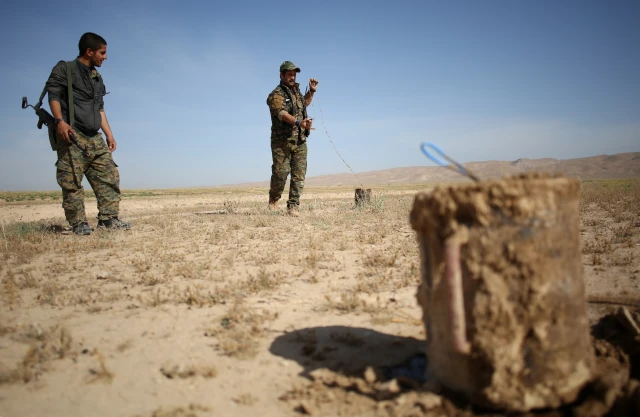
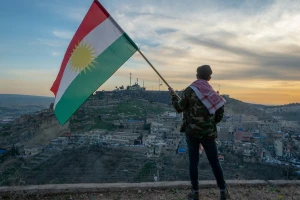
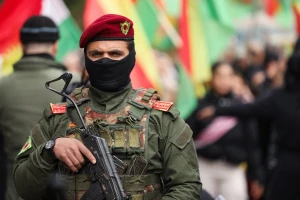
The CIA is working to arm Kurdish militants in Iran as part of plans to overthrow the Islamic Republic’s regime, CNN reported on Tuesday.
According to the report, U.S. President Donald Trump’s administration has held active discussions with Iranian opposition groups, including Kurds, as well as Kurdish leaders in Iraq, about the possibility of American backing for an uprising.
At the same time, Reuters reported that Iranian Kurdish militias have held consultations with the U.S. regarding attacks on Iranian regime security forces in the western part of the country, in areas with a large Kurdish population.
There are an estimated 9-10 million ethnic Kurds living in Iran, most in the provinces of Kurdistan, Kermanshah, West Azerbaijan, Ilam, and Lorestan.
Reuters reported that Kurdish militias in the Kurdish semi-autonomous region of northern Iraq have been training to mount such an attack, as both Israel and the U.S. are striking regime targets throughout Iran.
According to the reports, the goal would be to create an opportunity for Iranians opposed to the Islamic regime to rise up and confront the weakened government.
Iranian Kurdish militias have thousands of troops along the Iraq-Iran border, with most being located in the Kurdish region of Iraq. The Kurds have governed a semi-autonomous region in northern Iraq since the fall of Iraqi dictator Saddam Hussein in 2003.
A senior Iranian Kurdish official told CNN that Iranian Kurdish opposition forces could take part in operations in western Iran in the coming days.
“We believe we have a big chance now,” the source told CNN, while saying the militias are counting on receiving U.S. and Israeli support during such operations.
Both CNN and Reuters reported that Trump held discussions with Iraqi Kurdish leaders on Sunday to discuss the military operations in Iran and potential cooperation as the operation progresses.
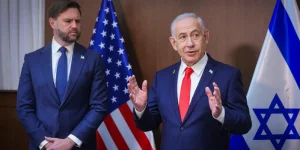
Axios reported that the idea to bring in the Kurds came from Israeli Prime Minister Benjamin Netanyahu.
“Netanyahu, who ‘has been relentless’ in urging strikes on and regime change in Iran, first advocated for the Kurds in a White House meeting with Trump,” the site reported.
An official who spoke to Axios on condition of anonymity said, “When he first came over and sat with Trump for hours, you would have thought Netanyahu had it all figured out.”
Any attempt to bring weapons to Iranian Kurds would likely involve routing such support through the Iraqi Kurdish regions, where the U.S. military already has a presence.
The U.S. hopes that if forced to confront armed resistance from Kurdish militias, IRGC and Basij forces would be unable to come out in force against the largely unarmed Iranian populace.
Alex Plitsas, a CNN national security analyst and former senior Pentagon official, noted that the lack of arms is a significant challenge for the opposition groups in Iran.
“The Iranian people are generally unarmed as a whole and unless the security services collapse, it’ll be difficult for them to take over unless someone arms them,” Plitsas told CNN. “I believe the US is hopeful that this will inspire others on the ground in Iran to do the same.”
The regime appears to be taking this threat seriously. The Islamic Revolutionary Guard Corps carried out a series of drone and missile strikes against Iranian Kurdish opposition groups based in northern Iraq between March 1-3, 2026, Kurdish media reported. According to those reports, one person was injured in the attacks.
However, some analysts are concerned that the plan could fracture the Iranian nation, leading to breakaway movements that could galvanize public support for the nation and enable the regime to survive.
Karim Sadjadpour, a senior fellow at the Carnegie Endowment, warned that attempts to “factionalize the country” could undermine U.S. efforts to overthrow the regime.
Acknowledging the suffering of the Kurds in Iran under the Islamic Republic’s regime, Sadjadpour noted that Kurds make up only 10% of Iran’s population, and cannot pose a threat by themselves.
“At the same time, I would argue the greatest countervailing force against the radical Islamism of the Iranian regime is Iranian nationalism, and I would say pluralistic Iranian nationalism, a nationalism that encompasses Persians, Kurds, Azeris, and others,” Sadjadpour told CNN. “I think the vast majority of Iranians will be opposed to any outside attempts to try to threaten the territorial integrity of the country.”
The greatest countervailing force against the Islamic Republic is pluralistic Iranian nationalism. Reports that the US may fund or arm Kurdish factions inside Iran will alarm many Iranians—and undermine the regime’s opposition. My interview w/ @OutFrontCNN https://t.co/TZ8ufOIGTM pic.twitter.com/9kq1ctUN8v
— Karim Sadjadpour (@ksadjadpour) March 4, 2026
Another challenge to the plan to use Kurdish militias against the Iranian regime comes from NATO member Turkey, which has been waging an extended campaign against Kurdish groups in northern Syria and northern Iraq under the guise of fighting terrorism.
The Turkish government is likely to oppose any effort to aid or arm Kurdish militias, regardless of the arena, fearing that such a move would undermine its objective of weakening Kurdish groups and preventing the establishment of an autonomous Kurdish zone.
Some analysts have even warned that arming Kurdish militias could lead to Turkish intervention, even if such action benefits the Iranian regime.
Do they know what fires they are unleashing?
— Policy Tensor (@policytensor) March 3, 2026
If the Kurds agree to do this, it will have major consequences. The Turks will almost certainly intervene, at first with air strikes and then with ground forces. They might even get into a direct conflict with Israel, who they now… https://t.co/TlkrRebBZZ pic.twitter.com/FxiOtvdIj8
Many Kurdish leaders, particularly in the western regions of northern Iraq and in northern Syria, are also distrustful of President Trump following the decision of the U.S. to withdraw its forces from Syria earlier this year.
The U.S. had worked together with Kurdish forces in fighting ISIS, and also functioned as a security buffer to jihadist militias, including Turkish-backed militias, which have increased attacks on Kurdish positions. In his first term, President Trump also abandoned the Kurds, allowing them to come under fire from Turkish forces.
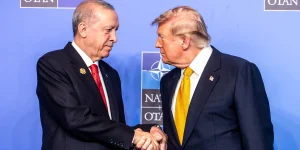
Despite Turkey ostensibly being a U.S. ally and a NATO member, the country’s leaders publicly expressed condolences following the killing of Ayatollah Ali Khamenei and have stated that they are working to end the U.S. military operation in Iran.
You might also like to read this: