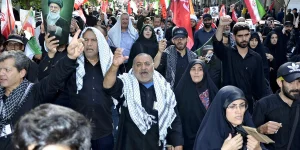
Protesters and ultra-Orthodox both defy Israel’s wartime public gathering limits
High Court demands coherent policy amid disputes over wartime restrictions


Recent events in Israel highlighted an unusual convergence between mostly left-leaning protest movements and the ultra-Orthodox community, as both groups defied government wartime restrictions on gatherings.
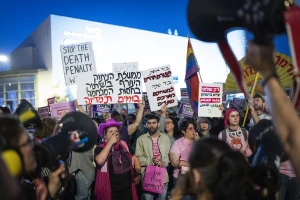
Ahead of scheduled anti-government and anti-war demonstrations, the High Court of Justice issued a conditional order on Saturday raising the cap on participants at the main protest in Tel Aviv to 600, and to 150 for similar demonstrations in Jerusalem, Haifa and Kfar Saba.
The court expedited a petition filed by protest groups from Wednesday to Friday, aiming to resolve the issue before the weekend protests. However, the government had not prepared its position for the Friday hearing, prompting the court to issue a temporary ruling.
In its Saturday ruling, the court noted that the government was lax in enforcing restrictions on other gatherings – such as beachgoers and shoppers in malls – while rigorously enforcing limits on protests. It ordered the IDF Home Front Command and the Israel Police to explain why there was no clear policy for the “balancing of security needs with the right to freedom of religion and worship.”
IDF Home Front Command argued that the number of protesters at Habima Square, the main protest site in Tel Aviv, should be limited to 150 people because nearby public shelters could not accommodate more than that number.
Despite the court’s decision to increase the limit to 600 people at Saturday night's demonstration, Israel Police arrested 17 people after the number of attendees surpassed the newly raised limit.
Knesset Member Moshe Gafni, chairman of the Haredi "Degel HaTorah" (Flag of the Torah) party, accused the judges of issuing an illegal ruling in a statement released after Shabbat ended at sunset.
Coalition members were quick to criticize the court’s ruling that allowed larger gatherings for protests, while not intervening to increase the number of people allowed at public religious gatherings, despite the court drawing attention to the issue.
Prime Minister Benjamin Netanyahu published a post on 𝕏, saying, “While Jews are restricted during the holiday from praying at the Western Wall, the High Court of Justice has approved a left-wing demonstration in Tel Aviv.”
“Freedom of protest is important, but freedom of prayer is no less important. During wartime, the only authority determining security arrangements is the Home Front Command,” Netanyahu wrote.
National Security Minister Itamar Ben Gvir also criticized the court, saying there should not be “one law for the Square, and another for the Mount,” referring to the Habima Square protest site and the Temple Mount in Jerusalem.
On Sunday, the High Court issued a new ruling, raising the number of people allowed to gather at the Western Wall and Temple Mount areas from 50 to 100, following several petitions by religious leaders.
Following Saturday’s ruling allowing larger protests, the court also issued a conditional order – signed by President Isaac Amit and Justices Khaled Kabub and Yechiel Kasher – requiring the government to explain why it has not established a clear policy on protests.
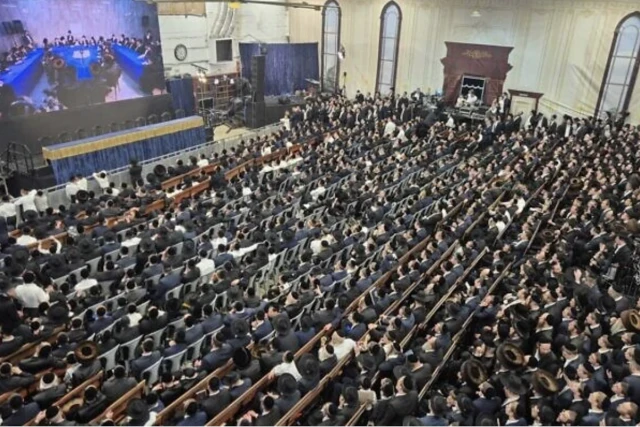
However, on Sunday, a group of ultra-Orthodox men, numbering around 1,000, gathered for a holiday event in the city of Bnei Brak headlined by Rabbi Dov Lando, the spiritual leader of the Degel HaTorah party.
A spokesman for Rabbi Lando said that “both the rabbi and the audience are situated in protected spaces.” Current Home Front Command restrictions in central Israel limit the number of people at a religious gathering to 50, even in protected spaces.
Israel Police reported that they spoke with the event organizers upon learning about the event, however, no attempt was made to disperse the gathering, as was done at Saturday’s protests.
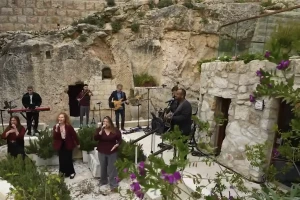
Later, on Sunday night, Israel Police dispersed a gathering of around 100 people at a private compound near the Tomb of the Kings, as there are no local shelters nearby able to accommodate such a large number of people.
These incidents highlight a growing dissatisfaction on both sides of the religious and political divide with the court and the government.
Former Sephardic Chief Rabbi Yitzhak Yosef sharply criticized the High Court after its ruling on Sunday, raising the number of worshippers at the Western Wall to just 100.
“All our troubles in religious matters with the state, including conscription of yeshiva students, are all because of these wicked judges,” Rabbi Yosef said. “If they hold a protest in Kaplan [Tel Aviv] with 600 people, then they should allow 600 people at the Western Wall. There’s a place to immediately enter the [sheltered areas].”
In its Saturday ruling, the court instructed the parties involved, including the government, to submit response affidavits by Monday afternoon, followed by written arguments due on Tuesday.
The order signals the court’s dissatisfaction with the government’s failure to establish a clear policy for both protest and religious gatherings.
You might also like to read this: