Lebanon-Israel talks resume in Rome as Hezbollah insists Iran deal will bring about Israeli withdrawal
Lebanese delegation to protest Israeli 'destruction' in southern Lebanon




Lebanese and Israeli delegations were set to resume their negotiations in Rome, Italy, on Tuesday, with discussions due to focus on evaluating the results of the first phase of the Israeli withdrawal from two “pilot zones.”
Meanwhile, the terror organization Hezbollah, which is the main object of the negotiations but openly opposes them, continued to rail against the government’s direct contacts with Israel while attempting to re-link the negotiations to the separate U.S.-Iran talks.
A senior Lebanese political source told the Lebanese newspaper Nidaa Al-Watan that the U.S-mediated negotiations will focus on three basic issues that the Lebanese delegation considers decisive.
These include the need for another pilot zone withdrawal, agreeing on a verification mechanism for the withdrawal, and convincing the U.S. to pressure Israel to halt “the destruction” in the Israel-controlled areas of southern Lebanon.
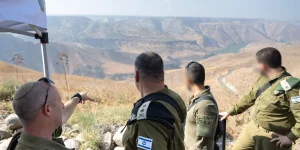
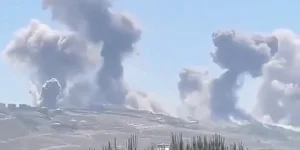
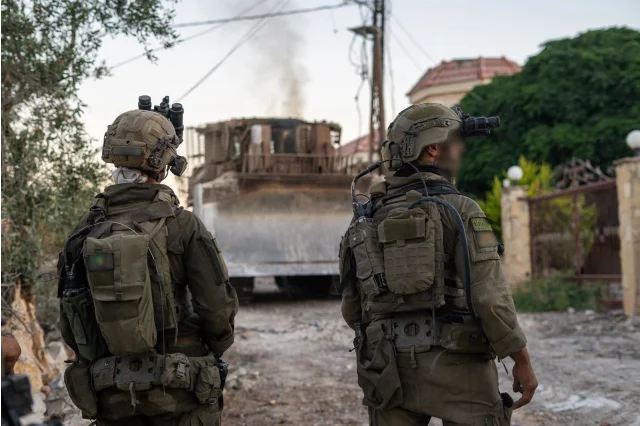
The third point apparently refers to the IDF’s recent demolition of large parts of Hezbollah's underground tunnel network in the Beaufort area, which was also criticized by the UN this week.
Israel has also demolished large parts of villages and towns directly adjacent to the border area, though it isn’t clear whether such demolitions have occurred in recent weeks.
The demolitions of Hezbollah's underground infrastructure are dealing it a severe strategic blow, according to data presented to Defense Minister Israel Katz on Sunday, Walla News reported.
“Only after conducting a comprehensive survey of the network did we realize how critical it was to Hezbollah's operational plan for attacking Israel,” senior officers in the IDF Northern Command told Walla.
“The assessment is that the Lebanese Armed Forces are incapable of dealing with these sites… If the IDF does not receive authorization from the political leadership because of American restrictions, Hezbollah will continue to retain strategic assets,” they warned.
According to the senior Lebanese political source, Beirut will insist that the next withdrawal area will be within the zone currently controlled by the IDF, rather than outside, like the first two pilot areas.
Regarding the verification mechanism, Beirut will propose tasking either the UNIFIL forces still in the area, the United Nations Truce Supervision Organization (UNTSO), or a third party agreed upon by both sides and the U.S., Nidaa Al-Watan reported.
However, Naharnet cited an “informed source” who claimed that “the general trend” in the negotiations leans towards appointing an Italian officer to head a verification committee, both because the UNIFIL force is currently led by an Italian general, and also because both the U.S. and Israel oppose naming a French officer.
He said that assigning an Italian officer to head it is not only because an Italian general is currently leading the UNIFIL peacekeeping force, but also because there is American-Israeli objection to naming a French officer.
Meanwhile, Kan News reported Monday that Foreign Minister Youssef Raggi, from the Christian Lebanese Forces Party, has been completely excluded from the talks due to being too hawkish toward Hezbollah.
A Lebanese political source told the channel that there is a feeling President Aoun and Prime Minister Salam do not want to “upset Hezbollah and the Shiite Amal Movement of Lebanese Parliament Speaker Nabih Berri too much,” noting that this demonstrated that the government is still not ready “to go all the way” in the negotiations with Israel.
Hezbollah leader Naim Qassem continued to rail against the negotiations in a speech on Tuesday, claiming that all they brought Lebanon was “shame, humiliation, disappointment” and endless concessions to Israel.
“Give me just one achievement! While Israel has taken everything, nothing remains for Lebanon's leadership to give after it gave up what it had without any compensation and without any benefit,” Qassem said.
He urged the government to return to a dialogue with Hezbollah, and “act on the ground” to secure an Israeli withdrawal from southern Lebanon.
Qassem also insisted that the withdrawal would be accomplished through the talks between Tehran and Washington, affirming the group’s loyalty and faith in its Iranian patrons. “Israel will withdraw and will not remain in Lebanon,” he declared.
You might also like to read this: