With next round of Lebanon talks set for Aug 4, Israel concerned Lebanese Army not fulfilling its role
IDF officials warn LAF commander ‘coordinating activities with Hezbollah’ to avoid conflict






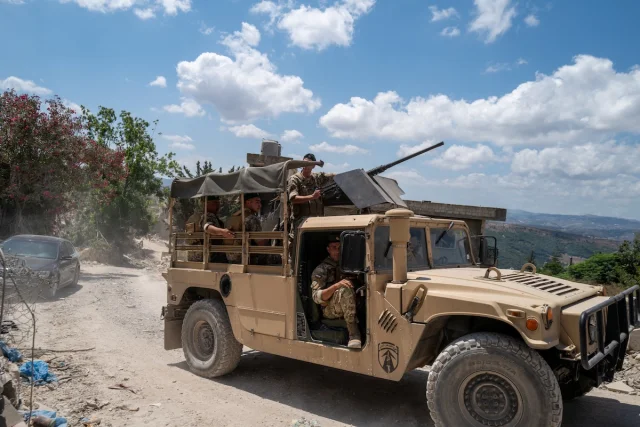
The next round of U.S.-led negotiations between Israel and Lebanon is set to take place in Rome on Aug. 4, a State Department official told media on Monday.
U.S. officials are hopeful the discussions will produce good results, after the launch of the first pilot zone in southern Lebanon. The talks are expected to focus on further implementation of the trilateral framework, resolving border issues, and expanding the pilot areas in southern Lebanon.
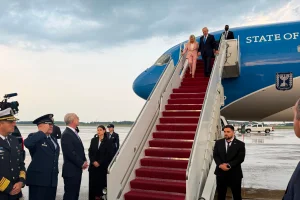
Lebanese President Joseph Aoun met with President Donald Trump at the White House last week, where he expressed his desire that talks could lead to a permanent end to hostilities between the two countries.
The U.S. is hoping to make progress on expanding the initial pilot zone into additional zones. Israeli officials, however, are taking a wait-and-see approach, raising concerns about the entry of Hezbollah-affiliated aid organizations into the pilot zone and indications that senior Lebanese Armed Forces (LAF) officers are communicating with Hezbollah.
On Monday, senior U.S. officials told Walla News that Israel is not expected to make a complete withdrawal from Lebanon before Hezbollah has been disarmed.
“The framework establishes a clear deal based on conditions between Israel and Lebanon,” the officials said. “Israel will redeploy its forces from Lebanese territory in exchange for Hezbollah's disarmament and the restoration of the sovereignty of the State of Lebanon over its entire territory.”
The officials noted that the agreement is intended to achieve three goals common to both Israel and Lebanon: restoring Lebanese sovereignty, dismantling Hezbollah's terrorist infrastructure, and allowing the IDF to return to secure borders following the removal of the security threat.
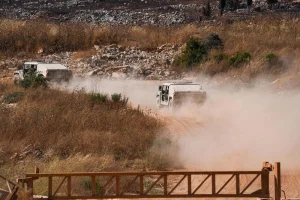
Last week, a redeployment of IDF forces in southern Lebanon began as part of the pilot program, which came as a direct result of the previous talks in Rome.
The officials said the United States will continue to work with both sides to see the framework completed.
The LAF is expected to request that a third party supervise the process of the pilot zones in southern Lebanon, according to a report in Lebanese newspaper Nida al-Watan.
The newspaper said the Lebanese government will request that the UN Interim Force in Lebanon (UNIFIL) handle the task, a decision likely to be opposed by Israel, due to the body’s failure to either identify or prevent Hezbollah infiltration south of the Litani River following the 2006 Lebanon War.
At the same time, the outlet reported that the U.S. will not commit any ground forces to such a role. It also reported that the U.S. sent an ambiguous message to the Lebanese government that if Hezbollah intervenes on Iran’s behalf in any future escalation, the U.S. would not seek to limit Israel’s response.
Despite some initial friction, Nida al-Watan reported that the LAF did notify Israel, through the coordination mechanism established in previous talks, about the presence of a Hezbollah weapons cache discovered in the pilot zone after the IDF pulled out.
The outlet said the pilot zones are currently “the sole benchmark for measuring the seriousness of the Israeli withdrawal and the Lebanese state's capacity to extend its authority and clear these areas of illegal weapons.”
With Prime Minister Benjamin Netanyahu and President Donald Trump expected to discuss the situation in Lebanon at their meeting on Tuesday, the official statement indicates that the U.S. remains committed to disarming Hezbollah and restoring the sovereignty of the Lebanese government.
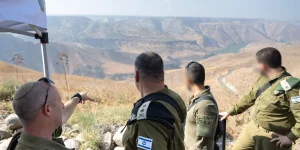
Israeli defense officials, however, remain pessimistic regarding the success of the pilot zone project. Brigadier General Rodolphe Haikal, the LAF Chief of Staff, has been coordinating military activities in southern Lebanon with Hezbollah in order to avoid friction, a source in the IDF’s Northern Command told Walla News on Tuesday.
The Israeli expectation is that the LAF will conduct searches and locate and destroy any Hezbollah terror infrastructure in the areas from which the IDF withdraws. However, despite notifying Israel of some weapons caches, the LAF has not performed according to Israeli expectations, the outlet reported.
Israeli security officials believe that Brig. Gen. Haikal is afraid that any confrontation with Hezbollah would lead to a civil war in the country, Walla reported.
At the same time, operatives from Hezbollah’s Islamic Health Organization recently entered the area of Zawtar al-Gharbiyah, part of the initial pilot zone, Israel’s Alma Research and Education Center reported.
Alma showed videos from the organization, in which its operatives can be seen, accompanied by LAF soldiers, entering the pilot zone, ostensibly to locate bodies of Hezbollah fighters.
However, Alma noted that the Islamic Health Organization “is an integral part of Hezbollah’s military support network,” saying the organization “effectively serves as Hezbollah’s medical corps.”
The presence of a Hezbollah-affiliated organization in the pilot zones has raised Israeli concerns that the LAF is not operating in good faith.
Netanyahu is expected to raise the Israeli concern with Trump during their meeting. However, with President Trump eager to see progress in the talks between Israel and Lebanon, and a similar process started in Syria, it remains unclear what Israel has for leverage.
You might also like to read this: