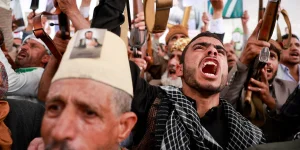
Lebanese President Aoun tells Trump his country will end hostility with Israel ‘forever'
IDF fires warning shots as LAF troops mistakenly enter Israeli security zone in southern Lebanon





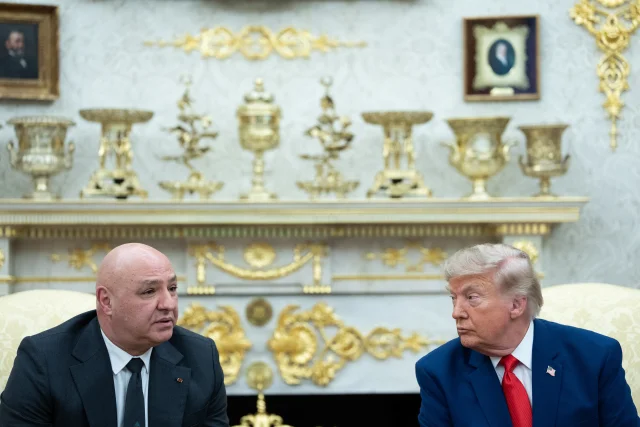
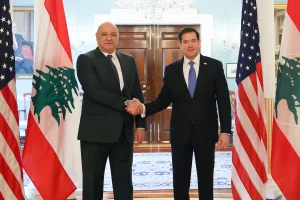
Lebanese President Joseph Aoun told U.S. President Donald Trump during their White House meeting on Tuesday that Lebanon is committed to permanently ending hostilities with Israel, describing the effort as a potential legacy achievement for Trump.
“I would like to thank President Trump and his team for the historic visit and for the historical achievement that we did together, by signing the framework, with the ultimate objective of ending the state of hostility between Lebanon and Israel forever,” Aoun said at the White House meeting.
Referring to Trump’s broader regional peace efforts, Aoun added, “I think, Mr. President, this will be your legacy,” and said, “I think my vision coincides with your vision.”
🚨 HISTORIC: LEBANON MOVES TOWARD ENDING HOSTILITIES WITH ISRAEL
— Mossad Commentary (@MOSSADil) July 21, 2026
Lebanese President Joseph Aoun thanked President Trump for helping secure a new framework aimed at ending the state of hostility between Lebanon and Israel “forever.”
“This will be your legacy.” pic.twitter.com/JPLrmhaGQd
Aoun’s visit to Washington marked the first visit of a Lebanese president to the U.S. capital in 17 years. During his talks with Trump, Aoun called on the international community to support the Lebanese Armed Forces (LAF), which is tasked with disarming the Hezbollah terror group under the agreement signed with Israel in June, and based on a Lebanese government Cabinet decision made in 2025.
The Lebanese leader has been gradually increasing pressure on Hezbollah to disarm, both domestically and through international channels, as his government seeks to end decades of Israeli strikes and incursions into Lebanese territory aimed at reducing the terrorist organization’s ability to threaten Israel.
Aoun embraced the U.S. government’s call for the Lebanese government to exercise “a monopoly on arms” in the country. Hezbollah’s military capabilities rivaled those of the LAF before Israel began systematically destroying its infrastructure and targeting its leadership in 2024, leading many analysts to describe it as a “state within a state.”
Ending Hezbollah's presence in southern Lebanon has been an international concern for years, leading to the adoption of UN Resolution 1701 following the 2006 Second Lebanon War. However, neither the LAF nor the United Nations Interim Force in Lebanon (UNIFIL) took concrete steps to enforce the resolution or address Hezbollah’s military presence in the area.
This failure has meant that Israeli forces have continued to confront the Shia terror group directly in an effort to maintain security along its northern border and protect nearby communities. It has also contributed to the continued presence of IDF troops in southern Lebanon after the December 2024 ceasefire agreement, as Israel sought to prevent renewed fighting from spilling across the border.
The signed agreement between Lebanon and Israel envisions a series of IDF withdrawals from southern Lebanon, based on a successful entry of the LAF into “pilot zones,” and a demonstrated ability to prevent Hezbollah reentry into those same areas.
President Aoun emphasized the need for continued international support for the Lebanese army as they take on an expanded role in southern Lebanon.
“We need to support the LAF,” Aoun said. “Without the LAF, everything will collapse.”
“We don’t want that. I think President Trump doesn’t want that,” Aoun, the former LAF commander, said.
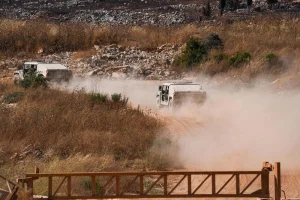
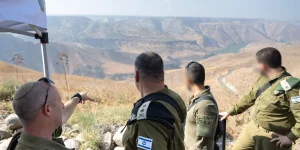
At the same time, as Lebanese soldiers entered the first pilot zone on Tuesday, tensions briefly rose with Israeli forces, which fired warning shots during the encounter.
The LAF accused Israeli soldiers of firing toward Lebanese troops as they entered the town of Zawtar al-Gharbiya, which is part of the first pilot zone.
Israel reported LAF troops crossing into the Israeli security zone and breaching barriers in the neighboring town of Zawtar al-Sharqiyah, which is not part of the pilot zone.
“IDF soldiers operating in the area fired warning shots into the air only, which did not endanger the Lebanese Armed Forces personnel, in order to distance them from the area,” the Israeli military said in a statement.
Earlier today, IDF soldiers operating in the Security Zone in southern Lebanon identified Lebanese Armed Forces personnel, accompanied by an engineering vehicle, who crossed ~150 meters into the Security Zone and breached barriers in the area of Zawtar al-Sharqiyah, contrary to…
— Israel Defense Forces (@IDF) July 21, 2026
The IDF also reported, “The Lebanese Armed Forces personnel withdrew from the area, and no injuries were reported.”
Despite Aoun’s request for Trump to press Israel for a swift withdrawal, Trump did not provide a timeline for a potential Israeli withdrawal.
When asked about Israeli withdrawal and the Lebanese army taking control of southern Lebanon, Trump said there are “very concrete plans already in store for that, with others going in and helping, but they’re also becoming much more self-sufficient.”
The U.S. president said he would be willing to begin dialogue with Hezbollah on behalf of Aoun, saying, “if the president wanted me to speak to Hezbollah, I would.”
Following the nearly one-hour meeting, the senior advisor for Africa at the U.S. State Department, Massad Boulos, of Lebanese descent, said the agreement would take time to implement.
“It's all about implementation. It's going to take time. This is not easy,” Boulos said. “Nobody believes for a second that this is going to be an easy task in any way.”
“We are determined, President Trump is absolutely determined to see this through," he added.
The meeting with President Trump is a diplomatic achievement for Aoun, as he seeks to gather support inside Lebanon for what could be a long, complicated process.
You might also like to read this: