









ANALYSIS Trump thinks outside the box on Hezbollah – Lebanon wants Israel out first
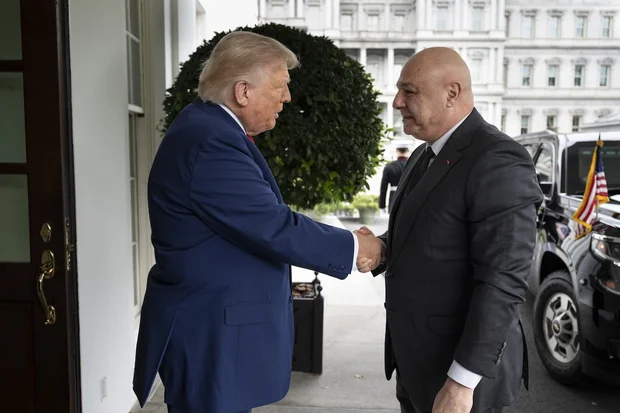
U.S. President Donald J. Trump has never been accused of thinking inside the box. If anything, the opposite is true.
Now he is bringing that same unconventional approach to one of the most complicated problems in the Middle East: how to disarm Hezbollah without triggering a Lebanese civil war, allowing the terrorist organization to regroup or leaving Israel vulnerable along its northern border.
During an Oval Office meeting on Tuesday with Lebanese President Joseph Aoun, Trump publicly floated an idea that would have been nearly unthinkable under most American presidents. He offered to personally speak with Hezbollah. That's not just outside-the-box thinking – it's about as unconventional as it gets.
“I would speak to Hezbollah. I speak to everybody,” Trump said. “I’ll speak to people that a lot of people think I shouldn’t be speaking to and things work out.”
Trump said he would only open such a channel if Aoun believed it would help. “If the president wanted me to speak to Hezbollah, I would,” Trump added.
That is classic Trump. He sees himself as the ultimate dealmaker who can communicate with virtually anyone – including sworn enemies and terrorist organizations – if he believes a conversation might produce results.
It's an approach that leaves many traditionalists uneasy, but in Trump's mind, why not? Conventional approaches have produced few lasting results.
Whether it can work with Hezbollah is another question entirely.
Yet Trump's willingness to think outside the box is only one piece of the puzzle. The bigger challenge is that Washington, Jerusalem and Beirut are not operating from the same playbook.
Lebanon wants Israel to complete its withdrawal from southern Lebanon before fully confronting Hezbollah.
Israel, meanwhile, wants meaningful guarantees that Hezbollah will be disarmed before giving up its remaining positions. Reconciling those competing priorities – not simply opening a dialogue with Hezbollah – may ultimately determine whether Trump's latest initiative succeeds or stalls.
“There’s a Hezbollah problem,” Trump acknowledged as he sat beside Aoun. “We’re going to help it. We’re going to help it a lot. We are going to solve a lot of problems. We’ve already solved some of them for Lebanon.”
The president also reportedly suggested that Syria could play a role in cutting Hezbollah’s weapons supply routes or applying pressure on the organization.
Other ideas under consideration include deploying specially selected Lebanese army units that would be vetted, trained and equipped by the United States before taking control of territory evacuated by Israel.
It's a tenuous situation at best. Hezbollah isn't simply a terrorist force positioned along Israel's northern border. It is deeply embedded within Lebanon’s Shiite community and wields significant political, religious, social and economic influence throughout the country.
Any attempt by the Lebanese army to forcibly disarm it could spark violent internal conflict. A civil war in Lebanon is a very real possibility.
The first test is already underway through so-called "pilot zones" in southern Lebanon.
Under the U.S.-brokered framework agreement reached on June 26, Israeli troops are expected to gradually withdraw from selected areas. Lebanese soldiers would then move in immediately, preventing Hezbollah from returning and the Lebanese government would ultimately become the country's sole armed authority.
Popular article:
interview Easter message of resurrection hope amid war at Jerusalem's Garden Tomb

biblical commentary Let my people go: a Passover message for today
4 IDF soldiers killed, 2 wounded in fighting in southern Lebanon, as Israel eliminates dozens of Hezbollah terrorists
Receive latest news & updates
A message from All Israel News
Help us educate Christians on a daily basis about what is happening in Israel & the Middle East and why it matters.
For as little as $10, you can support ALL ISRAEL NEWS, a non-profit media organization that is supported by readers like you.
Latest articles:
ANALYSIS Founding trustee of Oxford’s Islamic studies department believed Muslims should ‘continue the work of Hitler’

ANALYSIS 'Peaceful dialogue is not a crime:' Petition urges Lebanon to abolish its Israel Boycott Law
ANALYSIS Israeli defense companies expand global reach with new deals in Cyprus, Germany and Canada

ANALYSIS Netflix’s ‘The Diplomat’ appears to pay tribute to slain Israeli hostage Hersh Goldberg-Polin
ANALYSIS IDF kills Hamas terrorists involved in abduction of German-Israeli Shani Louk on Oct 7