'Peaceful dialogue is not a crime:' Petition urges Lebanon to abolish its Israel Boycott Law
Lebanese-American singer calls on Trump to push Beirut to end 70-year ban on contact with Israelis
A 70-year-old law in Lebanon which renders contact with Israelis illegal has come under the spotlight lately following incidents involving high-level Lebanese figures who “broke” the boycott law in recent months.
Lebanese Ambassador to the U.S. Nada Hamadeh Moawad was called out for inquiring about the health of Israeli Ambassador to the U.S. Yechiel Leiter’s son who was injured in a terror attack in Israel, while businessman Antoun Sehnaoui was photographed near Israeli Prime Minister Benjamin Netanyahu at an event honoring the late U.S. Sen. Lindsay Graham.
Now, a new petition addressed to U.S. President Donald Trump and Secretary of State Marco Rubio urges U.S. leaders to pressure the Lebanese government to abolish the ban for good.
U.S.-based singer and peace advocate Carine Bassili, who cannot return to Lebanon following her public support for Israel, initiated the petition calling for the U.S. to pressure the Lebanese government to repeal the 1955 Israel Boycott Law along with related restrictions that penalize peaceful engagement between Lebanese and Israeli citizens.
“Peace cannot be built if ordinary people are punished for reaching across borders,” the petition states.
Middle East analyst Jonathan Spyer welcomed this call for change, but doubted it could get approved by the Lebanese parliament.
“There’s quite serious pushback inside Lebanon, from Hezbollah obviously, and from those aligned with it, against changing the statute,” he told ALL ISRAEL NEWS. “Having said that, I think it's very good that Lebanese Americans and others are pushing for this in the United States because, of course, the law is ridiculous, and it ought to be repealed.”
Tony Abi Najm, editor-in-chief of IMLebanon, pointed out in July that the recent U.S.-brokered agreement with Israel required working groups to prepare a comprehensive peace and security agreement.
“What does that mean?” Abi Najm asked. “It means representatives from both countries will sit together and negotiate. How do you reach a peace agreement without communicating with the other side?”
Former Lebanese Parliament member Hadi Hobeiche has also questioned whether the legal framework from 70 years ago reflects the country’s current political realities.
“Look, the law is one thing. But today, in my opinion, the national interest is stronger than the law. When you have matters of national interest, all these details become secondary,” Hobeiche said in an interview with Al Jadeed.
“If the law prevents me from sitting with Israelis, but sitting with Israelis leads to stopping attacks and stopping the killing of my people, then yes, I will sit with them regardless of what the legal texts say,” he added.
However, the ability of the Lebanese government to determine and enforce its own policy toward Israel has been significantly tested in recent weeks.
On Oct. 5, Lebanese security forces intercepted and confiscated a van carrying 780 kilograms of explosives intended for an attack against Israel. Hezbollah claimed ownership and demanded the government turn over the weapons. Rubio intervened, however, urging Lebanon to keep the shipment and hold the terror group accountable, underscoring the competing pressures on the Lebanese President Joseph Aoun.
In her petition, Bassili insists that “a sovereign Lebanon must be able to protect its citizens, enforce its laws fairly and make decisions in the national interest without intimidation.”
At one point, Hezbollah had more fighters than the official Lebanese army and the eighth-largest missile capability in the world, according to Israeli military expert Colonel Miri Eisin. Moreover, the Iranian-backed terror group holds positions of political power and has become an integral part of Lebanese governance.
While Hezbollah once enjoyed the support of Lebanese citizens, the tide has been turning. A majority of citizens support disarming Hezbollah, according to a poll released in May. However, defanging the militia group is easier said than done.
“Lots of people think Hezbollah has brought disaster down in the country,” Spyer said. “You can even find examples of Lebanese Shia who are thoroughly fed up with all this nonsense from Hezbollah about resistance — it just gets their houses destroyed every few years when Hezbollah decides to go to war against Israel.”
“But one should not allow that to obscure the fact that Hezbollah have got the guns. That, unfortunately, is what matters,” he said, noting that the terror group is well known for killing its political opponents.
The Lebanese military has struggled to fulfill the commitment to clear designated areas of Hezbollah weapons and infrastructure as agreed upon in June, while Israel has not met Lebanon’s demands to halt attacks.
Nevertheless, a new round of negotiations are taking place in Tampa, Florida this week.
“Both Lebanon and Israel want to keep talking, even if we’re still waiting for the elections,” said Nuna, a local Lebanese Christian, referring to Israel’s upcoming election. “Everything is in the waiting season… We’re just praying that even in these times, we will keep moving towards that peace that we are all waiting for, all praying for.”
Spyer remains unconvinced that change is imminent, but that “at a certain point, Hezbollah will be sufficiently weakened… and in the end, that's how the situation will be resolved.”
“We're moving in the right direction, but I don't think we're there now, simply because all the other forces in Lebanon are so weak,” he said. "At the end of the day, the only force that has actually been able to treat Hezbollah in the appropriate way to weaken it has been the Israel Defense Forces.”
The tipping point, Spyer believes, would be the fall of the Islamic Republic of Iran which would cut off Hezbollah’s support.
“Then Lebanese Hezbollah becomes just another Lebanese militia and would receive its appropriate fate,” he said, bringing an end to what he called, “this terrible obstacle to normal development in Lebanon.”
“It could be a great country. It has smart and well-educated, resourceful people and deserves much better than what he’s currently got,” he said.
Bassili’s petition calls on Trump and Rubio to prioritize reforming the boycott law as part of their diplomatic engagement with Lebanese leaders.
“Help Lebanon build a different future in which national security and peaceful civilian relationships can coexist,” the petition urges. “The campaign does not ask the United States to dictate Lebanon’s future or dismiss legitimate security concerns. It calls for Lebanese-led legal reform supported by international diplomacy.”
“No Lebanese citizen should have to choose between loving their homeland and believing that peace with Israel is possible,” Bassili wrote.
Nuna said that her house of prayer in Beirut recently spent 50 hours praying for the nation, including peace with Israel.
“The things that we thought for more than 50 years were impossible, like peace talks with Israel, the Abraham Accords, everything is coming into place,” she said. “We’re anticipating that God is going to bring a new season in Lebanon.”
Click here to see the petition.
Popular article:

interview Easter message of resurrection hope amid war at Jerusalem's Garden Tomb

biblical commentary Let my people go: a Passover message for today

4 IDF soldiers killed, 2 wounded in fighting in southern Lebanon, as Israel eliminates dozens of Hezbollah terrorists
Receive latest news & updates
A message from All Israel News
Help us educate Christians on a daily basis about what is happening in Israel & the Middle East and why it matters.
For as little as $10, you can support ALL ISRAEL NEWS, a non-profit media organization that is supported by readers like you.
Latest articles:
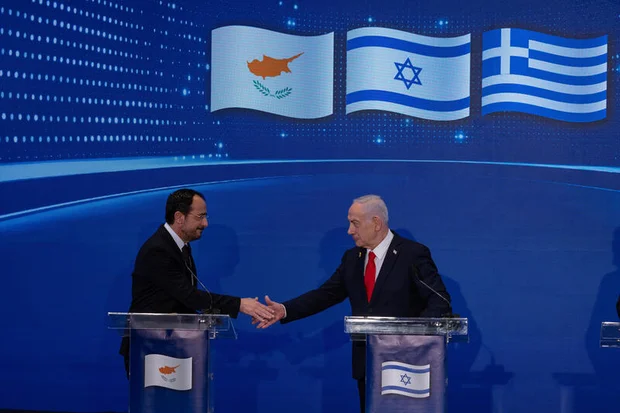
Israeli defense companies expand global reach with new deals in Cyprus, Germany and Canada
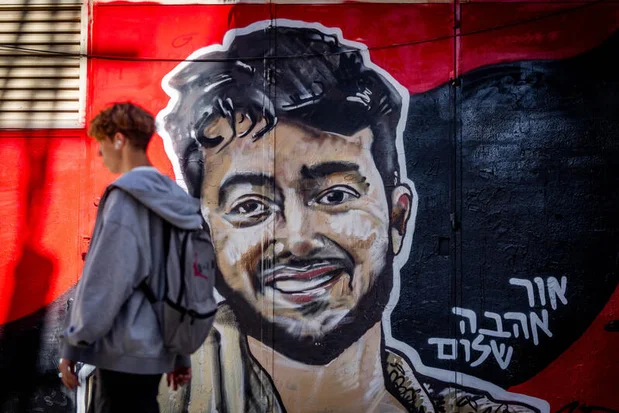
Netflix’s ‘The Diplomat’ appears to pay tribute to slain Israeli hostage Hersh Goldberg-Polin
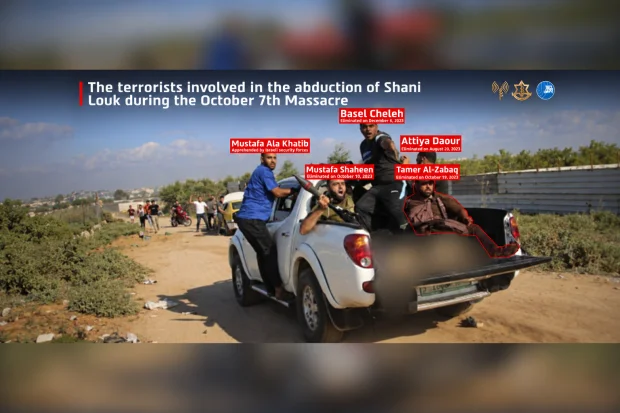
IDF kills Hamas terrorists involved in abduction of German-Israeli Shani Louk on Oct 7

Hungary reaffirms ties with Israel during Herzog visit, condemns antisemitism
Elections 2026 IDF soldiers begin voting as poll shows most Israelis have settled on a party