Before we demand justice, let us remember the truth
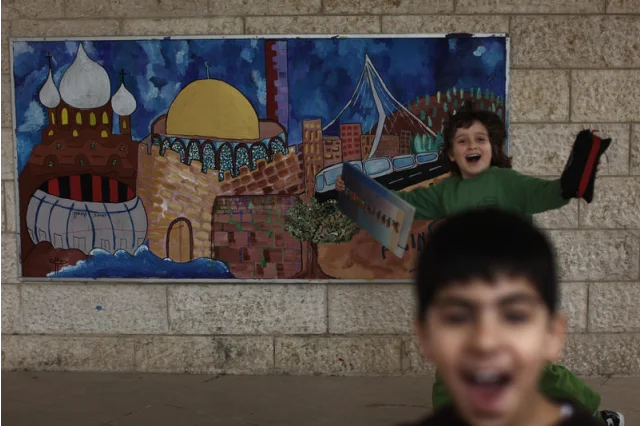
Every innocent life has value. Israeli and Palestinian children are not merely statistics or symbols in a political conflict. They are human beings created in the image of God. Every grieving mother, every broken father, and every child robbed of a future deserves our compassion.
Yet compassion must never come at the expense of truth.
What Is Justice?
From a biblical perspective, justice begins with the character of God. The prophet Micah gives us a clear picture of what God requires: "To act justly, and to love mercy, and to walk humbly with your God" (Micah 6:8).
Justice is not determined by culture, public opinion, or political ideology. Justice begins with God Himself. Because God is perfectly holy, righteous, and true, everything He does is just. His standard never changes, and His judgments are never influenced by emotion, favoritism, or the shifting values of society.
Biblical justice therefore requires more than compassion. It requires truth. It calls evil what God calls evil, defends the innocent, holds the guilty accountable, and refuses to excuse sin regardless of who commits it. At the same time, it is marked by mercy, because the God who judges sin is also the God who offers forgiveness through Jesus Christ to all who repent and believe.
Justice that ignores truth is not biblical justice. Justice that excuses sin is not biblical justice. And justice that elevates political causes above God's Word is not biblical justice. True justice reflects God's holiness, upholds His truth, and seeks His glory above every human agenda.
The deepest tragedy in this conflict is not merely the destruction of cities but the corruption of the human heart. Nations lie. Leaders manipulate. Terrorists murder. Governments commit injustice. Crowds celebrate evil. None of this surprises Scripture, for "The heart is deceitful above all things, and desperately sick" (Jeremiah 17:9). Political solutions alone cannot heal what is fundamentally a spiritual problem. Lasting peace begins with repentance before God.
Justice Requires the Whole Story
Today, many people call for justice, and justice is indeed a worthy pursuit. Yet some Palestinian Christian leaders have gradually shifted the focus of the gospel from God's message of reconciliation with Himself toward a political narrative that, intentionally or unintentionally, has often aligned itself with the goals of Palestinian nationalist movements.
Seeking justice is not wrong.
But genuine justice requires us to ask an uncomfortable question:
How did we get here?
During the Second Intifada, children were often drawn into a conflict they did not create. There were documented cases in which Palestinian factions encouraged children to leave school, sent them to confront Israeli checkpoints, and urged them to throw stones. In some instances, armed militants operated in close proximity to these young protesters, exposing them to grave danger. When violence erupted, children were sometimes caught in the crossfire. Afterwards, political factions frequently portrayed these children as "martyrs," transforming heartbreaking family tragedies into powerful political symbols.
This was not an act of love for the Palestinian people. It was a betrayal of them.
Do people remember that in 1947 the United Nations proposed the creation of both a Jewish state and an Arab state? The Jewish leadership accepted the proposal, while the Arab leadership rejected it. That decision profoundly shaped the course of the conflict.
Do people remember that in 2000 President Bill Clinton presented parameters intended to provide the basis for a negotiated peace and the creation of a Palestinian state in nearly all of the West Bank and Gaza?
Rather than bringing the conflict to an end through negotiation, those efforts ultimately failed, and President Clinton later expressed deep disappointment with Yasser Arafat's response. Soon afterward came the Second Intifada—a conflict that brought immense suffering to both Palestinians and Israelis.
The greatest tragedy is that ordinary Palestinians have repeatedly paid the price for the failures, corruption, and reckless decisions of leaders who too often chose violence over the difficult work of peace.
For decades, too many Palestinian leaders have excelled at blaming others while refusing to take responsibility for the devastation their own decisions have brought upon their own people. Generations have grown up amid bloodshed, economic hardship, political repression, and lost opportunities—not only because of the conflict itself but also because corrupt leadership repeatedly sacrificed the welfare of its people for power, ideology, and political survival.
History should not be rewritten. Peace has never been easy, but genuine opportunities for negotiation have existed. Ignoring that reality does nothing to advance justice or reconciliation.
Do people remember that in 2005 Israel withdrew completely from Gaza, dismantling every Israeli settlement there and evacuating thousands of its own citizens? For many Israelis, this was an extraordinarily painful concession made in the hope that it would open a path toward peace.
Gaza possessed remarkable potential. With its Mediterranean coastline, young population, entrepreneurial talent, and strategic location, it could have become a center of commerce, education, tourism, and economic growth.
Instead, Hamas seized control of Gaza and transformed it into a launching ground for armed conflict. Vast resources and significant international assistance that could have strengthened schools, hospitals, businesses, and civilian infrastructure were instead invested in tunnels, rockets, weapons, and military capabilities. Rather than building a flourishing society for the people it claimed to represent, Hamas built its legitimacy on perpetual conflict.
The people of Gaza have paid an enormous price for that choice. Entire generations have grown up under war, fear, poverty, repression, and hopelessness while Hamas's leadership continued to pursue military confrontation instead of the long-term well-being of its own people.
Those who genuinely care about Palestinians should be willing to say this plainly: Hamas has brought catastrophic suffering upon Gaza. It has repeatedly sacrificed the welfare of ordinary Palestinians in pursuit of an ideology that glorifies endless conflict rather than pursuing peace and human flourishing.
Criticizing Hamas is not criticizing the Palestinian people. It is holding accountable a terrorist organization whose decisions have inflicted profound suffering on Palestinians and Israelis alike.
The Church Must Not Become Political
The Church must never become the chaplain of any political movement. Its calling is not to baptize nationalism, excuse terrorism, sanctify revenge, or selectively condemn evil depending on who commits it.
The Church exists to proclaim Christ crucified, call sinners everywhere to repentance, defend the truth, love both neighbor and enemy, and bear witness to the kingdom of God.
Whenever the gospel is replaced by political ideology, the Church has abandoned its first calling.
Compassion Must Never Silence Truth
None of this denies the reality of Palestinian suffering. Their suffering is real, and generations of Palestinian families have endured profound hardship. Neither does it erase the suffering of Israelis, who have lived for decades under the threat of terrorism, suicide bombings, rocket attacks, and war.
The pain of both peoples is real.
But compassion does not remove moral responsibility.
The deliberate targeting of innocent civilians is always evil. No political grievance, historical injustice, or national aspiration can justify murder, kidnapping, torture, rape, or acts of terrorism. Such acts violate God's law regardless of who commits them.
Likewise, no nation, government, movement, or army is above moral accountability before God. Every human authority is subject to His righteous judgment.
If we truly desire justice, we must be willing to face the whole story. Justice without truth becomes propaganda. Compassion without truth becomes sentimentality. Truth without compassion becomes cruelty.
The path to peace begins when we refuse to excuse evil—whether it is committed against Palestinians or against Israelis—and when we remember that every human being bears the image of God.
Only then can we begin to pursue a future shaped not by hatred or revenge, but by truth, justice, mercy, and ultimately the hope that God offers through Jesus Christ.
You might also like to read this: