








ANALYSIS Will religion and state, not security, decide Israel's next election?
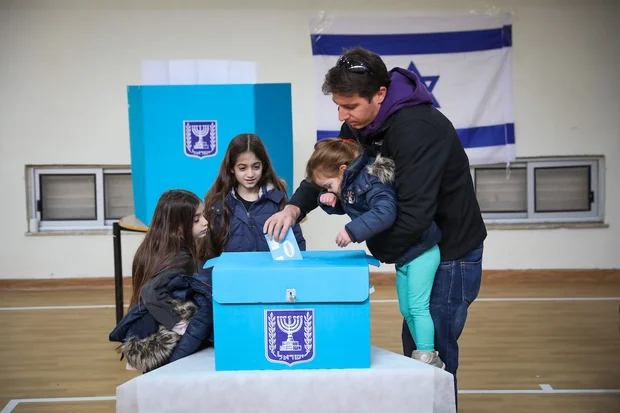
The Israeli election is scheduled to be held on Oct. 27, 2026, unless Iranian rockets start raining down again or another major security crisis erupts on Israel's borders. Experts say the campaign will be shaped less by external threats than by the country's growing internal divisions.
“Israelis plainly fear that cohesion is eroding and society is unraveling,” wrote Dr. Shuki Friedman, CEO of the Jewish People Policy Institute (JPPI), in a blog published in The Times of Israel.
Friedman, who spoke with ALL ISRAEL NEWS, highlighted a recent JPPI Israeli Society Index showing that more than half (55%) of Israelis believe internal division is the greatest threat facing the country, compared with fewer than a quarter (23%) who identified Iran as Israel's greatest threat.
Moreover, the overwhelming majority of Israelis (80%) said they are worried about the country's social cohesion.
On issues that matter most for national security, such as Iran, Israelis told surveyors they believe there is broad public consensus.
The platforms of the leading candidates also suggest that whether Prime Minister Benjamin Netanyahu, Gadi Eisenkot of Yashar, or Naftali Bennett wins the election, they are likely to take a similar approach to Israel's borders and the existential threat posed by Iran's nuclear program. Even Yair Lapid is unlikely to deviate significantly from Israel's core security policies.
The sharpest political battles are expected to center on the relationship between religion and state.
Questions such as whether ultra-Orthodox (haredi) men should be required to serve in the IDF or continue studying Torah, as recent legislation effectively allows, whether civil marriage should be expanded, and whether boys and girls should be allowed to sit together at public colleges and universities have become some of the issues driving the deepest wedges between Israelis.
Rabbi Hayim Leiter, a member of a private beit din (rabbinical court of law) in Israel, said he has long been a supporter of Netanyahu. However, the Efrat resident said the latest round of draft-related legislation has been "really hard to stomach."
Earlier this month, just before the Knesset went on its summer break, it passed a new Basic Law titled "Torah Study," which declares Torah study a "fundamental value in the heritage of the Jewish people and in the State of Israel."
While that may sound uncontroversial on paper, critics argue the law was designed to bolster the position of those seeking to avoid military service. Alongside it, lawmakers passed a temporary measure freezing the arrest of draft evaders.
At the same time, the Knesset passed an amendment to the Student Rights Law allowing universities and colleges to offer gender-separated master's and doctoral programs, rather than limiting the practice to bachelor's degrees, as had previously been the case.
Additionally, the Knesset passed legislation restoring the Chief Rabbinate's exclusive control over kosher certification in Israel, reversing reforms enacted in 2021.
"Everything in the last couple of weeks has been horribly detrimental on so many levels," Leiter said. "I just feel like you can't ignore the fact that they've tried to enshrine Torah study as something equivalent to serving in the army. I don't know why they had to rush that legislation through at the last minute."
Friedman said he believes most Israelis understand that allowing the haredi way of life to continue without requiring greater integration into society could ultimately undermine the country's future.
He noted that about 25% of Israel's first graders are from the haredi community. If they do not study core subjects and participate more fully in the workforce, he argued, Israel could eventually lose its economic strength.
"That's basically the question: Will Israel let the haredim drag the state to be more and more extreme?" Friedman asked. "It's about who is in the coalition and their influence on politics. It's about integration into society. It's about drafting into the army. It's about their influence on the rabbinical system and the religious services."
Leiter said that although he believes most Israelis want to loosen the haredi establishment's grip on matters of religion, it is the exemption from IDF service that is most likely to spark another wave of protests over the judicial reform, as widespread and intense as those seen before Oct. 7, 2023.
He said he expects to see demonstrations every Saturday night and growing tension between different segments of Israeli society.
He added that failing to change the makeup of the coalition and reduce the influence of the far right and the ultra-Orthodox could further damage Israel's international standing.
While he does not believe antisemitism is tied to one leader or another, he said that "the way this coalition has functioned" and the "outlandish things that have been said and done, those sorts of things are just not helping us."
Friedman said he believes most Israelis know what changes need to happen and hopes their voices will be heard at the ballot box.
He stressed in his Times of Israel essay that this is "not a call for bland centrism. It is a call to reject fanatical extremists and choose a national life grounded in fellowship and in a renewed emphasis on what unites us."
If the polls are right, the greatest threat Israelis hope to confront on Oct. 27 will not be Iran, but themselves.
Help more people find our reporting from Israel! Leave a quick Google review of our website HERE .
Popular article:
interview Easter message of resurrection hope amid war at Jerusalem's Garden Tomb

biblical commentary Let my people go: a Passover message for today
4 IDF soldiers killed, 2 wounded in fighting in southern Lebanon, as Israel eliminates dozens of Hezbollah terrorists

Receive latest news & updates
A message from All Israel News
Help us educate Christians on a daily basis about what is happening in Israel & the Middle East and why it matters.
For as little as $10, you can support ALL ISRAEL NEWS, a non-profit media organization that is supported by readers like you.
Latest articles:
ANALYSIS North American Jewish organizations to recruit 100 professionals to combat antisemitism

ANALYSIS ‘No need’ for pre-election Iran strike, IDF chief says as gov’t, opposition trade blame for potential escalation – report
terror attack 2 Israeli soldiers killed, 2 terrorists eliminated in Hebron shooting; IDF says much larger attack was prevented
analysis A people dwelling securely? Israel’s strategic standing, 3 years after Oct 7

ANALYSIS Hamas on wheels: What I found in Dearborn reveals a troubling history and a battle over Israel