Israel's Health Ministry outlines lessons from underground hospital care during 2025 Israel-Iran war


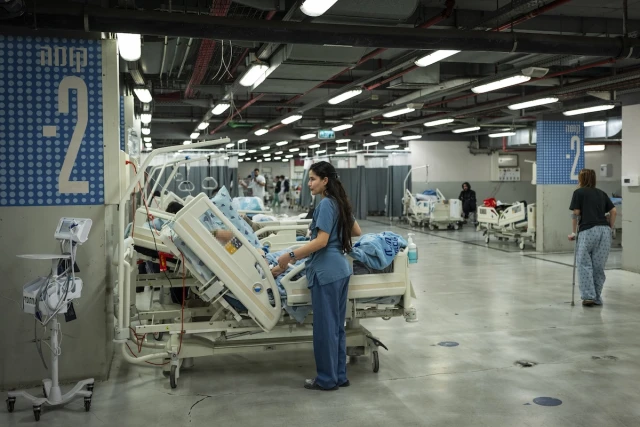
Israeli hospitals have learned important lessons about the treatment of patients under fire, and underground, from the Israel-Iran War last June, according to internal Health Ministry documents.
Thousands of patients were relocated underground during Israel's 12-day war with Iran last year, known in Israel as Operation "Rising Lion".
While lives were saved, Health Ministry documents show that treating patients in underground parking garages and basements created serious challenges, including higher infection risks due to crowding, staff burnout and reduced patient privacy.
The document aimed not only to identify shortcomings but also to offer practical recommendations for improving medical care during wartime.
Dr. Hagar Mizrahi, who heads the Health Ministry’s Medical Division, assessed the challenges of treating patients during extreme war conditions.
“Because of the proximity and crowding, infections are what concern us most on the medical level. The beds are so close that it takes only one family member touching a curtain to potentially transmit infection to additional patients,” Mizrahi explained.
“The first rule is preventing crowding – discharge, discharge, discharge. One arm is discharge to the community, a second arm is home hospitalization, in order to protect those who remain hospitalized,” she said.
The health chief also addressed the challenge of staff burnout, saying, “Our goal is to preserve staff resilience over time so they can continue providing high-quality care to patients and to give them breathing space. To allow teams a period of time to come up from underground for brief recovery and to allocate a clean, staff-only area.”
Mizrahi believes the documents should be viewed as recommended guidelines and stressed that conditions will vary depending on the specific underground facility being discussed.
“It very much depends on the underground layout of each institution,” she said. “We cannot set things in stone when I know that in some places it simply will not work. We are giving hospitals the principles, and they will adapt the implementation to their specific layout,” Mizrahi said.
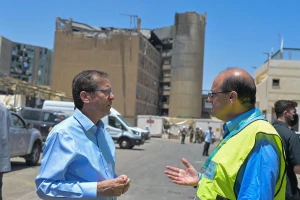
Last year, an Iranian ballistic missile struck Soroka Hospital in the southern Israeli city of Beersheva. Soroka is one of Israel’s most important hospitals and the largest medical center in southern Israel. The missile strike resulted in significant physical damage to parts of the facility, however, patients were evacuated in advance and no civilians were seriously injured.
Israeli President Isaac Herzog, who visited the hospital shortly after the attack, condemned “the destruction and devastation caused by an Iranian missile fired indiscriminately” at the hospital, saying, “This is a war crime!”
Despite the destruction, the hospital continued operating but with limited capacity, forced to improvise at times. Last November, the Israeli government allocated approximately $US100 million toward reconstruction.
In addition, Canadian-Israeli billionaire and philanthropist Sylvan Adams also announced he would donate an additional $100 million for the project, saying, “Our answer to hatred and destruction is simple: we choose life. That is the secret strength of the Jewish people."
You might also like to read this: