Israeli cyber expert warns AI-powered attacks on critical infrastructure already happening







Artificial intelligence-powered cyberattacks against critical infrastructure are no longer a theoretical threat but a present reality, according to Gil Messing, Chief of Staff of the Israeli cyber defense firm Check Point.
Messing’s warning comes amid growing concern from major international technology companies about the rapidly evolving threat posed by AI-powered cyberattacks. More than 100 major companies, including Check Point, recently jointly issued a warning that the current approach to cybersecurity is no longer sufficient to confront the emerging threat.
"The unusual call comes because more than 100 significant companies around the world, including us, have joined in saying that what has been happening cannot continue," Messing said in an interview this week with the 103FM media portal.
"It is becoming more dangerous, and it is not that this will happen soon; it is already happening," he said.
Messing said AI is empowering small groups and even individuals to launch sophisticated cyberattacks using capabilities that previously were largely available only to major corporations and nation-states.
"Since those significant models from OpenAI, Anthropic, and others were released, at levels we had never seen before, the gaps that previously existed between powers and actors that are not major powers in their ability to create cyberattacks have disappeared," he said.
"The models allow almost anyone with a little knowledge to create attacks and vulnerabilities that have never been seen before. This tool, which is like a weapon, is reaching everyone's hands, and that is at the heart of the approach of the new AI companies, so the attacks have become more sophisticated and more frequent," he continued.
Messing explained that cyberattacks typically exploit software vulnerabilities to gain access to systems, potentially resulting in stolen information or system failures or shutdowns.
"The entire cyber world ultimately works on the fact that there is software with a vulnerability through which someone gets in, exploits it, and that becomes an attack," he explained. "At the end of the process, what we see is something that does not work, something being shut down, information being stolen, a crash or encryption, and systems that stop functioning."
However, he warned that AI is now enabling attacks to occur with increasingly limited human involvement:
"The models make possible, although they should not make possible, attacks unlike anything we have seen before, without human involvement. It has reached the point where the models sometimes attack on their own without a person controlling them and asking them to do it, and that gets out of control."
Messing said governments, technology companies, universities and organizations at the federal, state and local levels all need to strengthen their cybersecurity efforts.
"There are three main components, and if we deal with them, we will deal with most of the problem," he said.
"One is the issue of version updates, because organizations have to constantly update their versions. They do not know how to do this because they do not have enough manpower, so more personnel need to be trained to deal with it," Messing continued.
He also called for greater government oversight of AI models.
“There are governments that need to regulate what is happening now with AI models," he concluded. "If we do not deal with each of these components, we will not have the tools to deal with the attacks that are taking place. As the models continue to develop, if there is no effort to stop or confront this, then the warning from the companies is that we will face a world in which breaches will be significant and painful," he explained.
Messing’s interview came amid several high-profile cyberattacks targeting water infrastructure, factories and other sensitive systems around the world in recent weeks.
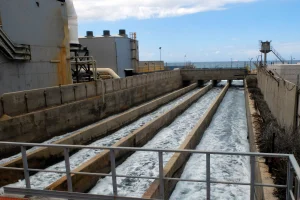
Israel’s National Water Carrier has insisted that the recent shutdown of saltwater desalination plants was not caused by an Iranian cyberattack. However, some Israelis have expressed doubts about that explanation as concerns over attacks on the country’s critical infrastructure continue to grow.
You might also like to read this: