As AI slows high-tech hiring, defense tech takes off




For years, the most prestigious destination for an ambitious Israeli engineer was a software company. Cybersecurity, financial technology and business software offered high salaries, valuable share options and the possibility of a lucrative exit. Defense work was important, but its image was less glamorous: large contractors, slower projects and pay that often lagged behind the commercial technology sector. That hierarchy is beginning to change. As artificial intelligence allows civilian technology companies to expand output without expanding payrolls, wars and the fear of future wars are creating a new hiring boom in defense technology.
This transition is becoming visible in Israel’s labor market. According to a new report from the recruitment company GotFriends, the number of new jobs opened up by Israeli defense-tech start-ups in 2026 increased by 20% from the same period last year, while average salaries rose by about 8%.
This is more than a temporary scramble for engineers. It marks a reversal in the direction of Israel’s technology economy. A decade ago, policymakers worried that a shortage of programmers would constrain high-tech growth. Now the civilian industry is learning to do more with fewer people. The Israel Innovation Authority reported that the number of employees in research and development roles declined for the first time in 2025, even as the broader technology sector continued to grow. The Authority linked the change partly to greater efficiency gained from using AI tools and partly to Israeli companies expanding their development operations abroad.
Artificial intelligence is not the only explanation. A strong shekel has made Israeli employees more expensive in dollar terms, while companies have become comfortable building teams in lower-cost centers overseas. The end of the cheap-money era has also forced start-ups to focus on profitability. Yet AI has strengthened these pressures. If a smaller team equipped with coding tools can produce the same software, another expensive developer becomes harder to justify.
Defense technology follows a different logic. In civilian software, AI can reduce the people needed to write code, answer customers or analyse data. In defense, it is being added to drones, surveillance systems, interceptors and autonomous vehicles. Those products must still be designed, manufactured, tested and integrated with cameras, communications equipment and weapons. AI makes each system more capable, but it is also increasing the complexity of what armed forces want to buy.
That explains why the hiring boom reaches beyond conventional software development. GotFriends reports growing demand for engineers who can build the software inside drones, sensors and other physical systems, alongside specialists in artificial intelligence. Hardware expertise has also returned to the center of recruitment. Companies need people who can design chips, electronic boards and the components that allow advanced equipment to operate reliably in real-world conditions. They are also hiring engineers who teach machines to interpret images and combine information from multiple sensors into a clear picture.
The salaries show how far the sector has moved from its old reputation. GotFriends puts average monthly pay for hardware architects at about NIS 50,000. Algorithm engineers average roughly NIS 47,000, while AI and VLSI chip-design engineers receive around NIS 45,000. Experienced software developers are approaching NIS 44,000. These are not the wages of an industry relying on patriotic duty to compensate for weaker financial rewards. Defense start-ups are now competing directly with software, fintech and cybersecurity companies for the same scarce people.
Capital is following the workers. GotFriends estimates that defense-tech companies worldwide raised $12.3 billion in 2026 to the date of its report, almost double the comparable amount in 2025. Israeli companies raised about $846 million, already close to last year’s total. The figures come from a recruitment company rather than an independent investment database and should therefore be treated with some caution. Nevertheless, the rapid increase in investment is consistent with the broader rise in military spending worldwide.
The Stockholm International Peace Research Institute estimates that global military expenditure reached $2.89 trillion in 2025, the eleventh consecutive annual increase. Spending in Europe rose by 14% in real terms. NATO says its European members and Canada increased core defense expenditure by nearly 20% last year. Russia’s invasion of Ukraine exposed depleted ammunition stocks and limited production capacity across Europe. Wars in the Middle East demonstrated the growing importance of drones, air defense, electronic warfare and rapid battlefield intelligence. Governments are no longer treating defense budgets as a residual expense that can be cut when public finances become tight.
Israel offers start-ups something that money alone cannot easily buy: immediate contact with operational needs. GotFriends says about 800 start-ups are receiving direct purchase orders from the Ministry of Defense. Young companies can test equipment under real conditions, receive feedback from soldiers and improve products far faster than would be possible through a conventional multiyear procurement program. Many have been founded by reservists or veterans of technology units who encountered a specific battlefield problem and believed they could solve it.
This shortens the journey from an idea to a paying customer. It also gives Israeli companies a powerful sales argument abroad: the product has been used in combat, not merely in a demonstration. As in cybersecurity, military experience produces founders with specialized knowledge. But defense technology requires a broader industrial base. Software is important, but so are factories, supply chains, optics, semiconductors and mechanical engineering.
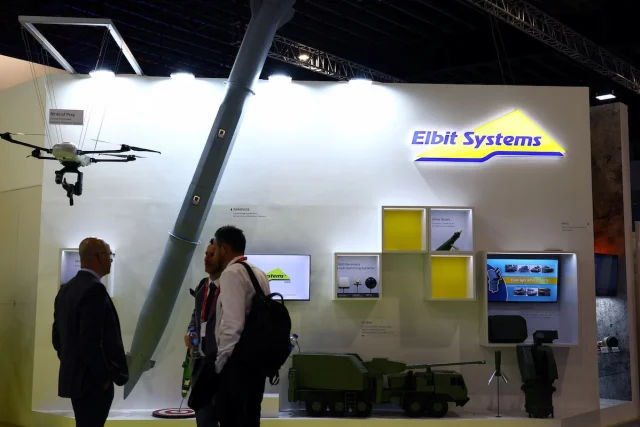
The established defense companies show the scale of demand waiting behind the start-ups. Elbit Systems entered the second half of 2026 with a record order backlog of $32 billion, up from $23 billion a year earlier. Its management said earlier this year that the company had added about 2,000 employees over the previous year and planned to recruit another 2,000. Elbit is not a start-up, but its expansion illustrates the same constraint facing the younger companies: orders are plentiful, while the engineers and production capacity required to deliver them are not.
There are good reasons not to confuse a boom with a permanent transformation. Defense procurement is politically exposed, export licences can delay or prevent sales, and reliance on one government customer creates obvious risks. Products developed quickly during a war may struggle to find a large peacetime market. Venture capital can also misprice fashionable sectors, particularly when founders attach the labels “AI,” “autonomous” or “defense” to technology whose military value remains unproven. Operational testing is an advantage, but it is not a substitute for reliable manufacturing or a sustainable business model.
The surge also presents an uncomfortable trade-off. Engineers moving into defense are drawn from a limited labor pool. That may strengthen national security and exports, but it could deepen talent shortages in medical technology, alternative energy technology and advanced manufacturing. Dependence on conflict-driven demand is hardly an ideal economic strategy.
Still, the labor market is sending a clear signal. Israel’s prestigious civilian high-tech industry is not disappearing, and its strongest companies will continue to recruit. But the age in which every funding round produced another wave of software jobs has ended. AI, cost discipline and overseas hiring have broken the old link between technology growth and employment growth. Defense technology is moving the other way because geopolitical insecurity is creating both capital and customers, while AI is increasing the capabilities militaries expect rather than simply reducing headcount.
Israel’s next technology boom is therefore likely to look very different from the one that preceded it. It will involve more hardware, more manufacturing and a much closer relationship between engineers, defence companies and the state. The country that became known as the start-up nation by selling software to businesses is now seeing some of its strongest employment growth in technologies developed for military use. This commercial opportunity has emerged from a grim geopolitical reality, but its consequences for investors, workers and policymakers are becoming increasingly difficult to ignore.
You might also like to read this: