The hidden cost of boycotting Israeli technology



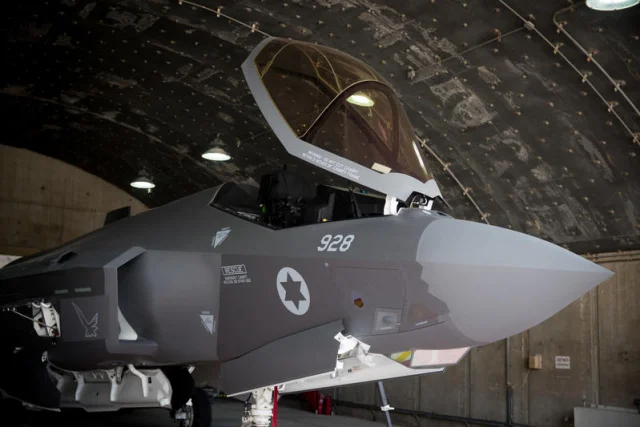
Political boycotts are often presented as moral choices. However, less attention is paid to their economic and technological consequences. Ireland's latest decision to remove an Israeli-made system from its new government aircraft illustrates a broader reality that extends well beyond aviation: modern economies increasingly depend on Israeli technology in ways that are not always visible until it is removed.
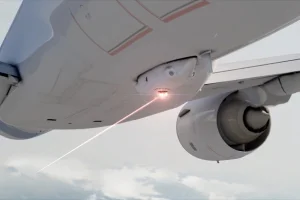
The Irish government paid €53 million for a new Dassault Falcon 6X executive aircraft to replace its aging government jet. During procurement, Dublin insisted that the aircraft be delivered without FalconEye, an enhanced vision and landing assistance system developed by Israel's Elbit Systems.
The decision reflected Ireland's policy of avoiding Israeli defense products amid deteriorating diplomatic relations with Israel over the war in Gaza.
The consequences of their anti-Israel action became apparent almost immediately. Aviation specialists interviewed by Irish media noted that FalconEye provides pilots with enhanced situational awareness during poor visibility, allowing operations in weather conditions that might otherwise require diversion to an alternative airport.
Reports suggest that removing the system reduces operational flexibility in adverse weather, although the aircraft still retains conventional certified instrument landing systems used by modern aircraft.
Whether the practical impact proves significant over the aircraft's lifetime is almost beside the point. The episode illustrates something much larger than a single procurement decision.
It demonstrates how difficult it has become to separate advanced technology from the country that increasingly helps develop it.
Israel accounts for less than 0.12% of the world's population. Yet its influence on global technology is disproportionately large.
The country consistently ranks among the world's leading innovation ecosystems, produces one of the highest venture capital investments per capita, and hosts hundreds of multinational research and development centers operated by companies including Intel, Nvidia, Microsoft, Apple, Google and Amazon.
Many of the technologies developed in those facilities ultimately become embedded inside products manufactured elsewhere.
That creates an important distinction between boycotting Israeli-branded products and avoiding Israeli technology. The former may be relatively straightforward. The latter is becoming progressively more difficult.
Semiconductors provide one example. Israeli engineers have played important roles in the development of several generations of Intel processors.
Nvidia has transformed Mellanox, the Israeli computer networking company it acquired in 2020 for $6.9 billion, into one of the pillars of its artificial intelligence infrastructure business.
Numerous cybersecurity products protecting governments, banks and critical infrastructure worldwide originate from Israeli companies or Israeli research teams.
But Israeli innovation is not limited to semiconductors and aviation tech. Precision agriculture, desalination technology, medical devices, autonomous driving systems, artificial intelligence, satellite communications and advanced sensors all contain substantial Israeli intellectual property.
However, ordinary consumers rarely notice it because these technologies are usually integrated into products carrying American, European or Asian brands.
Defense provides perhaps the clearest illustration. Israeli companies have become deeply integrated into international supply chains rather than simply exporting complete platforms. Elbit Systems, Rafael and Israel Aerospace Industries increasingly contribute subsystems, sensors, avionics, electronic warfare capabilities and missile technologies that become components of equipment assembled elsewhere.
And the Irish government demonstrates this contradiction overtly.
While their officials sought to exclude Elbit's FalconEye system from its executive aircraft, reports indicate that newly ordered Airbus helicopters still incorporate Helionix flight systems jointly developed by Airbus and Elbit because those systems are considered essential.
Irish maritime patrol aircraft also include Israeli radar technology. Complete technological separation, it appears, is considerably more difficult than political declarations may suggest.
The episode also illustrates something else. Ireland's opposition to Israeli technology appears to stop where its own strategic interests begin.
When Israeli systems are considered indispensable, they remain in service and when they can be removed without fundamentally compromising capability, political symbolism takes precedence. That is less a coherent procurement policy than a selective application of principle.
Sadly, Ireland is not alone. Many Western governments that advocate or support restrictions on Israeli products continue to maintain extensive commercial relationships with countries whose human rights records have attracted sustained international criticism.
Europe relied on Russian oil and natural gas for years, helping sustain the Kremlin's revenues. Western companies continue to manufacture extensively in China despite persistent concerns over Xinjiang, Tibet and increasing pressure on Taiwan.
Saudi Arabia remains a major strategic and commercial partner despite repeated criticism of its human rights record, while Qatar has hosted Hamas's political leadership even as it has become one of Europe's largest suppliers of liquefied natural gas and invested billions of dollars in Western universities.
The pattern is difficult to ignore: ethical standards often become remarkably flexible when national interests or economic benefits are involved.
The Irish government's aircraft is unlikely to be the last example of politics colliding with technology. As Israeli innovation becomes increasingly embedded in global supply chains, attempts to exclude it will become progressively more difficult and, in many cases, more expensive.
The irony is that campaigns intended to isolate Israel may increasingly end up isolating those who pursue them. In a world where Israeli expertise helps power everything from aircraft and semiconductors to cybersecurity, medical devices and artificial intelligence, the cost of symbolic boycotts is unlikely to be borne by Israel alone.
It is more likely to be borne by the governments, businesses and consumers that discover innovation cannot be replaced by political slogans. Israel has lived with boycotts, sanctions and diplomatic pressure for much of its existence and has repeatedly adapted to them.
Those determined to turn Israeli technology into a political target, however, may ultimately discover that they have shot themselves in the foot.
You might also like to read this: