Iran heats up as US conducts 2nd round of strikes following tension in Strait of Hormuz
IRGC conducts retaliatory attacks on US forces in the region, claims to ‘destroy American bases’






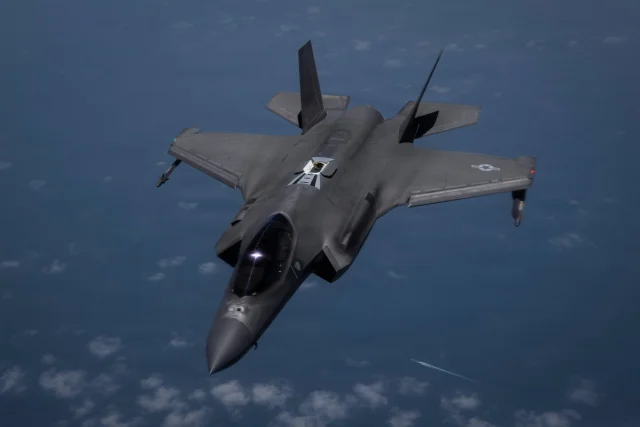
The U.S. military struck two tankers owned by the Iranian government on Tuesday in retaliation for attacks on vessels in the Strait of Hormuz, Axios reported early Wednesday.
The report cited a U.S. official, who claimed the strikes are part of a new "tanker for tanker" policy approved by President Donald Trump. That policy is meant to deter future Iranian attacks on commercial vessels transiting the strait outside of the Islamic Revolutionary Guard Corps-approved northern route.
The strikes on the Iranian regime vessels were carried out by drones and targeted the engine rooms of the two vessels, which were “anchored off Iran's coast north of the U.S. naval blockade line,” Axios reported.
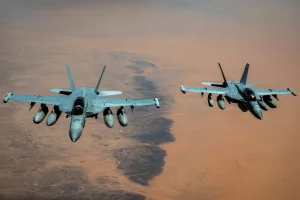
Meanwhile, U.S. Central Command (CENTCOM) reported carrying out “a wave of strikes against Iranian military targets Sept. 1.”
“U.S. forces struck Islamic Revolutionary Guard Corps (IRGC) targets including air defense sites, radar systems, maritime assets and facilities, mine laying capabilities, and communications sites,” CENTCOM said in a statement.
The military further said the strikes were conducted following “recent attempted attacks by the IRGC against commercial shipping in the Strait of Hormuz and against American service members.”
According to Axios, CENTCOM hit over 100 sites in Iran during the strikes.
During an interview with Fox News, Trump said U.S. forces hit Iranian radar stations.
“They tried to rebuild their radar because they can't see anything,” Trump was reported as saying. “We waited until it was almost built and then we hit it.”
Iranian media reported strikes on an airport, various sites along the Strait of Hormuz, as well as on several of the Iranian-controlled islands in the Persian Gulf.
On Tuesday, Trump confirmed that the previous strikes by CENTCOM were carried out to prevent an Iranian attempt to place sea mines in the strait, after U.S. forces had declared the waterway to be free of all mines.
The United States is, as we speak, striking Iranian Targets near the Strait of Hormuz. The strikes are large and powerful, and in retaliation for the Iranians’ failed attempt at adding sea mines to the Strait, which currently has no mines (They have been completely removed or… pic.twitter.com/64FZNNnIMi
— Commentary Donald J. Trump Truth Social Posts On X (@TrumpTruthOnX) September 1, 2026
Following the CENTCOM strikes on Tuesday night, IRGC forces launched retaliatory attacks on American forces throughout the Middle East, including the United Arab Emirates, Jordan, Bahrain, and Kuwait.
Publishing a statement about the attacks, the IRGC also claimed that the U.S. strikes hit a wedding celebration in the city of Sirik. According to the Islamic Republic News Agency (IRNA), 11 people were killed.
Regarding the retaliatory ballistic missile and drone response, the IRGC claimed to have “powerfully attacked and destroyed the criminal American bases in the region with powerful missiles and drones.”
تصاویری از حملات گسترده موشکی به اهداف آمریکایی در اردن در موج سوم عملیات تنبیه متجا،وز pic.twitter.com/zH9hw6c7pQ
— خبرگزاری ایسنا (@isna_farsi) September 2, 2026
However, there were no reports of injuries in any of the attacks. The Jordanian military said it intercepted 10 ballistic missiles targeting its territory, while the remaining “three missiles fell in remote areas away from populated centers.”
The Kuwait Army said in a statement it was “confronting attacks by hostile drones, following the sinful Iranian aggression.”
Explosions due to air defense systems were reported in Kuwait and Bahrain.
Later Wednesday morning, Kuwaiti media reported a fire in a residential complex in the capital due to an Iranian drone, but stated there were no casualties from the attack.
Meanwhile, despite comments by Iranian President Masoud Pezeshkian that his country would be willing to return to the Memorandum of Understanding, Trump dismissed the idea.
“I’m not trying to force Iran to the bargaining table, as ABC Fake News reported,” Trump wrote on his Truth Social account. “I couldn’t care less if they sign a worthless, to them, agreement.”
Trump also said, “I like our position now much better, with almost total control of the Hormuz Strait, and their economy totally collapsing. They are just playing out the inevitable.”
He also questioned when the Iranian people might take to the streets, writing, “When are the Iranian people going to rise up and fight?”
Shortly before the launch of the U.S. and Israeli military operations in Iran, President Trump promised that weapons were on the way to support Iranians in the struggle against their government. He later claimed the weapons were redirected by the Kurds.
The U.S. State Department has now issued a security alert to American citizens, cautioning them to “exercise heightened vigilance” in the Middle East.
“Americans currently in the Middle East should exercise heightened vigilance and be aware of potential flight cancellations, airspace closures and travel disruptions,” the alert said. “Americans traveling to or from the region should monitor information about airport and airline operations.”
You might also like to read this: