Iranian president acknowledges economic impact after US Treasury warns 'economic D-Day is coming to Iran’
Iranian president says country in ‘full-scale economic, military and security war’ with US







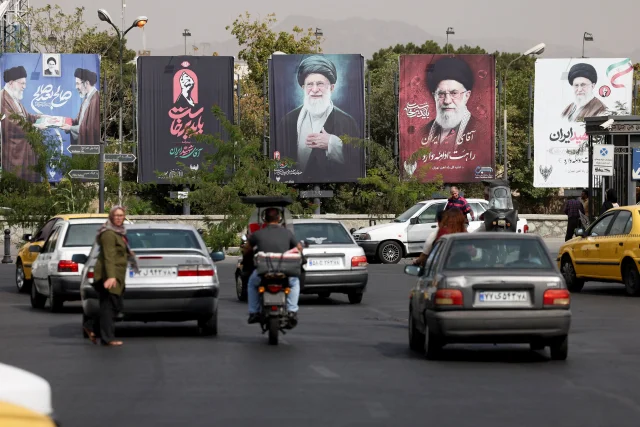
After U.S. President Donald Trump announced an “economic D-Day” on Iran last week, Treasury Secretary Scott Bessent has now begun to reveal some details of that strategy, as the U.S. appears to be fully shifting the focus to economic warfare rather than kinetic action, for now.
The announcement of the new economic strategy against the Islamic Republic comes just days after the president announced that, in a reversal of previous statements, there are “no talks or conversations going on, or scheduled, with the Islamic Republic of Iran.”
At the same time, Iranian President Masoud Pezeshkian, who reportedly favors shoring up the regime's economic situation through an arrangement with the U.S. instead of continuing the confrontation, acknowledged the significant impact of the American actions.
In an opinion piece published in the Financial Times, Secretary Bessent explained the reasoning and historical precedent behind the American strategy.
Secretary Bessent referred to the 1943 Tehran Conference, in which the Allies discussed “what could be done ‘to bring the greatest pressure to bear on the enemy,’” saying the U.S. “has returned that question to Tehran.”
“President Donald Trump and the overwhelming might of our military have significantly dismantled Iran’s military capabilities and weakened its nuclear program,” Bessent wrote, saying, “Now we are entering the endgame. At dawn begins an economic D-Day — the single greatest financial offensive ever marshaled against an adversary.”
President Trump has dismantled Iran’s military capabilities, destroyed nearly 100 percent of its military factories, and buried its nuclear program.
— Treasury Secretary Scott Bessent (@SecScottBessent) August 23, 2026
We are now entering the endgame. At dawn begins an economic D-Day — the single greatest financial offensive ever marshaled against…
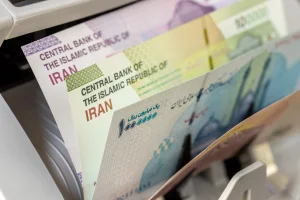
“President Trump has decimated Iran’s economy to a point where the rial has never been weaker and inflation has rarely been higher.”
However, Bessent claimed that the Iranian regime is able to survive because of “the self-deception of fearful nations that still believe accommodating aggression can secure a durable peace.”
This financial aid from other nations is what the U.S. will now target, Bessent stated.
Rial collapses to 2,000,000 to USD. https://t.co/hTv1gKt6Ss
— Mark Dubowitz (@mdubowitz) August 23, 2026
“Iran’s enablers purchase and transport its petroleum. They facilitate the flow of its finances through exchange houses and free trade zones. They welcome Iran’s flights and maintain registries on its behalf. They turn a blind eye to seaborne fuel transfers and the illicit use of their banks, all while concealing the extent of their complicity,” Bessent accused.
He said the U.S. will now pursue a strategy of economic isolation against any nations enabling Tehran to thwart U.S. sanctions.
“The alternative for those who tether themselves to Tehran is the foreclosure of any path to lasting prosperity,” Bessent stated, adding, “And any nation that serves as a financial artery of a withering regime should expect to share in its isolation.”
“Any remaining tie to Tehran will hasten the economic ostracism of countries and entities, whether that tie be purposefully constructed or willfully ignored,” Bessent wrote.
“The world should understand that our objective is to sever every economic lifeline that sustains the tyrannical regime until Tehran stands alone,” he concluded.
The opinion piece by Secretary Bessent comes as the Iranian regime is facing a severe economic crisis, which Iranian President Masoud Pezeshkian called a “full-scale economic, military and security war” with the United States.
Despite U.S. pressure, "we are standing and making efforts to serve the people in the face of this unequal war," Pezeshkian said in a speech broadcast on the state-run IRNA channel.
“I understand we have many problems in society right now. We are trying to prevent these as much as we can,” Pezeshkian added.
Last week, Pezeshkian was reported to have again advocated for a deal based on the Memorandum of Understanding with the U.S., in order to end the economic warfare.
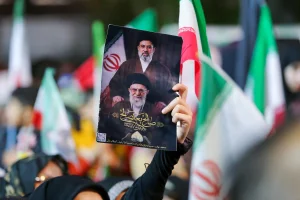
“There is not a single provision in this agreement that amounts to capitulation,” Pezeshkian was reported to have said. “The supreme leader sets the policies, and we will follow that path.”
However, on Monday, Major General Mohsen Rezaei, the new Secretary of the Supreme National Security Council, threatened that Iran would close the Strait of Hormuz to all energy traffic, if the economic war continues.
“If the economic war continues, not a single drop of oil will be exported, neither through the Strait of Hormuz nor from anywhere in the Persian Gulf,” Rezaei wrote on social media. “Iran will regard any country’s participation in or support for America’s economic war against the Iranian people as an act of war.”
The regime-operated Persian Gulf Strait Authority (PGSA) threatened to take action against vessels transiting the Strait outside of the Iranian-controlled route, including “restrictions in their future transits through the Strait of Hormuz, such as fines, seizure, or confiscation.”
You might also like to read this: