After US military strikes rocket launchers in Hormuz, Iran targets American soldiers in Jordan
Strikes reinforce Trump’s threat to destroy any attempts to place new mines in Hormuz Strait







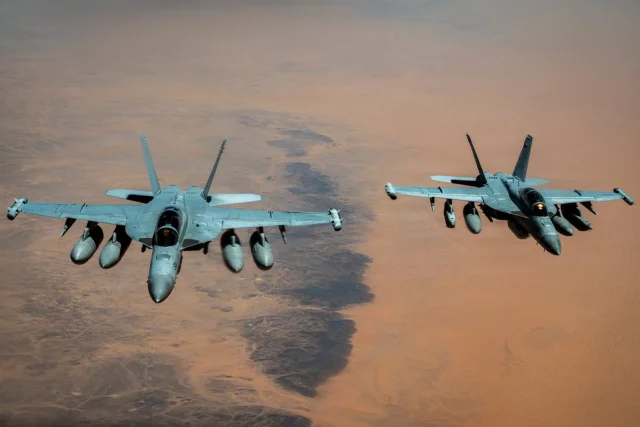
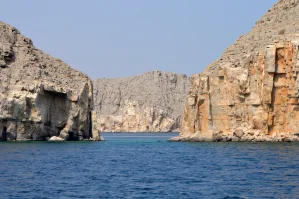
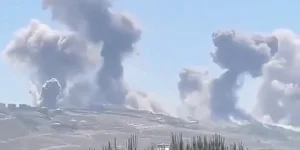
The U.S. military struck two Iranian rocket launchers on Larak Island after identifying Islamic Revolutionary Guard Corps (IRGC) forces preparing to fire at the Strait of Hormuz on Sunday night.
The strikes were reported by Axios and Iranian media, and confirmed by U.S. Central Command (CENTCOM) a short time later.
According to U.S. officials, the strikes came after CENTCOM identified an attempt to launch rockets to deploy additional sea mines into the strait, days after the U.S. military announced that international shipping routes through the waterway had been cleared of mines placed by the IRGC earlier this year.
After Iranian officials denounced the strikes as an “act of aggression,” CENTCOM countered, saying that “U.S. forces took limited, precise action against IRGC minelaying forces posing an imminent threat in the Strait of Hormuz.”
🚫CLAIM: Iran’s Islamic Revolutionary Guard Corps (IRGC) claimed in a recent statement that strikes by U.S. forces to prevent the IRGC from placing mines in the Strait of Hormuz were an “act of aggression.” This claim is absolutely FALSE.
— U.S. Central Command (@CENTCOM) August 31, 2026
✅FACT: U.S. forces took limited,… pic.twitter.com/XLx8xNTHto
CENTCOM noted that the IRGC created the threat by attempting to deploy new mines in the waterway.
In a statement published by the Islamic Republic News Agency, the IRGC said the U.S. strikes “led to the martyrdom and injury of several of our combatants and compatriots,” vowing retaliation.
IRGC spokesperson Gen. Hossein Mohebi called the U.S. strikes a “fatal mistake by the Trump regime during the economic war,” warning that the enemy would soon suffer military and economic consequences.
The IRGC conducted retaliatory attacks on U.S. positions in Jordan, launching ballistic missiles and drones at the King Hussein and Al-Azraq joint air bases in the country, which it claimed were “smashed” with “heavy damages.”
The IRGC published video of the launches on the Iranian Student’s News Agency (ISNA), a government affiliated agency.
تصاویری از لحظه شلیک پهپادها و موشکهای بالستیک در عملیات «تنبیه متجا،وز» با رمز «یا محمدبن عبدالله(ص)» | هدف این عملیات زیرساختهای فنی و تعمیراتی و محل استقرار جنگندههای دشمن در دو پایگاه هوایی آمریکایی «ملک حسین» و «الازرق» در اردن بود https://t.co/Q0xPTdNnAG pic.twitter.com/kwREIGpEu9
— خبرگزاری ایسنا (@isna_farsi) August 31, 2026
The U.S. military did not report any damage from the attacks, while Jordan reported that it had intercepted the ballistic missiles.
“Air defense systems intercepted eight missiles that breached the kingdom’s airspace at dawn today, Monday,” the Jordanian military said in a statement early on Monday morning.
Iranian media also claimed that IRGC forces carried out attacks on the United Arab Emirates' Al Minhad Air Base early Monday morning, saying the attacks targeted U.S. forces, including helicopters, at that location.
America’s “secure” Al Minhad base in the #UAE just got a visit from Iranian attack drones.#Iran #Trump #War pic.twitter.com/0YK5BmVPFX
— Iran in Mumbai (@IRANinMumbai) August 31, 2026
The UAE Defense Ministry said it had downed an Iranian drone over the Persian Gulf, but did not report any impacts.
The strikes by U.S. forces mark the first confirmed military action since late July, when CENTCOM forces targeted several IRGC sites used for surveillance and attack capabilities.
Last week, when announcing that the Strait of Hormuz had been cleared from the mines in international shipping lanes, U.S. President Donald Trump warned that “any ship or boat placing new mines will be immediately and systematically destroyed.”
“There is a Zero Tolerance policy on mine placement in full force and effect,” Trump added.
Iranian media disputed CENTCOM’s claim that it had cleared all mines from the Hormuz, reporting on Monday that a supertanker attempting to depart through the southern lane, near the coast of Oman, “was struck by two sea mines, resulting in a massive fire and complete halt.”
At the time of publication, the claim had not been confirmed by any of the agencies monitoring sea traffic, including the United Kingdom Maritime Trade Operations (UKMTO) center.
Early Monday morning, Trump uploaded an AI-generated video depicting a strike on Kharg Island, with the caption, “Kharg Island being blown to smithereens!!!”
President Trump did not connect the video to the CENTCOM strikes on Larak Island.
You might also like to read this: