How reality keeps rewriting the script for Israeli hit series 'Tehran'



When Israeli Dana Eden died unexpectedly while in Athens, Greece, the cast and crew of "Tehran" lost more than an executive producer. They lost the person who had insisted, against considerable skepticism, that an Israeli espionage story could find a global audience. She was right, and the fourth season they are now completing will serve as both a continuation and a quiet monument to her vision.
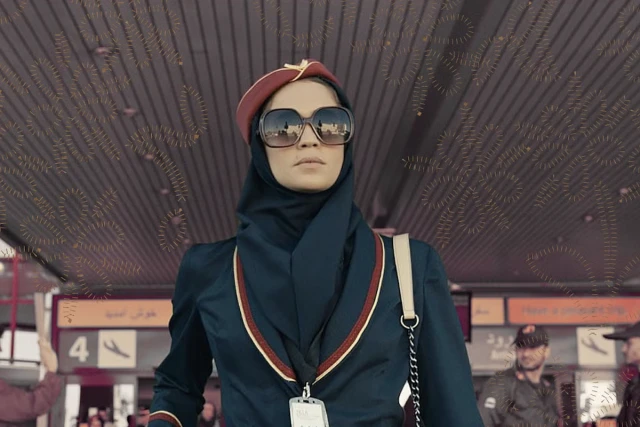
The show that Eden helped build has always operated in a strange relationship with reality. In its early seasons, "Tehran" asked viewers to suspend disbelief in service of taut, inventive fiction – a Mossad agent named Tamar Rabinyan, deep cover operations, the cat-and-mouse logic of espionage drama.
Then the real world began writing its own scripts. The Israeli strike on Tehran on Feb. 28 that killed Ali Khamenei, the September 2024 pager attacks that gutted Hezbollah's command structure from the inside – events so operationally audacious they would have been flagged as implausible in any writers' room. What was once a thriller straining against the edges of imagination now occasionally seems to be chasing headlines.
The show's structure has always been unusual: a partnership between Kan – Israel's public broadcaster – and Apple TV+, which controls global distribution. That marriage gave "Tehran" international reach and genuine prestige. It also introduced layers of oversight that the production has had to navigate carefully. Wartime political sensitivities now travel upward through corporate hierarchies, and decisions that might once have been creative calls now require a longer approval chain. The broadcast date for the new season remains unset.
"It's unbelievable," said a senior member of the production. "From the very beginning, 'Tehran' has succeeded globally against all odds, even though Israel has effectively become a pariah in parts of the international industry. Once again, most things are working against us, and once again we believe we'll prevail."
That defiance has a particular weight now. The production team is carrying its grief forward into the work – finishing a season that Eden shaped, in a world she would have perhaps found both vindicating and heartbreaking. For those still on set, the story of Tamar Rabinyan has become inseparable from the story of the woman who believed it was worth telling.
On the night of Feb. 15, Dana Eden was found dead in her hotel room in Athens. What followed was a second tragedy. Within hours of her death becoming known, Israeli websites began publishing what was being reported as a nationalist murder that many believed could be related to Iran, as tensions were mounting for a new war between Israel and the Islamic Republic.
Some were even reporting that signs of violence had been found on her body and attributed to unnamed sources in Greece. The logic of the clickbait was almost mechanical: an Israeli producer dies abroad while filming a series about covert assassinations. The headline seemingly wrote itself. It also happened to be false.
Greek outlets picked up the Israeli reports and amplified them, with speculation bouncing between the media in both countries until facts emerged. The people closest to Eden were simultaneously managing their grief and were subjected to lies spreading like a wildfire they couldn’t control.
"Rumors about what happened in Athens spread incredibly fast," said Shula Spiegel, Eden's production partner and close friend. "We had absolutely no control over it. While we were dealing with the tragedy itself, people were publishing lies."
Kan and the production team moved to contain the damage. A statement was issued. The Greek police, Spiegel said, had handled the matter properly. Eden was brought home, but the noise kept coming in the form of questions, speculation, and false narratives, even after the facts had been stated plainly.
"I still can't bring myself to say 'may her memory be a blessing,'" Spiegel said. "The pain is enormous. What happened was terrible enough without all the nonsense that followed."
In Athens, her death was registered as a genuine loss in an industry that had come to know her name through proximity to something unexpected. A television producer there, speaking anonymously, recalled the disbelief that accompanied "Tehran's" arrival on a global platform.
"Dana, of course, was completely unknown in Greece until a few years ago, but 'Tehran' was filmed here and somehow it ended up on Apple TV, who would have thought? Do you know how many projects I've tried to sell to Apple over the years? It's almost impossible to get them interested. Since then, Dana Eden became a name people here recognized."
He paused with grief, adding, "There was real sadness, because we got the impression that the success may also have been difficult for her; she had everything, enormous success, a series at its peak, and eventually she found her death on the set of the dream she built; it's so sad."
Long before Apple came calling, there was a mortgage and bills to pay. Shula Spiegel had put her home on the line to keep the first season filming in Greece, a bet on a project that had not yet proven itself to anyone outside the people making it. Dana Eden had always believed "Tehran" was worth that kind of risk. According to Ynet News, it was considered to be her professional "holy grail" – the work everything else had been building toward.
Her father, director Yoram Levy, founded Dana Productions when Eden was a baby. She grew up inside the industry, studied at the prestigious Thelma Yellin High School of the Arts, and joined her father's company at 23. A year later, she had already produced her first series, "Dreams of Youth." When Parkinson's disease gradually took her father out of the day-to-day, she stepped in and took over.
In 2007, she found a different kind of partnership. She and Shula Spiegel formalized what would become one of Israeli television's most productive collaborations, dividing the work along natural lines: Eden was drawn to drama, while Spiegel anchored the documentary slate and kept the business running. Together they accumulated a long list of Israeli hits, but nothing on the scale of what came next.
A vortex of talent joined Eden around the table, including writers Moshe Zonder and Maor Cohen, and director Daniel Syrkin. The fourth season added director Oded Davidoff to that core team. But the original instinct – that this particular Israeli story could travel – was Eden’s. Apple eventually agreed.
Ynet reported that Spiegel brought the entire crew to Eden’s funeral in Israel. Filming was paused for three days before production resumed. “Everyone returned to work despite the difficulties,” she said. “I truly believe this will be a wonderful season. Honestly, just the challenges we’ve faced over the years could themselves make a dramatic series.”
Fiction has a shelf life when reality keeps expiring it.
"Tehran" was built around a world that no longer exists. The Islamic Republic under Khamenei provided the series with its architecture of menace – a coherent antagonist, a system of power with recognizable faces and logic. That scaffolding has now partially collapsed in the real world, and the writers are left holding scripts drafted against a geopolitical backdrop that has since been redrawn.
The series has always taken liberties with reality, but the deeper problem is when covert operations, targeted assassinations, and cyberwarfare are unfolding in real life at a pace that outpaces the production cycle, storylines risk arriving on screen already feeling outdated and irrelevant. What feels daring in the writers' room may feel mundane by the time the viewers watch it.
When the system is, in reality, visibly fractured, the drama has to find a new footing, including new sources of danger and new power structures to push against. Whether "Tehran" pivots or absorbs the shift remains to be seen. What seems clear is that the writers' room is no longer the most inventive place in the story.
"Apple is aware of the debate, but the production’s complexity means decisions will take time. Even if we rewrite the script tomorrow, reality might overtake us again a few hours later. So for now, we’re waiting. Every day of filming is very expensive. When you take into account all the costs and investors involved, this is certainly one of the most expensive series ever made in Israel,” said Roni Perry of Kan.
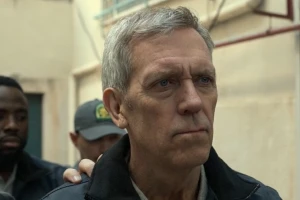
Hugh Laurie, a well-known actor best known for his leading role in "House, M.D.," and current cast member of "Tehran," came under scrutiny for writing a tribute post on 𝕏, honoring Eden.
He says the big question is how to navigate the constant changes dictated by the current war and reach a broad audience without alienating them. Inside the production of “Tehran,” the goal remains simple.
“In Dana’s spirit, we will make the best content we possibly can,” members of the team said. “The rest is beyond our control. That’s certainly what she would have wanted most.”
You might also like to read this: