EU seeks moratorium on strikes against Middle East water, energy infrastructure as Iran war escalates



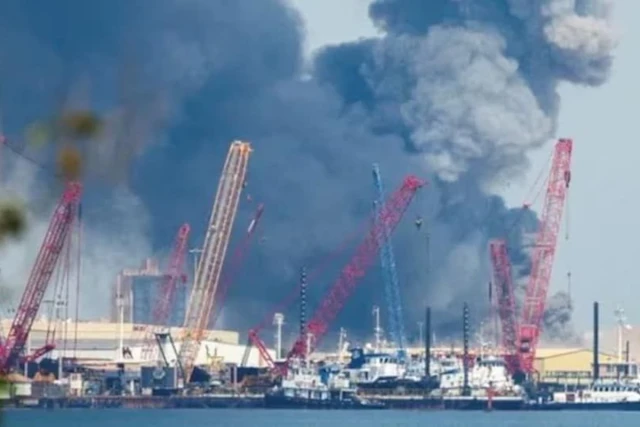
European Union (EU) leaders on Thursday demanded a moratorium on military strikes targeting critical water and energy infrastructure across the Middle East, warning that further attacks could deepen the regional crisis and threaten global stability.
"The European Council calls for de-escalation and maximum restraint, the protection of civilians and civilian infrastructure and full respect of international law by all parties," the leaders of the EU's 27 countries jointly announced in a written statement after a top-level meeting in Brussels, Belgium.
"In this regard, it calls for a moratorium on strikes against energy and water facilities," the European leaders added. They also called for boosting security for the European bloc’s current Red Sea naval mission as well as the counterpiracy naval mission in the Horn of Africa.
The European statement comes amid growing international concerns that the Iran war will have negative implications for the global economy.
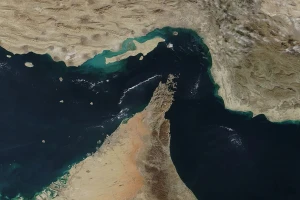
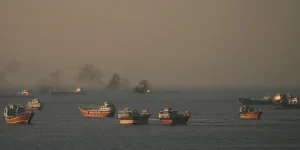
The Islamic Republic of Iran has declared a blockade of the strategically important Strait of Hormuz, where some 20% of the world’s energy supplies pass through.
U.S. President Donald Trump has vowed to reopen and secure the strait, signaling earlier this week that he is seeing an international coalition to do so.
“I’m demanding that these countries come in and protect their own territory, because it is their own territory,” Trump stated.
“We are talking to other countries about policing the straits. It will be nice to have other countries policing with us. We will help. We are getting a good response,” he added.
Trump also warned that NATO would face a “very bad” future unless the member states took action.
“It’s only appropriate that people who are the beneficiaries of the Strait will help to make sure that nothing bad happens there,” the U.S. president said, adding: “If there’s no response or if it’s a negative response, I think it will be very bad for the future of NATO.”
EU member states are considering dispatching naval reinforcement to the already significant U.S. naval presence in the region. Its leaders are calling for strengthening the Red Sea and Horn of Africa missions "with more assets, in line with their respective mandates."
The European leaders also welcomed "increased efforts announced by Member States, including through strengthened coordination with partners in the region, to ensure freedom of navigation in the Strait of Hormuz, once the conditions are met."
Middle East experts long warned that Tehran might at some point move to restrict traffic through the Strait of Hormuz to exert economic pressure on the West – a chokepoint through which roughly 20 % of the world’s oil passes. But analysts also noted such a move would carry high costs for Iran itself, since a large share of its oil exports – particularly to China – depends on passage through the same waterway.
China, which has close commercial ties with Iran, has condemned the U.S. and Israeli strikes on Iran. While officially backing Tehran, the Chinese government has also signaled its opposition to the closure of the Strait of Hormuz, as it hurts its own economy.
You might also like to read this: