Los ex primeros ministros israelíes Bennett y Lapid anuncian la fusión de sus partidos de cara a las elecciones al Knesset





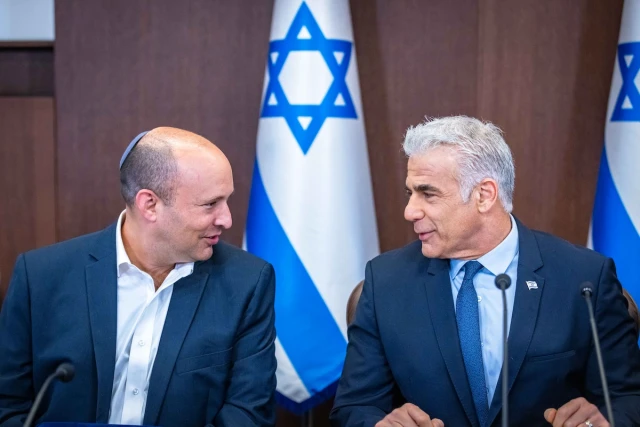
Los ex primeros ministros Naftali Bennett y Yair Lapid anunciaron el domingo que fusionarán sus partidos en una lista unificada de cara a las próximas elecciones al Knesset, que deben celebrarse a más tardar en octubre.
Los contornos de la fusión se hicieron más evidentes el domingo por la tarde, cuando la oficina de Bennett comunicó que él y Lapid planean «anunciar el primer paso en el proceso de sanación del Estado de Israel: la fusión del partido Yesh Atid y el partido Bennett 2026 en un partido unificado liderado por el ex primer ministro Naftali Bennett».
«Esta medida une al “bloque reformista”, pone fin a las luchas internas y permite que todos los esfuerzos se dediquen a lograr una victoria decisiva en las próximas elecciones y a conducir a Israel hacia la reforma necesaria».
El anuncio se produjo apenas unos días después de que una encuesta publicada por el sitio web de noticias israelí Maariv mostrara que un partido liderado por Bennett tendría aproximadamente el mismo nivel de apoyo que el partido Likud, liderado por el actual primer ministro Benjamin Netanyahu. La misma encuesta pronosticaba siete escaños para Yesh Atid, de Lapid, lo que supone una fuerte caída respecto a los 24 que obtuvo en las elecciones al Knesset de 2022.
Se dice que Bennett mantiene conversaciones con otros líderes políticos, incluido el líder del partido Yashar, el exjefe del Estado Mayor de las FDI, Gadi Eisenkot.
La campaña de Bennett se ha centrado hasta ahora en la promesa de crear consenso y promover políticas destinadas a mejorar la vida cotidiana de los israelíes. Su enfoque respecto a cuestiones a más largo plazo, en las que hay menos acuerdo, sigue sin estar tan claramente definido.
Nacido en la ciudad norteña de Haifa, Bennett es hijo de inmigrantes judíos estadounidenses procedentes de San Francisco y pasó parte de su juventud en Montreal (Canadá), así como en Teaneck (Nueva Jersey), debido al trabajo de su padre.
A los 18 años, Bennett se alistó en las Fuerzas de Defensa de Israel, donde sirvió en las unidades de élite Sayeret Matkal y Maglan. Ascendió en el escalafón hasta convertirse en comandante de una pequeña unidad y dirigió varias operaciones de combate durante su servicio, antes de pasar a la reserva y emprender una carrera civil en el sector del software y la informática.
Esta iniciativa resultó ser muy fructífera y se convirtió en multimillonario antes de cumplir los 35 años.
En 2006, Bennett pasó a ser jefe de gabinete del entonces primer ministro Netanyahu y permaneció en ese cargo hasta 2008. En 2010, asumió la dirección del Consejo Yesha, el organismo que supervisa los asuntos civiles de las comunidades judías en Judea y Samaria. En 2012, fue elegido líder del partido Hogar Judío, que representaba a esta comunidad en la política. El partido obtuvo 12 escaños en las elecciones de 2013 bajo el liderazgo de Bennett.
Como parte del acuerdo que incorporó al partido Hogar Judío al gobierno de coalición liderado por Benjamin Netanyahu en la XIX Knesset, Bennett fue nombrado ministro de Economía y Servicios Religiosos. En 2015, fue nombrado posteriormente ministro de Educación.
Sirvió bajo el mandato de Netanyahu de 2013 a 2015, y tras las elecciones de la primavera de 2015 fue nombrado ministro de Educación, cargo que ocupó hasta las elecciones a la Knesset de abril de 2019, en las que perdió su escaño. Bennett regresó a la Knesset unos meses más tarde, tras las elecciones anticipadas de septiembre de 2019, esta vez con el partido Nueva Derecha. Fue nombrado ministro de Defensa y ocupó el cargo durante varios meses antes de dimitir antes de otra elección, en la que lideró un nuevo partido, Yamina, que obtuvo seis escaños.
En las siguientes elecciones, celebradas en junio de 2021, Yamina obtuvo siete escaños, y Bennett llegó a un acuerdo con Lapid para alternarse en el cargo de primer ministro: Bennett ocuparía el cargo en primer lugar hasta 2023, momento en el que se lo cedería a Lapid para que este completara los dos años restantes hasta 2025.
La coalición de Bennett perdió la mayoría necesaria para gobernar tras la deserción de miembros de su propio partido y de otros socios de la coalición.
En junio de 2022, apenas un año después de iniciar su mandato, anunció que solicitaría una votación para disolver la Knesset y dimitiría como primer ministro tras su disolución, quedando Lapid como su sucesor.
Unos días más tarde, el 29 de junio, Bennett anunció que se tomaba un descanso de la política y que no se presentaría a la reelección en las siguientes elecciones que se celebrarían más adelante ese mismo año.
Este descanso terminó el año pasado, en abril de 2025, cuando Bennett anunció que iba a formar un nuevo partido y que se presentaría a las próximas elecciones.
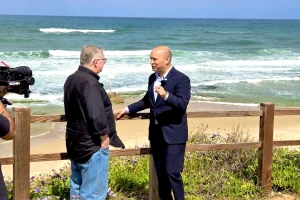
El redactor jefe de ALL ISRAEL NEWS y presentador de THE ROSENBERG REPORT, Joel Rosenberg, se reunió con Bennett la semana pasada para una entrevista en Tel Aviv que se emitirá en los próximos episodios del programa, que sale al aire los jueves a las 9 p. m. hora del Este en TBN, la cadena de televisión cristiana más vista de Estados Unidos.
«Mi intención es ganar, convertirme en el próximo primer ministro de Israel, unificar el país y, a continuación, traer la mejor era que Israel haya visto jamás en cuanto a crecimiento, seguridad y unidad», declaró Bennett a Rosenberg.
Cree que los israelíes anhelan la unidad política, social y cultural tras la guerra y unas divisiones profundas y traumáticas, y que él es el único líder capaz de traer esa unidad, con un historial que lo demuestra.
Bennett afirmó que se presenta para propiciar «un renacimiento israelí» y le dijo a Rosenberg que su objetivo es llevar a Israel a convertirse en «La Nación de las Soluciones», un país cuyas innovaciones tecnológicas podrían resolver muchos problemas globales.
You might also like to read this: