From Caesar’s sword to Yeshua’s word: Faith at the edge of empire
Part Nine of the 'Real People of the New Covenant' series



This article is part of Real People of the New Covenant: Lives Behind the Names, a series by ALL ISRAEL NEWS that contextualizes the historical figures of the biblical narrative. Exploring the history and archaeology of the Land offers an objective framework for reading the text, grounding distant figures within their concrete environment.
The people considered here did not all encounter Yeshua in the same way. The centurion of Capernaum appears in the setting of Yeshua’s Galilean ministry. Sha’ul encounters the risen Lord on the road to Damascus. Cornelius, who does not meet Yeshua during His earthly ministry, encounters the significance of His work through Shimon Peter and the community that bears witness to Him.
This distinction is important in our approach. Their stories show how healing, testimony, and faith could cross boundaries created by military authority, ethnicity, citizenship, and imperial administration.
In Rome’s shadow: local rule and imperial authority
The first-century world was shaped by several forms of power. Rome exercised imperial authority, but local rulers and client kingdoms governed much of daily life. Galilee was ruled by Herod Antipas, while Judaea and Caesarea were more directly connected to Roman provincial administration.
This political setting was not uniform. Not every military figure belonged to the Roman army, and not every encounter with Roman power took place within a Roman institution. Local forces, royal administrations, Roman officials, Jewish communal leaders, and household networks all formed part of the environment in which Yeshua’s ministry unfolded.
The military presence in the Land was likewise complex. Roman power could operate through local rulers and allied forces, while direct military presence varied according to place and period. Galilee remained under Herod Antipas and within Rome’s wider sphere of influence, but long-term Roman garrisons do not appear to have been established there until around 120 CE. Direct contact with Roman troops, as opposed to local Herodian forces, may therefore have been less common in daily Galilean life during Yeshua’s ministry, even though imperial power continued to shape the region’s political and military environment.
The stories of the centurion of Capernaum, Sha’ul, and Cornelius must therefore be read within a world where imperial, local, Jewish, and household authorities overlapped.
The centurion of Capernaum: military authority before Yeshua’s word
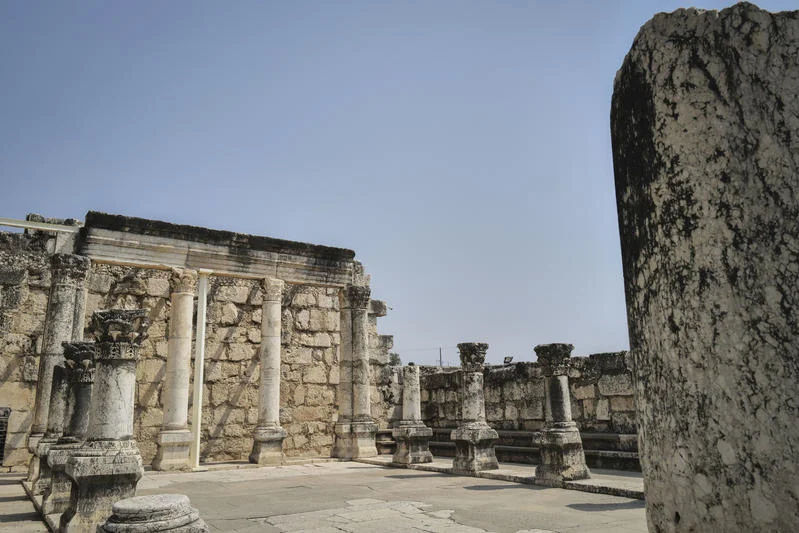
The Gospels describe a centurion whose servant was seriously ill. In Matthew, the centurion approaches Yeshua directly (Matthew 8:5-13). In Luke, Jewish elders and later the centurion’s friends convey his request (Luke 7:1-10).
The narrative places a man associated with military authority before Yeshua in a posture of dependence. The centurion understands command and recognizes that Yeshua’s authority does not depend on physical presence. He trusts that a word spoken at a distance will be enough to restore his servant.
Luke also records that the local Jewish elders regarded him favorably, saying that he loved their nation and had built their synagogue. This detail suggests a relationship between the centurion and the local Jewish community, without removing the social and political inequalities associated with military power.
His exact institutional identity, however, remains uncertain. Although he is often called a Roman centurion, the Gospel does not identify the force to which he belonged. The Greek term translated as “centurion,” hekatontarchos, identifies him as a centurion-level commander but does not by itself establish whether he served in a Roman or Herodian force. Some scholars therefore connect the figure with Herodian forces rather than with a Roman unit.
For this reason, it may be preferable to refer to him simply as “the centurion of Capernaum” rather than “the Roman centurion of Capernaum.” The Gospel presents him as a military figure, but it does not make clear whether he belonged to a Roman or Herodian force.
The story’s central contrast is not simply between Rome and Judaism. It is between authority exercised through rank and authority recognized through trust. The centurion’s humility becomes the means through which he perceives the power of Yeshua’s word.
Sha’ul of Tarsus: a Jewish witness in the Roman world
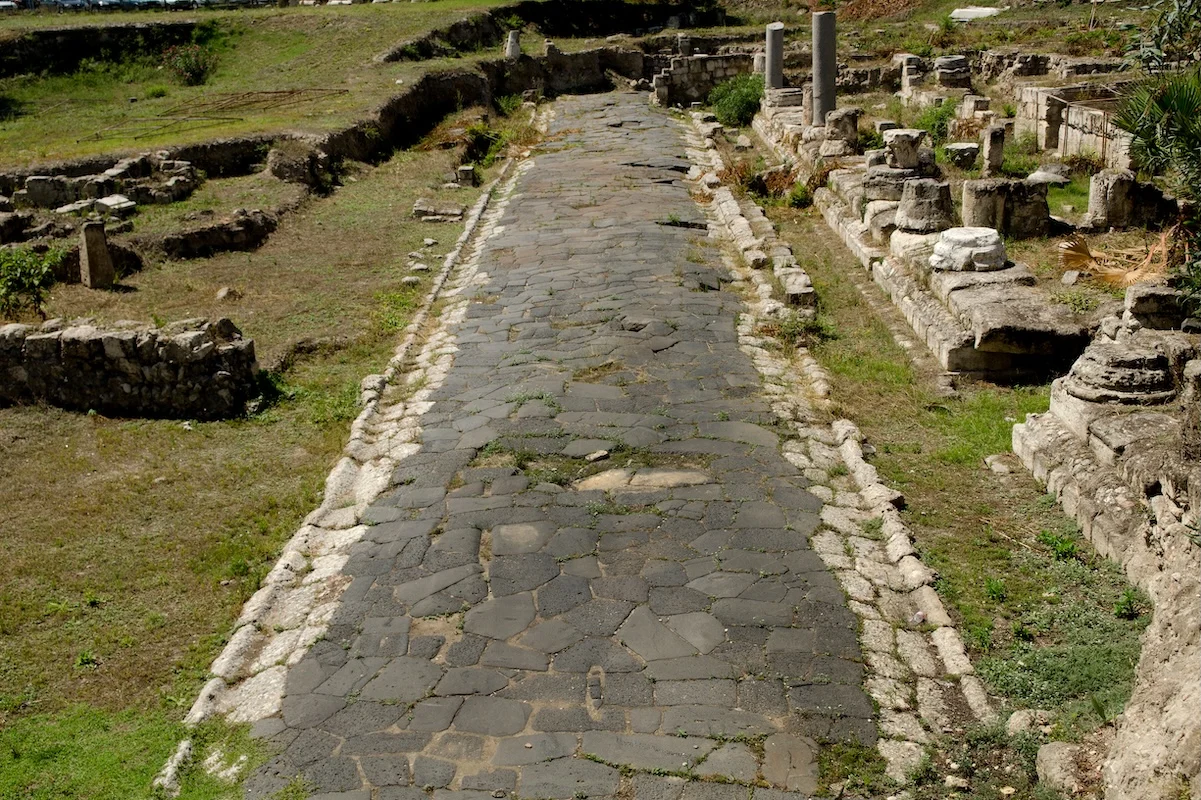
Sha’ul enters the story from a different direction. He does not appear among the crowds gathered around Yeshua during His earthly ministry. Acts first presents him as a persecutor of Yeshua’s followers and then as a man confronted by the risen Lord on the road to Damascus (Acts 9:1-19).
His encounter with Yeshua is therefore direct, but it belongs to the period after the resurrection. The persecutor becomes a witness, and his life takes a new direction through an encounter that he understands as a divine call.
Sha’ul’s identity was shaped by several worlds. He was Jewish, formed by Israel’s Scriptures and traditions. In Jerusalem, he was educated at the feet of Gamaliel, a respected Pharisaic teacher, and he described himself as a Pharisee. He also identified Tarsus in Cilicia as his place of origin. Acts also identifies him as Paul, the name used throughout his letters and in the later sections of the book. His Jewish formation, Tarsian origins, and place within the Roman legal world placed him within overlapping cultural, legal, and political spheres. Acts presents him as a Roman citizen, a status that becomes significant when Roman authorities prepare to flog him (Acts 22:22-29).
While Paul’s own letters do not explicitly mention his Roman citizenship, the Book of Acts highlights it at key moments. Scholars discuss both its historical context – including the possibility that Paul inherited the status through an earlier generation of freedmen – and its importance within Acts, where citizenship becomes relevant to his encounters with Roman legal authorities.
The episode nevertheless illustrates the uneven character of Roman law. Roman authorities could subject individuals to coercion, while citizenship sometimes offered limited legal protections to those who possessed it. Paul’s citizenship does not place him beyond suffering or danger. It becomes one element within a larger calling.
His later ministry takes place across the cities and roads of the eastern Mediterranean. He speaks in synagogues, households, public spaces, and places of detention. His work reaches communities shaped by Greek language, Roman law, local customs, and Jewish Scripture.
Paul’s Jewish identity remained central as his ministry carried him through the wider Roman world. His story shows how a Jewish witness to Yeshua could move through imperial networks while remaining deeply rooted in the Scriptures and history of Israel.
Cornelius of Caesarea: the Gospel across boundaries
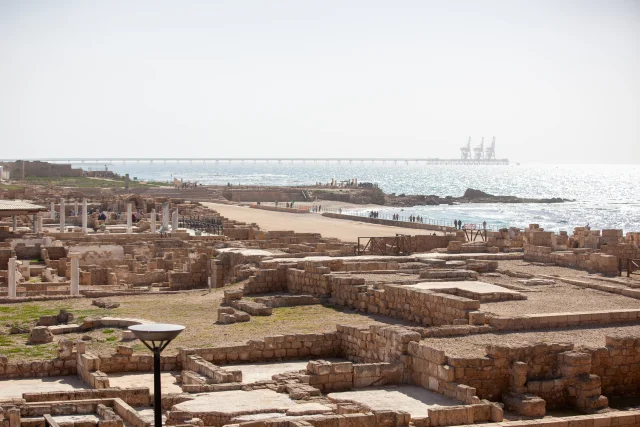
Cornelius represents a further widening of the story. Acts introduces him as a centurion in Caesarea, associated with what the text calls the Italian Cohort (Acts 10:1-8). Caesarea was a major coastal city and the administrative capital of the Roman province of Judaea, where the governor’s residence brought Jewish, Greek, Roman, and local populations into regular contact.
The identity of the Italian Cohort and the historical circumstances of its presence in Caesarea remain debated. Acts presents Cornelius as a Roman military officer, but the unit’s precise history cannot be reconstructed with complete certainty.
Acts emphasizes more than Cornelius’ military position. He is described as devout, prayerful, and generous toward the people, a man who reveres the God of Israel. He also exercises influence within his household. Yet he remains a Gentile and a Roman officer standing outside boundaries that Peter had previously regarded as decisive. The Spirit’s coming upon Cornelius and his household, followed by their baptism, becomes a significant early sign of Gentile inclusion among Yeshua’s followers.
Cornelius does not meet Yeshua during His earthly ministry. Instead, visions prepare him to receive the message about Yeshua, while Shimon Peter is led to his home to proclaim it. Through this encounter, Peter’s own understanding changes. He recognizes that God does not show partiality and that the message about Yeshua is not confined to one ethnic or social group (Acts 10:34-43).
The episode is therefore not simply the conversion of a Roman officer. It is also a story about Peter’s transformation and the reception of Gentiles into the community that bears witness to Yeshua. The Cornelius narrative marks a turning point in the early community’s recognition of God’s work among the Gentiles, a development reinforced by the debate and testimony recorded in Acts 11.
Cornelius should not be presented as evidence that the Roman army as an institution had embraced faith in Yeshua. He was an individual officer whose household became part of a decisive moment in which God’s work was recognized as reaching beyond established ethnic and social divisions.
Lives behind the names: faith at a crossroads
Taken together, these stories bring the purpose of Real People of the New Covenant: Lives Behind the Names into focus. Behind familiar names stand people who lived within real communities, households, institutions, and systems of power. Their lives were shaped by these settings, yet their encounters with Yeshua’s work changed how they understood their place within them.
The centurion stands at the intersection of military rank and humble trust. Sha’ul moves through the roads and legal structures of the Roman world while remaining rooted in Jewish identity and the knowledge of Scripture. Cornelius becomes part of the moment when Shimon Peter must recognize that God’s work reaches beyond boundaries he had once regarded as decisive.
These encounters do not erase the identities of the people involved. The centurion remains associated with military authority. Sha’ul remains rooted in Israel’s Scriptures and Jewish heritage. Cornelius remains a Roman officer with responsibilities toward his household. Yet each story reveals authority, responsibility, and belonging in a new light.
For readers today, their experiences raise a difficult but enduring question: what does it mean to follow Yeshua when faith brings us into tension with the expectations of our social, cultural, professional, or political world? Faith may not require us to abandon every part of our history, but it can change how we exercise authority, serve others, and understand the communities to which we belong.
Across this series, the biblical figures considered here have emerged not as isolated names, but as people whose lives unfolded in particular places and circumstances. Their stories have taken us through villages, courts, households, roads, synagogues, ports, and centers of power. In each setting, history provides the context, archaeology helps recover the world, and the biblical texts preserve the witness.
Read together, these sources reveal real lives behind the names, standing at the meeting point of faith, power, suffering, law, and hope.
Their stories remind us that the history of the New Covenant is not only the history of events, but also the history of people whose encounters with Yeshua reshaped the worlds they inhabited.
Real People of the New Covenant Series
Part One: Zeḥaryah and Elisheva in the Book of Luke reveal Temple-era priestly life
Part Two: Yoḥanan the Baptist – the dissident of the priestly elite
Part Three: Miryam and Yosef: From Nazareth’s workshops to the ministry of Yeshua
Part Four: Maritime partners of Galilee: Inside the world of the first 'fishers of men'
Part Five: The toll collectors: Yeshua’s call in the heart of Galilee’s tax system
Part Six: Elite scholars of Jerusalem: Nakdimon and Yosef of Arimathea in the wake of Yeshua
Part Seven: Patronesses of Galilee: Yohana, Miryam of Magdala, and the women who followed Yeshua
Part Eight: Bethany: Elʿazar, Marta and Miryam – a milestone in Yeshua’s ministry
You might also like to read this: