Behind Israel’s F-15 strikes on Iran: Technical crews powering the IAF’s mission



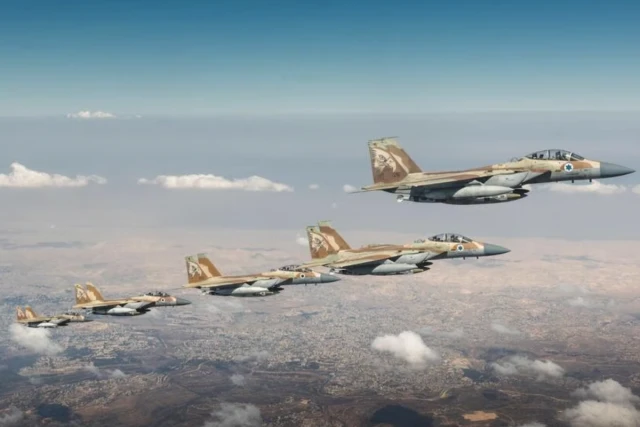
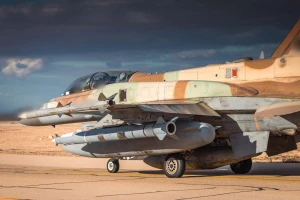
Technical crews of the Spearhead Squadron at Israel's Tel Nof Airbase play a crucial role in enabling the Israeli Air Force (IAF) F-15 fighter jets to strike targets across the Islamic Republic of Iran. While the 40-year-old F-15s lack the stealth capabilities of fifth-generation F-35 fighter jets, they remain a significant offensive platform in the IAF, with a maximum range of 3,459 kilometers (2,150 miles).
The F-15 also has a climb rate of 254 meters per second and is capable of carrying larger payloads than the F-35. The IAF currently operates about 66 F-15 fighters, compared with around 55 F-35 jets, in addition to nearly 200 F-16 fighter jets.
“This aircraft may not be new, but it definitely does the job,” explained Capt. Y. from the technical branch, referring to the F-15 jet. “Each aircraft has a tail number, and each aircraft also has a name. For example, ‘Ayelet Hashahar.’ It has its own identity and character,” he added.
The squadron’s weapons officer, Lt. B., noted the technical crews' close relationships with the F-15 jets.
“Every aircraft has its own soul. I’m not exaggerating,” he explained.
“They don’t behave the same way. We even have a slogan: ‘A machine with a soul.’ It’s the same model from the same manufacturer, but each one is different,” Lt. B. continued. “We live these aircraft, breathe them. We go to sleep with them and wake up with them.”
Capt. Y. explained, “We’re very connected to the aircraft in this squadron. This isn’t a garage where different cars arrive every day, one day a Subaru and Toyota and the next day an Audi or Peugeot. I live and breathe our aircraft day after day. They don’t change.”
“One aircraft is known for a certain type of malfunction, while the one next to it, from the same model and year, has completely different issues,” he said.
While IAF pilots typically receive most of the attention, its skilled technical crews keep the aircraft going mission after mission.
“We know the history of every aircraft,” Lt. B. said. “And we appreciate that history.”
The technical team enables the Israeli Air Force to conduct multiple sorties with the same aircraft due to very short turnaround times.
“It’s something you have to see to understand,” Capt. Y. said. “During the war, the turnaround times are extremely short between sorties. The pace is high and everything must happen exactly on schedule.”
“It’s like an orchestra playing in harmony around the aircraft,” he said, noting that the technicians focus on the overall condition of each aircraft, down to the tiny details.
“A tiny crack is potential trouble,” Capt. Y. said. “With a crack, you don’t fly to Isfahan. Not even to Ramat Gan. An aircraft with a crack is not allowed to take off.”
The Israeli Air Force has not lost a single manned aircraft in Iran to date, despite conducting an unprecedented number of sorties over hostile territory. This reflects the skill of some of the world’s most capable and experienced combat pilots and technical crews.
The opening strike of the joint U.S.–Israeli operation, Israel’s Operation Roaring Lion, on Feb. 28 involved some 200 IAF aircraft striking approximately 500 targets across Iran. The attacks reportedly included the elimination of Iranian Supreme Leader Ali Khamenei and around 40 other senior Iranian officials.
You might also like to read this: