Outrage in the Gulf: Saudi Arabia threatens 'military' response to Iran's strikes on energy facilities
UAE advisor warns regime attacks are driving Gulf toward Israel






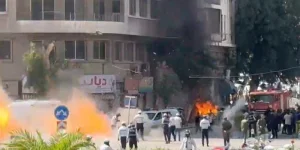
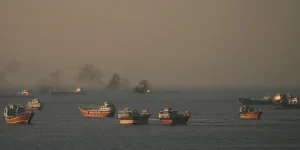
The Gulf countries and other Arab states reacted furiously after the Iranian regime attacked energy facilities in Qatar, the UAE, Saudi Arabia, and Kuwait in response to Israeli strikes targeting its South Pars gas field on Wednesday.
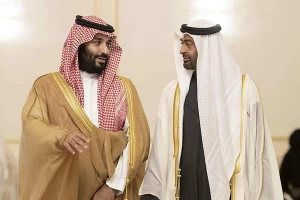
Saudi Foreign Minister Prince Faisal bin Farhan warned Thursday that Iran had miscalculated and its attacks on Gulf states would only increase its isolation, warning that military options were on the table.
Minister bin Farhan stated that despite Iranian denials of purposefully targeting its neighbors, the Kingdom of Saudi Arabia reserves the right to respond. “We will resort to all means to stop Iranian attacks,” bin Farhan stated.
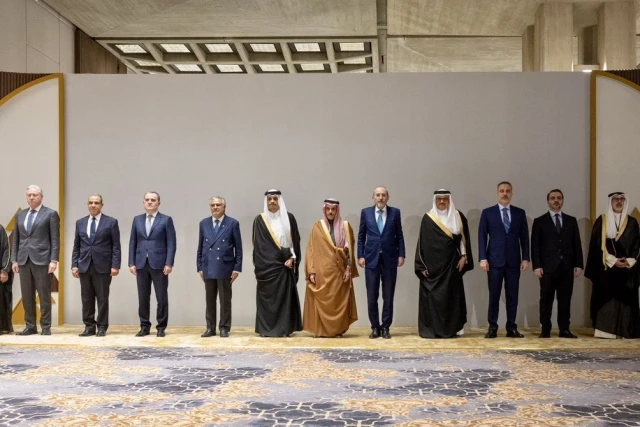
#Riyadh | Foreign Minister HH Prince @FaisalbinFarhan participated in the consultative ministerial meeting with the foreign ministers and representatives of the Republic of Azerbaijan, the Hashemite Kingdom of Jordan, the United Arab Emirates, the Kingdom of Bahrain, the Islamic… pic.twitter.com/bQCkHlRUBK
— Foreign Ministry 🇸🇦 (@KSAmofaEN) March 19, 2026
“If Iran thinks that the Gulf states are unable to respond, then its calculations are wrong, and Iran is going too far in attacking its neighbors and at the same time asking for solidarity with it,” he continued.
Prince Faisal bin Farhan further emphasized that Iran’s attacks on its neighbors would have consequences, saying that there is coordination among the Gulf Cooperation Council countries to confront Iranian aggression, while noting that “Iran attacked civilian targets in the Gulf states at the beginning of the war.”
The Gulf Cooperation Council convened in the Saudi capital of Riyadh on Thursday, which was targeted by Iranian ballistic missiles as the meeting was being conducted. Around the same time, Iran also launched new attacks on Gulf states, including the UAE, after striking the Qatari Ras Laffan Industrial City gas facility in a first response.
Prince Faisal strongly criticized Iran’s attacks on the capital while the meeting was happening. “I cannot see it as coincidental,” bin Farhan said, noting the targeting of Riyadh while a number of diplomats were meeting is “the clearest signal of how Iran feels about diplomacy.”
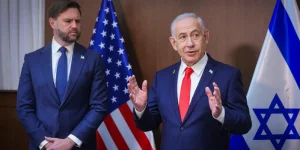
🇸🇦🇺🇸🇮🇱🇮🇷 Officially the Arab countries are threatening that they are going to join Israel and US in the war against Iran
— The Daily News (@DailyNewsJustIn) March 19, 2026
After weeks of Iranian attacks, countries in the Gulf say their patience is wearing thin.
Saudi Arabia's FM warned that if strikes on GCC neighbours… pic.twitter.com/VSiwQhDAZo
“As we have stated quite clearly, we have reserved the right to take military actions if deemed necessary,” the prince said.
The summit included the foreign ministers and representatives of the United Arab Emirates, the Republic of Azerbaijan, Bahrain, Egypt, Jordan, Pakistan, Turkey, Syria, Qatar, Kuwait, and Lebanon.
Following the summit, the council released a joint statement calling on Iran to immediately cease all its aggressions, comply with international law and international humanitarian law, and respect the principles of good neighborliness.
The ministers also affirmed the right of the affected countries to defend themselves, based on Article (51) of the Charter of the United Nations, which allows them to take the necessary measures to protect their sovereignty and territorial integrity.
After threatening to use military force against Iran, the Saudi Defense Ministry released footage of its armed forces in action to emphasize the message. pic.twitter.com/2tXkwrY1YF
— Ariel Oseran أريئل أوسيران (@ariel_oseran) March 19, 2026
On Wednesday, the Qatari Ministry of Foreign Affairs declared the Iranian military attaché and the security attaché at the embassy, as well as all staff working in their respective offices, persona non grata, ordering them to depart from Qatar within 24 hours.
The Qatari Foreign Ministry explained that this decision "comes in light of the repeated Iranian targeting and brutal aggression that has affected the State of Qatar and violated its sovereignty and security, in flagrant violation of the principles of international law, Security Council Resolution No. 2817 and the rules of good neighborliness.”
Before the war, Qatar had urged a diplomatic solution, and offered to help negotiate a deal with the United States. Despite this, it has increasingly found itself the target of Iranian strikes on its oil and gas infrastructure, along with the UAE and Saudi Arabia.
The dramatic developments came shortly after Anwar Gargash, a senior advisor to the United Arab Emirates’ president, said on Tuesday that Iranian attacks on Gulf states could push them closer to Israel and the U.S.
“Iran’s full-throttle attack on the Gulf states will actually strengthen the Israeli role in the Gulf, will not diminish it,” Gargash said, while speaking at a Council on Foreign Relations event.
He said that for countries which already have established relations with Israel, “this relationship, in my opinion, will be even more strengthened,” while noting that even states that do not have official relations, “more channels will be open.”
Last week, the UAE said that any negotiations over the end of the war would have to include limitations on Iran’s weapons, particularly its ballistic missiles and drones, which have been used to target Gulf states since the war began.
The UAE has been targeted by more missiles and drones than any other country since the start of the war, despite not taking part in combat operations against Iran.
You might also like to read this: