








The surprising history of Jewish composers behind Christmas music
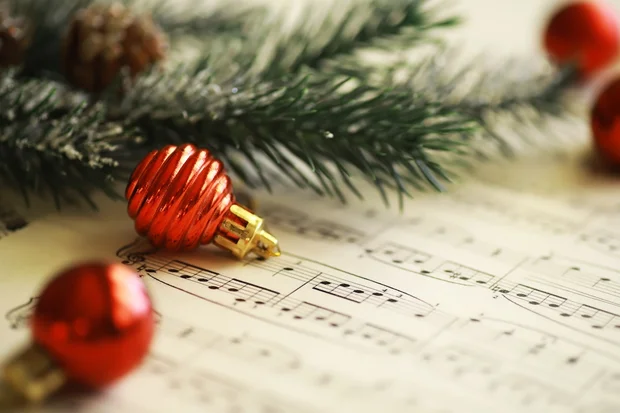
Some of the most iconic Christmas music was composed by Jewish people. Holiday classics such as "White Christmas," "Rudolph the Red-Nosed Reindeer," “Let it Snow,” and "Winter Wonderland" to name a few were all created by Jewish songwriters, according to MyJewishLearning.
How did this curiosity come about?
Michael Feinstein, the Emmy Award-winning interpreter of American musical standards and “Ambassador of the Great American Songbook,” told Religion News Service that Jews flocked to the music and entertainment industry early in the 20th century due to the fact that it was one of the few fields where Jews didn’t suffer constant antisemitism and discrimination.
Rabbi Kenneth Kanter, an expert in Jewish and popular culture at Hebrew Union College in Cincinnati, adds that the phenomenon was also a way of assimilating into American culture and expressing their patriotism. “These songs made Christmas a kind of national celebration, almost a patriotic celebration,” he said.
It wasn’t just a few offerings either – more midcentury classics including “Santa Baby,” “I’ll Be Home for Christmas,” “Chestnuts Roasting on an Open Fire,” and “Silver Bells” are all Jewish creations, along with others enough to fill several albums. Indeed, entire Christmas albums have been released by Jewish artists such as Barbra Streisand and Neil Diamond.
However, you’ll notice that these songs are all about the traditions and customs surrounding Christmas, rather than the central figure Himself.
“The Christmas songs that are popular are not about Jesus, but they’re about sleigh bells and Santa and the trappings of Christmas,” Feinstein clarified. “They’re not religious songs.”
And there are good reasons why Jewish people aren’t inclined toward the faith aspect of Christmas, quite apart from disagreeing with the doctrine of Jesus as the Jewish Messiah.
Rochel Sylvetsky, Op-ed & Judaism Editor of Israel National News, described how in earlier times, many Jewish people in the diaspora would have to barricade themselves inside their homes and hide in darkness during Christian holidays, hoping the danger from violent revelers would pass them by. She explained that once the calendar settled on Dec. 25 as Christmas and Jan. 1 calculated to be the night preceding the circumcision of the child born in Bethlehem, the dates signaled “a call for the local peasants to engage in drinking, making merry and killing Jews.”
According to Sylvetsky, the inauguration of the Christian calendar “initiated the reign of Christianity and the death of Judaism” and led to waves of persecution including synagogue and book burnings, public tortures, and simple murder. She added, “Communal Jewish history is made up of commandments, holidays and customs, but also of this type of memory.”
It is hardly surprising, then, that Jewish children in Christian countries are often told by parents not to sing the name of Jesus during a Christmas carol, or that Christmas trees in public squares can provoke strong reactions in the Jewish state of Israel. Added to the despicable history of the church and the general Jewish aversion to Jesus, songs about the incarnation and decorated trees are seen by many as straightforward idol worship.
Yet, now that Israel has survived for multiple decades as a Jewish state and the threat of violence from Christians in the country is reduced to almost zero, many Jewish Israelis are exploring the more Christmas-celebrating areas of the country such as Nazareth, Haifa, and parts of Jerusalem. The warm glow of Christmas lights and the festive atmosphere has drawn many visitors from all over Israel to come and see what it’s all about, and to learn about the story at the center of it all.
As you hear those Christmas classics belting out as the holiday approaches, remember the Jewish people who wrote them and pray that the “reason for the season” would become a source of joy for Jewish people all over the world.
Popular article:
interview Easter message of resurrection hope amid war at Jerusalem's Garden Tomb

biblical commentary Let my people go: a Passover message for today

4 IDF soldiers killed, 2 wounded in fighting in southern Lebanon, as Israel eliminates dozens of Hezbollah terrorists

Receive latest news & updates
A message from All Israel News
Help us educate Christians on a daily basis about what is happening in Israel & the Middle East and why it matters.
For as little as $10, you can support ALL ISRAEL NEWS, a non-profit media organization that is supported by readers like you.
Latest articles:
North American Jewish organizations to recruit 100 professionals to combat antisemitism

‘No need’ for pre-election Iran strike, IDF chief says as gov’t, opposition trade blame for potential escalation – report

terror attack 2 Israeli soldiers killed, 2 terrorists eliminated in Hebron shooting; IDF says much larger attack was prevented

analysis A people dwelling securely? Israel’s strategic standing, 3 years after Oct 7

Hamas on wheels: What I found in Dearborn reveals a troubling history and a battle over Israel