Petition sounded alarm on lack of evacuation plan two days before Iran war
JIJ, Bizchut insist: Shelters save lives—but only for the people who can reach them




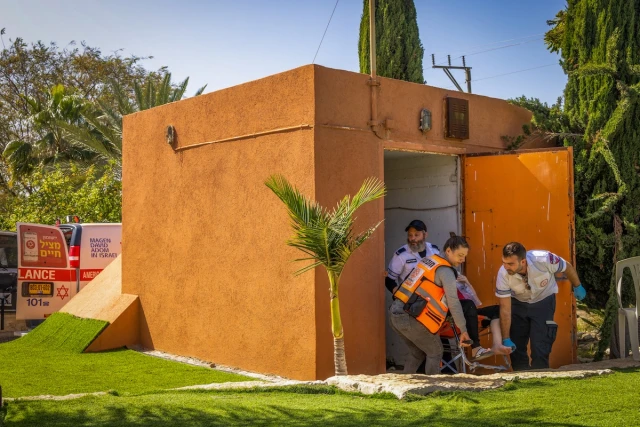
The war’s first casualty, Mary Ann De Vera—a 32-year-old caregiver from the Philippines—was killed by shrapnel from an intercepted Iranian missile while helping her employer, an elderly woman, get to shelter.
A couple in their 70s was killed after an Iranian cluster munition struck their building on March 17.
A 102-year-old man died of injuries sustained while running to a shelter.
Could these deaths have been prevented?
Tragedies such as these are precisely what two organizations, the Jerusalem Institute of Justice (JIJ) and Bizchut, the Center for the Rights of People with Disabilities, were hoping to avert or at least minimize when they submitted a petition urging the government to establish an emergency evacuation plan for people with disabilities.
Submitted on Feb. 26 to Israel’s High Court of Justice amid rising regional tensions, the warning proved tragically prescient.
“One-third of Israeli citizens, about 3 million people, have no protection at all—no shelter, no reinforced room, nothing,” Rotem Ben Simhon, the Director of Legal Aide at the Jerusalem Institute of Justice, told ALL ISRAEL NEWS.
“How is a person in a wheelchair, without an elevator and without a shelter in the building, supposed to protect themselves and reach a standard accessible protected space in a reasonable time?”
These drastic gaps in protection were already known, but rose to the forefront during the 12-Day War with Iran in June. So far, this war has lasted more than twice that length of time—and the missile fire continues. In Tel Aviv alone, 137 sirens sounded in 25 days.
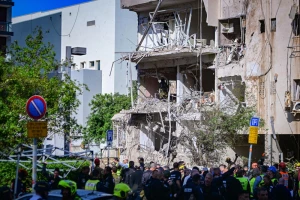
What’s worse, as the tragedy unfolded in the aftermath of the deadly strike in Ramat Gan, pundits immediately criticized the Moshes for not getting to shelter.
“They blamed them,” said Gai Akoka, an attorney at the Jerusalem Institute of Justice and long-time advocate for people with disabilities. “They said it was their fault, that they didn’t do what they were supposed to do and go to a shelter.”
As details emerged, police revealed that the bodies of Yaron and Ilana Moshe—and Yaron’s walker—were found just shy of the shelter.
“What the critics didn’t know was that the husband had trouble walking. He used a walker and the wife had to help him down the stairs,” Akoka continued. “They blamed them instead of helping them.”
These tragedies during the ongoing U.S.-Israel war on Iran, underscored the ongoing failure to provide shelters for Israel’s vulnerable population.
“They blame these people as if they are 18 years old and able to run,” Akoka said. “They don’t take into account that some people go to sleep without hearing aids. Maybe they fell sleep early and when they awake to a siren they didn’t remember where they put their walker and they can’t get down all those stairs in a reasonable amount of time.”
In another incident, video from a catastrophic missile strike in Dimona on Saturday illustrated the complexity of these situations. A home security footage shows an elderly woman sitting in her home when a missile hit nearby. The blast nearly threw her off her sofa and shattered her door.
As with the Moshes, viewers criticized the woman for not seeking shelter. But as her son later explained in an interview with Israeli TV, the elderly woman depends on a caregiver who was not present. The elderly woman suffers from physical limitations, mild dementia and hearing difficulties. After multiple trips up and down stairs to the shelter that same day, she remained at home when the final siren sounded. In fact, her family isn’t sure she was aware there was an alarm at all.
She survived, shaken, but not injured. But her plight is common—many in similar situations don’t even attempt to get to safety.
“This is not theoretical anymore—people with disabilities are being harmed because they cannot evacuate. The state needs to act in advance, and not wait for a disaster,” Akoka said.
Although the Knesset Labor and Welfare Committee discussed the petition during the first week of the war, it has yet to produce a concrete plan to evacuate vulnerable populations to locations with accessible shelters, including hotels or guesthouses if necessary, Akoka said.
“It’s not that the government doesn’t want to solve the issue, but it hasn’t, Akoka said. “If nothing else, this is a good start for the next war, and there will be more wars in the future.”
Akoka emphasized that while not everyone would choose to evacuate, they need to be given the option.
A neighbor of the Moshes, Akoka—who is legally blind—described his family’s path to a public shelter, outside their apartment building, across a street and down several stairs with no outdoor lighting at the entrance.
“Imagine, in the middle of the night, to cross a street—its doing that three to five times a night and several times during the day,” he said.
Of Israel’s population with physical disabilities, Ben Simhon said approximately 869,000 have no immediate access to shelter. In its petition, JIJ characterized the danger as “known and preventable,” noting the recent deaths as a catastrophic failure.
In the absence of a national plan, some local authorities have managed to evacuate people with disabilities, even if only on a temporary basis. A center for people with special needs that also serves as a national emergency response center in Jerusalem has provided temporary shelter to dozens of people with disabilities since the war began.
“During this war we received several referrals from all over the country from local authorities,” said Liat Rahat, director of educational programming at Shalva. “A single mom and her son who has autism were sleeping in the train station (near Tel Aviv) until they came here. It was the first time in three weeks she was able to shower.”
“We are handling so many referrals. So far, people come in and out to recharge and then leave. But for many, it has become the shelter they don’t have at home,” she said.
You might also like to read this: