Mossad director meets Syrian foreign minister in effort to lower tensions with Turkey
Syrian FM Shaibani says Damascus wants diplomatic arrangement but does not 'trust Israel currently'





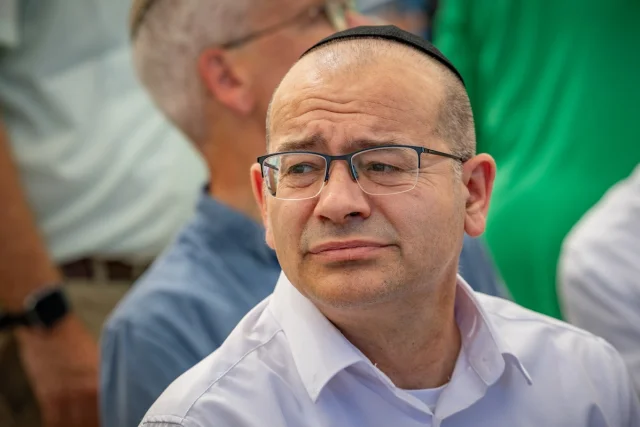
The director of Israel’s Mossad intelligence agency recently met with the Syrian foreign minister amid soaring tensions following an Israeli strike on a Syrian airbase aimed at preventing a Turkish military presence there.
The meeting between Mossad Director Roman Gofman and Foreign Minister Asaad al-Shaibani focused on lowering tensions between the countries and “went well,” an informed source told The Jerusalem Post.
Meanwhile, Israeli security experts have begun warning that the government should lower the tone toward Ankara, as a full-blown confrontation with the region’s largest military power, and the second-largest military force in NATO, should be avoided at all costs.
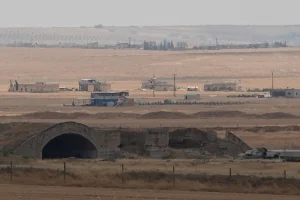
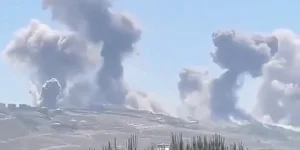
Last week, the Israeli Air Force struck the Abu al-Duhur airbase in northern Syria to prevent the Turkish military from taking it over and potentially deploying air defense assets that could threaten Israel’s freedom of action in Syria, as well as the air corridor between Israel and the Iranian frontier.
Several days earlier, Gofman had warned Shaibani about the strike in a phone call, Reuters reported last week. However, Turkish and Syrian officials, as well as U.S. Ambassador to Turkey Tom Barrack, have said that the strike came as a total surprise.
Barrack even suggested, without offering evidence, that the strike was an Israeli attempt at “baiting Turkey, that it's a very aggressive but maybe a well-received pre-election concept.”
On Saturday, Israeli Defense Minister Israel Katz pushed back against Barrack’s “inaccuracies,” noting that the strikes were carried out at the recommendation of the Israeli military based on intelligence about “Turkey's intentions to conduct operations there that would endanger” Israel’s security.
Meanwhile, Shaibani reiterated that Syria continues to seek a security arrangement with Israel under U.S. mediation, describing the moment as a “historic opportunity.”
Following the Iran war, negotiations between Syria and Israel were frozen despite the sides having “agreed on paper to almost everything,” including that Israel would maintain several security zones in Syrian territory. The proposed agreement would also reportedly establish buffer zones manned by United Nations peacekeepers, alongside multi-tiered areas allowing for varying levels of Syrian military deployment.
He said the airbase strike led to a suspension of ongoing contacts with Israel, but added, “We believe there should be contact, especially with a party that constantly threatens the security of Syria. But if this contact doesn’t bring results, then we don’t need it.”
“We do not trust Israel currently,” Shaibani continued, “Israel has tried to maintain its security through brute force, and it hasn’t succeeded.”
Nevertheless, the Syrian leader said the White House is “trying continuously to put pressure on Israel to return to the dialogue table,” concluding that he still believes “negotiations will resume soon.”
“Syria is extending its hand for understanding, for peace, for diplomacy and regional stability,” he added.
Regarding relations between Ankara and Damascus, Shaibani vowed not to reject Turkish offers of support in rebuilding its military, while adding that similar support also comes from Jordan, Saudi Arabia and other countries.
Ynet News also reported that Azerbaijan, one of the few countries maintaining close relations with both sides, is working behind the scenes to ease tensions between Israel and Turkey.
On Friday, rhetoric between Turkey and Israel escalated again after Ankara requested an Interpol arrest warrant for Israeli Prime Minister Benjamin Netanyahu, whose office responded by calling President Recep Tayyip Erdoğan an “antisemitic dictator who has massacred Kurds, harbors Hamas terrorists, occupies half of Cyprus, and jails record numbers of journalists and politicians who oppose him.”
Speaking to Radio Darom, a former IDF intelligence officer warned that Israel should exhaust all diplomatic opportunities to avoid a military clash with Turkey.
While assessing that such a confrontation is currently “not close at all,” he urged the Israeli leadership to “think creatively, not take diplomacy lightly… we’ve had years of relations with the Turkish army; we can’t throw it away.”
Col. (ret.) Dr. Jacques Neriah, a senior researcher at the Jerusalem Institute for Foreign and Security Affairs (JCFA), stressed that while the deployment of Turkish air defense systems that could harm Israel’s freedom of action is indeed a significant security issue, Israel has successfully dealt with similar challenges involving Russia’s military in Syria in the past.
“Before acting and wielding the sword, we simply need to sit down… The problems can be solved by sitting and talking, directly or through the Americans,” said Neriah. “We are not looking to clash with the Turks, certainly not with the Turkish army.”
However, his JCFA colleague Yoni Ben Menachem warned that Israeli and U.S. interests are misaligned in this arena.
"It will be very difficult for us with Trump on this matter, both regarding Turkey and regarding Jolani [Syrian President al-Sharaa],” Ben Menachem said, noting that the United States has an interest in investing in Syria’s reconstruction and maintains close relations with Ankara.
Please take a moment to join believers worldwide praying for Israel right now. Add your light to the live prayer map—and show the world one more watchman praying for the peace of Jerusalem.

You might also like to read this: