Israel confirms striking Syrian airport to prevent Turkish entrenchment; Damascus claims right to keep nuclear material
US works on Israel-Syria-Turkey deconfliction mechanism





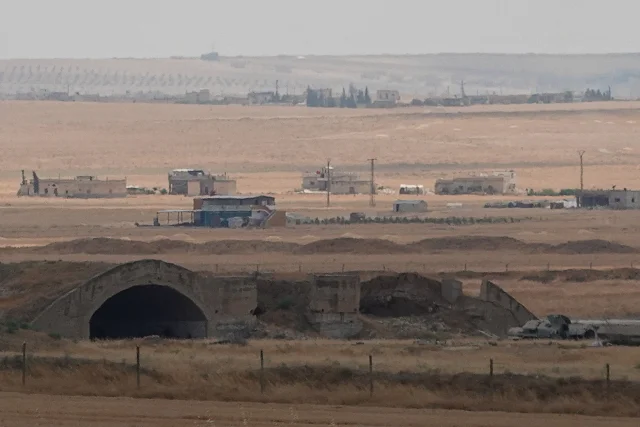
After months of relative quiet, the Syrian front came back into focus in Israel in recent days, as Jerusalem confirmed having struck an airport in northern Syria on Tuesday to prevent Turkey’s military from establishing itself there, rejecting criticism from the United States.
At the same time, the government in Damascus announced its intention to retain nuclear material left over from the Assad regime, asserting its right to pursue a civilian nuclear power program. The announcement came shortly after new video footage emerged showing Syrian military units chanting antisemitic slogans.
These recent incidents highlight Israel's concern that the new Syrian government of former terrorist Ahmed al-Sharaa continues to pose a serious threat, particularly because of its close ties to the Turkish government, despite American efforts to legitimize the government and integrate it into its regional alliance system.
Following the unusual public criticism from the U.S. Ambassador to Turkey Tom Barrack, the Israeli Prime Minister's Office (PMO) responded late on Tuesday saying, “Israel will not tolerate threats to its security,” and accusing Syria and Turkey of trying to breach the status quo.
The Prime Minister's Office:
— Prime Minister of Israel (@IsraeliPM) August 18, 2026
Israel and Syria agreed to a status quo in security matters, which Syria was on the verge of breaching by permitting Turkish troops to deploy at an airbase near Aleppo.
Israel repeatedly warned Syria that such a deployment would pose a threat to…
“Israel and Syria agreed to a status quo in security matters, which Syria was on the verge of breaching by permitting Turkish troops to deploy at an airbase near Aleppo. Israel repeatedly warned Syria that such a deployment would pose a threat to Israel's security. Syria chose to ignore these warnings,” the PMO stated, adding that Jerusalem would “welcome a return to the status quo.”
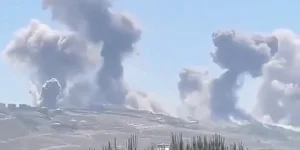
Early on Tuesday, Israeli fighters had reportedly bombed Syrian targets in the Abu al-Duhur Airbase in Idlib province, some 300 kilometers (188 miles) from the Israeli border.
Targets reportedly included the runway and several warehouses. Israeli security think tank Alma Research Center assessed that “the objective was to strike advanced equipment or weapons with potential threat capabilities. In addition, the purpose of striking the runway would be to temporarily prevent its use and, in any event, to send a message to the al-Sharaa regime – and possibly also to a third country – that their actions cannot be tolerated.”
In its analysis, Alma also noted, “reports of Turkish plans to deploy air defense systems in Syria, such as the Hisar system. Israel was previously reported to have warned Turkey against transferring advanced military capabilities to Syria that could disrupt the Israeli Air Force’s freedom of operation. It was also reported in April 2025 that Israel had struck the T4 airbase to prevent Turkey from establishing capabilities there.”
Barrack later argued that the Israeli strikes raised a significant danger of a direct confrontation with the Turkish military. Speaking to Reuters, he said Turkey “observed the aircraft heading north toward its territory and therefore could have reasonably prepared its own response.”
“Thankfully, calm heads were able to prevent the situation from deteriorating further,” Barrack said, stressing that this incident “underscores the need for a deconfliction mechanism involving Israel, Syria and Türkiye. That is something we are actively working on to establish in order to prevent future miscommunication.”
“Turkey knew full well that it was provoking Israel,” assessed Dr. David Wurmser, a fellow at the Jerusalem Center for Foreign Affairs and Security.
“Turkey was the party responsible for what can only be seen as an escalation that it itself sought to provoke,” he argued, adding that Barrack should condemn the Turkish government instead of encouraging “Turkey’s imperial and destabilizing ambitions.”
On Sunday, footage showing troops from the new Syrian military chanting threats against Israel and the Jewish people went viral on social media.
The Foreign Ministry retweeted one news report, commenting, “Outside the historic Damascus Citadel last Saturday, Syrian soldiers chanted: ‘I am coming for you, Jew. I will make your blood flow in rivers.’ This is Syria’s new army. Same old antisemitic bloodlust.”
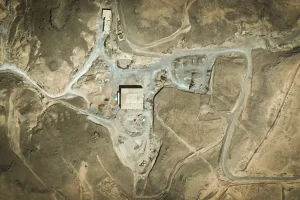
The Syrian reactor would have held 50 tonnes of natural uranium metal. There is also evidence that Syria also worked on putting together a facility to separate plutonium from the reactor’s irradiated fuel to be produced in the reactor. The reactor was destroyed by Israel in… https://t.co/SKJ2YOK2Xz
— David Albright (@DAVIDHALBRIGHT1) August 18, 2026
While President al-Sharaa has repeatedly asserted his desire for peaceful relations with Israel in meetings with international leaders and in the media, his military includes tens of thousands of former jihadist terror operatives. Since the fall of the Assad regime in December 2024, several video clips of soldiers shouting similar messages have been published, reinforcing Jerusalem’s skepticism.
In another development likely to raise concern among Israeli security officials, Syria surprisingly claimed it would retain the nuclear material discovered in Syria's Deir Ezzor site, contradicting reports that Israel and the U.S. had agreed that the International Atomic Energy Agency (IAEA) would remove it.
However, Syrian Foreign Minister Asaad Hassan al-Shaibani announced on Tuesday that the material will remain in Syrian custody, “subject to IAEA guarantees,” and that the country has the right to use it for civil and peaceful purposes.
“We will provide the necessary conditions for handling nuclear materials and storing them safely,” vowed Shaibani.
IAEA Director Rafael Grossi said that inspectors visited the Al-Kibar nuclear reactor site and “observed ongoing excavation activities.” He said that he also visited an undisclosed location outside of Damascus that contained “several tons of natural uranium metal,” as well as another location with “large quantities of graphite.”
Please take a moment to join believers worldwide praying for Israel right now. Add your light to the live prayer map—and show the world one more watchman praying for the peace of Jerusalem.

You might also like to read this: