Nuclear material to be removed from secret Syrian site after Israeli pressure





The International Atomic Energy Agency is expected to soon remove nuclear material from a secret site in Syria, following an agreement reached amid Israeli concerns that the material could fall into the hands of the country’s new regime, Axios reported on Monday, citing U.S. and Israeli officials.
The agreement came after Israel detected movement near the site that suggested the regime led by Ahmed al-Sharaa, formerly known as Abu Mohammed al-Jolani, might be attempting to access the materials.
According to Axios, Israel warned the Trump administration that it would strike the site if the situation was not resolved. The United States subsequently turned to the International Atomic Energy Agency (IAEA) to find a solution that would allow the materials to be removed.
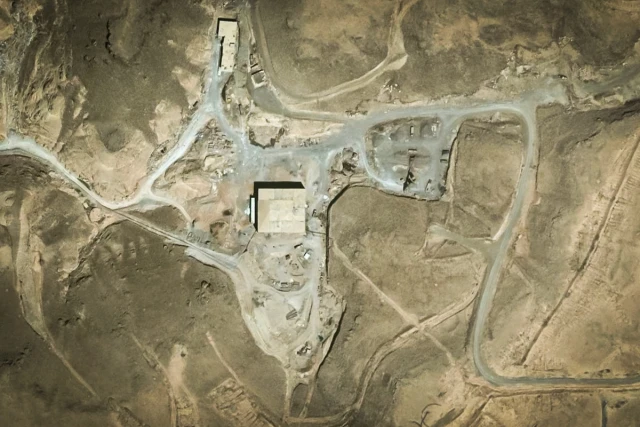
The site was part of the clandestine nuclear program developed by the Assad regime before it was ousted by forces led by al-Sharaa in December 2024. The centerpiece of that program, which reportedly had support from North Korea, was the secret al-Kibar reactor, which was destroyed by the Israeli Air Force in 2007.
Syria: Secret Understandings to Remove Nuclear Material from “Site 99”
— Israel-Alma (@Israel_Alma_org) August 11, 2026
According to Axios, the U.S., Israel and Syria’s new government reached secret understandings for the IAEA to remove yellowcake and other nuclear materials reportedly left from Syria’s covert al-Kibar reactor… pic.twitter.com/0M8MQWmdpv
Several smaller sites used for nuclear research, development and the storage of nuclear materials were scattered throughout Syria. Most have been inactive since 2007, and the al-Sharaa regime signed an agreement with the IAEA allowing inspections of the al-Kibar reactor site and several other locations associated with the former nuclear program.
Analysts have described the inspections as part of the new Syrian regime’s efforts to resolve outstanding issues inherited from the Assad government and pave the way for the country’s reconstruction. The Assad regime’s nuclear and chemical weapons programs are among the most significant of those unresolved issues.
According to Axios, one location in particular, known as “Site 99,” has been closely monitored by Israel for the past two years because it was known to have been used to store materials related to the al-Kibar reactor project.
A U.S. official quoted in the report said that the material included a powder produced from uranium ore and known as “yellowcake,” along with other “leftovers” from the al-Kibar project.
The material could potentially be used in a so-called “dirty bomb,” which would disperse radioactive material and contaminate a wide area.
"One big historical issue is where is all the natural uranium needed to fuel this reactor that Israel bombed in 2007," nuclear expert David Albright of the Institute for Science and International Security commented. "This reactor’s core would have needed up to 50 tonnes of uranium in the form of metal."
"Hopefully, the IAEA will soon report on this and other developments surrounding the Assad regime’s nuclear reactor project, built with North Korean assistance. Besides the uranium, there are questions about Syrian uranium conversion facilities and equipment and plutonium separation equipment," Albright added.
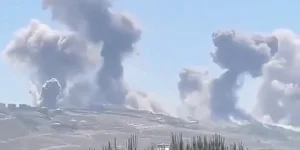
In the days immediately after the fall of the Assad regime, the Israeli Air Force bombed the entrance to the site in an effort to seal it. The strike was part of a broader Israeli campaign to prevent strategic weapons abandoned by Assad’s forces from falling into the wrong hands.
Israeli and U.S. officials subsequently held secret discussions about how to secure the facility and its contents. Eventually, they decided to inform the new Syrian regime about the nuclear materials and make clear that Israel would not tolerate their continued presence at the site.
In recent weeks, Israel detected movement near the site that indicated the Syrian regime might be attempting to access the materials, despite previous assurances that it would not. Israel then informed the United States that it would strike the site if the situation was not resolved.
The Trump administration responded by contacting the IAEA, which agreed to facilitate access to the site and the removal of the nuclear material.
Another U.S. official cited in the Axios report said that “we think everybody is happy with the result. Hopefully we will be able to kick off the removal process soon and end it before the end of the year.”
You might also like to read this: