The return is not spurious - It is unfinished
Ezekiel, Israel, judgment, and the God who gathers before He cleanses





Ezekiel did not see a flag. He saw a valley.
He did not see a parliament, an army, a border fence, a secular court, a coalition government, a divided electorate, or a modern state living under the terrible moral pressure of war. He saw bones. Dry bones. Scattered bones. Bones beyond human repair.
Then, at the word of the Lord, the bones began to move.
That detail matters.
The bones came together before breath entered them.
This is the neglected center of the debate over Israel, Zionism, unbelief, judgment, and prophetic restoration. One side speaks as though the modern State of Israel were already the holy kingdom of Messiah. It is not. The other side speaks as though Israel’s present unbelief, secularism, political origin, military history, moral failures, and coming judgment prove that the modern Jewish return can have no providential or prophetic significance.
That does not follow either.
The Bible gives us a harder and holier category: unfinished restoration under judgment.
Israel has come home, but not yet all the way home. The bones have come together, but the breath has not yet filled the house. The people have returned, but the nation has not yet passed through the full cleansing, mourning, refining, Spirit-renewal, and Davidic peace promised by the prophets.
That does not make the return meaningless.
It makes it sobering.
The question is not whether modern Israel is righteous. Scripture gives no nation that exemption. The question is whether the prophets allow for a Jewish return to the land before national repentance, before spiritual renewal, before Israel’s full recognition of Messiah, and before the final peace of the kingdom.
Ezekiel’s answer appears to be yes.
And that is why the present Jewish return should not be dismissed as “spurious.” It should be understood as providential, partial, morally accountable, and not yet spiritually complete.
The real objection: “This is a spurious return”
The strongest objection deserves to be stated fairly.
The critic says that the present State of Israel cannot be the prophetic restoration because it is secular, political, violent in origin, morally compromised, and largely unbelieving. He says many Christian Zionists read the prophets without a clear hermeneutic, with “eyes firmly shut” to history, and without applying righteous judgment. He insists that the true restoration promised by Ezekiel, Jeremiah, Hosea, Amos, Zechariah, and Malachi includes the Lord Himself gathering the exiles, Israel and Judah becoming one, repentance, a new heart, pardon, covenant renewal, permanent possession of the land, the Davidic King, peace, safety, justice, and the nations going up to Jerusalem to worship the Lord.
On many of those final conditions, he is right.
The final restoration will not be secular Zionism. It will not be achieved by human politics. It will not be morally ambiguous. It will not leave Israel in unbelief. It will not be ruled by unregenerate men. It will not be dependent upon American foreign policy, military superiority, diplomatic maneuvering, or evangelical enthusiasm.
It will be Messianic.
It will be righteous.
It will be holy.
It will come through Yeshua, the Son of David, the pierced One, the Shepherd-King, the righteous Branch, the Lord our righteousness.
So the debate is not whether the final restoration includes repentance, judgment, cleansing, Davidic kingship, and peace. Of course it does.
The debate is whether the absence of those final conditions proves that no preliminary regathering can have begun.
That is the mistake.
Final-restoration texts prove the consummation. They do not disprove the beginning.
Tradition matters, but Scripture judges every tradition
Some Jewish and Christian interpreters have historically opposed political Zionism. That fact should be acknowledged honestly, not brushed aside.
Within Jewish tradition, some religious anti-Zionists have argued that the Jewish people must wait for miraculous Messianic redemption rather than pursue collective political sovereignty by human effort. In that view, the modern State of Israel is not merely premature but a theological rebellion — a human attempt to force what only HaShem may accomplish. The “Three Oaths” argument, associated especially with some Haredi anti-Zionist readings, has often been used in precisely this way.
Some Christian interpreters, too, have been skeptical of identifying modern political Zionism with biblical restoration. Some have feared that secular nationalism could counterfeit the kingdom, displace Messiah, or induce Christians to excuse injustice. Those concerns are not frivolous. They are warnings worth hearing.
But they are not the final court of appeal.
Other Christian interpreters, long before the modern State of Israel and not simply as followers of Darby, anticipated some form of Jewish restoration to the land. The history is not one-sided. There have been anti-Zionist, non-Zionist, restorationist, and proto-restorationist streams within both Jewish and Christian interpretation. Tradition is therefore a witness, but not a judge. It may warn. It may illuminate. It may humble. It may preserve neglected questions. But it cannot overrule the canonical sequence of Scripture.
The final question is not, “Which historical school can be cited?” Historical schools can be cited on more than one side.
The final question is: What do Moses, Ezekiel, Jeremiah, Zechariah, Malachi, Yeshua, and Paul actually require us to believe?
If a tradition says the final restoration must be righteous, Messianic, repentant, cleansed, and peaceful, Scripture agrees.
If a tradition says no political state should be treated as the kingdom of God, Scripture agrees.
If a tradition warns that Christians must not excuse evil in the name of Israel, Scripture agrees.
But if a tradition insists that Jewish unbelief, human agency, political conflict, or coming judgment makes any preliminary return to the land impossible, then that tradition must answer Ezekiel’s order: gathering before cleansing, bones before breath, judgment before peace, hardening before mercy, Jerusalem in crisis before national mourning.
The point is not that tradition is worthless. The point is that tradition is subordinate.
A tradition that preserves moral caution is useful.
A tradition that keeps Messiah at the center is useful.
A tradition that refuses to confuse a secular state with the kingdom of God is useful.
But a tradition that makes the final condition of restoration the necessary precondition for any restoration at all has asked the prophets to say more than they say.
Tradition may sharpen the question.
Scripture must answer it.
A hermeneutic: not Darby first, not headlines first, but Scripture first
The argument for Israel’s unfinished restoration does not need to begin with John Nelson Darby, prophecy charts, newspaper exegesis, or a romanticized view of the modern State of Israel. It should begin with Scripture’s own grammar and covenantal logic.
The hermeneutic should be canonical, covenantal, grammatical-historical, and Christ-centered.
It should be canonical because Ezekiel must be read with Moses, Isaiah, Jeremiah, Hosea, Amos, Zechariah, Malachi, the Gospels, Acts, and Romans.
It should be covenantal because God’s promises to Israel rest on His oath-bound faithfulness, not on Israel’s worthiness.
It should be grammatical-historical because “Israel,” “Judah,” “Jerusalem,” “Zion,” “land,” “nations,” “exile,” “return,” “David,” “covenant,” and “Spirit” should not be dissolved into abstractions whenever their plain sense becomes inconvenient.
And it must be Christ-centered because the promises do not end in land, ethnicity, statehood, sovereignty, or politics. They end in Messiah. Yeshua is the final meaning of Israel’s hope.
This framework refuses two opposite errors. It refuses to turn the State of Israel into an idol. But it also refuses to treat the Jewish people’s return to the land as a meaningless political accident outside the providence of God.
The Bible gives us a better category: God may begin restoring what He has not yet finished redeeming.
The bridge: why modern Israel is not merely any political event
A necessary clarification must be made.
The claim is not that every feature of the modern State of Israel fulfills prophecy. Nor is the claim that every political event in the Middle East should be baptized as prophetic. Nor is the claim that any morally compromised national project may be called holy simply because someone can attach biblical language to it.
That would be reckless.
The narrower claim is this: the large-scale return of Jews to the ancestral land, the reemergence of Jewish sovereignty after centuries of dispersion, the renewed centrality of Jerusalem, and the continued presence of Israel among hostile nations create the historical precondition the prophets themselves assume before the final crisis, mourning, cleansing, and Messianic intervention occur.
This does not prove that the modern state is the kingdom.
It does not prove that its founders were righteous.
It does not prove that its policies are beyond judgment.
It does not prove that Israel has already received the new heart.
It does suggest, however, that the Jewish return to the particular land named by the prophets is not a random datum. It belongs inside the biblical grammar of exile, land, return, Jerusalem, nations, judgment, remnant, Spirit, and Messiah.
A preliminary regathering is not the same as final redemption.
But without some historical Jewish presence in the land, many of the final prophetic scenes become unintelligible. Zechariah’s Jerusalem must be there before it is besieged. The inhabitants of Jerusalem must be there before they mourn over the One they pierced. The house of Israel must be gathered before it is cleansed. The bones must stand before the breath enters them.
That is the bridge from text to history.
Not everything about modern Israel is fulfillment. But the Jewish return is too concrete, too covenantally charged, and too textually resonant to be dismissed as nothing.
Ezekiel’s order: land, then cleansing
Ezekiel 36 is decisive because the order is explicit.
God says:
“I will take you from among the nations, and gather you out of all countries, and will bring you into your own land.”
Then He says:
“Then will I sprinkle clean water upon you.”
Then:
“A new heart also will I give you, and a new spirit will I put within you.”
Then:
“I will put my Spirit within you, and cause you to walk in my statutes.”
The sequence is not: Israel receives a new heart, becomes nationally righteous, recognizes Messiah, and only then returns to the land.
The sequence is: God gathers Israel from the nations, brings them into their own land, cleanses them, gives them a new heart, puts His Spirit within them, and causes covenant obedience.
That order does not justify Israel’s sin. It exposes it. The people who are gathered still need sprinkling. They still need cleansing. They still need a heart transplant. They still need the Spirit.
Even more striking, God says He acts “not for your sakes” but for His holy name. That is the scandal and glory of the chapter. Israel’s return is not presented as Israel’s moral achievement. It is presented as God’s vindication of His covenant name before the nations.
If Israel returned already repentant, righteous, Spirit-filled, and obedient, Ezekiel 36 would read very differently. But the passage says the opposite. God begins acting before Israel deserves it.
That is not nationalism.
That is grace.
Dry bones before living breath
Ezekiel 37 makes the same point in an image no reader can forget.
The prophet is set down in a valley full of bones. They are “very dry.” They are not merely sick. They are dead. Yet when the word of the Lord comes, the bones begin to move. Bone joins to bone. Sinews appear. Flesh comes upon them. Skin covers them.
Then comes the haunting sentence:
“There was no breath in them.”
The body is reconstituted before it is animated. Israel is visibly assembled before it is spiritually alive. Only afterward does the breath come from the four winds. Only afterward do they live and stand as an exceedingly great army.
This is not a vision of instant consummation. It is staged restoration: bones, body, breath.
That order should make us cautious about saying, “Because Israel is not yet spiritually alive, the present physical reconstitution must be false.” Ezekiel’s vision shows precisely the opposite possibility. The bones come together before the breath enters them.
A critic may look at modern Israel and say, “There is no national breath.”
That may be true.
But Ezekiel would ask another question first:
Are the bones still scattered?
Judgment is not the proof that the return is false
The strongest objection is judgment.
Ezekiel 20 speaks of God gathering Israel from the peoples and countries where they were scattered, then entering into judgment with them and purging rebels from among them. Malachi 3 says the Lord will come like a refiner’s fire. Zechariah 13 speaks of a remnant brought through fire. Zechariah 14 speaks of nations gathered against Jerusalem before the Lord intervenes. Zechariah 12 speaks of the house of David and the inhabitants of Jerusalem mourning over the One they pierced.
Judgment is real.
But judgment does not make the return false.
Judgment is part of the prophetic sequence.
This is the central point.
A return that still requires judgment is not therefore counterfeit. It may be exactly what Ezekiel describes: a regathering that exposes Israel’s need for cleansing, repentance, Spirit-renewal, and Messiah.
The proper sequence is not:
Spurious return,
Judgment,
True return.
The better biblical sequence is:
Providential physical regathering while Israel remains largely in unbelief,
Divine shaking, judgment, purging, and national crisis,
Spiritual renewal, repentance, forgiveness, Davidic kingship, and final Messianic peace.
The judgment stage is real. But it does not nullify the regathering. It belongs to the regathering.
The Exodus gives the pattern. Israel was truly delivered from Egypt, but the delivered generation was judged in the wilderness. Their judgment did not make the Exodus spurious.
The return from Babylon gives the pattern again. Jews truly returned to the land, rebuilt the altar, rebuilt the temple, and restored Jerusalem’s walls. Yet post-exilic Israel remained spiritually incomplete, politically vulnerable, morally compromised, and still in need of Messiah. Their incompleteness did not make the return from Babylon spurious.
That is the category needed now: genuine but incomplete.
“The Lord Himself will gather them” does not exclude human means
Another objection says the true regathering must be the Lord’s work, not a political achievement or military project.
That is true if we mean the Lord is the ultimate cause.
But Scripture constantly speaks of the Lord doing what He also accomplishes through human instruments. The Lord delivered Israel from Egypt, yet He used Moses. The Lord judged Egypt, yet He used plagues, signs, and historical acts. The Lord gave Israel the land, yet Joshua fought battles. The Lord restored Jews from Babylon, yet He used Cyrus. The Lord rebuilt Jerusalem, yet He used Zerubbabel, Ezra, and Nehemiah. The Lord established David’s kingdom, yet David fought real wars.
Divine agency and human means are not opposites in Scripture.
The fact that the Jewish return involved politics, diplomacy, migration, war, statecraft, and military defense does not, by itself, prove God was absent. If that were so, much of biblical history would have to be reclassified as non-providential.
The real question is not whether human means were involved. The question is whether God can use human means without morally endorsing every human motive and action.
Scripture’s answer is yes.
Providence does not absolve human sin
This point must be stated with care.
To say God has providentially preserved and regathered the Jewish people is not to say God morally approves every action involved in that history. Providence is not absolution.
Joseph’s brothers meant evil against him, but God meant it for good. Assyria was the rod of God’s anger, yet Assyria was judged for its arrogance. Babylon was used by God, yet Babylon was judged by God. Cyrus was a pagan king, yet God called him by name to return the Jews from exile. The crucifixion was carried out by wicked hands, yet it occurred according to the definite plan and foreknowledge of God.
God can use morally compromised actors without becoming the author of their sin.
That is not a loophole. It is one of Scripture’s basic teachings about history.
Therefore, pointing to secular founders, political motives, military conflict, or human sin does not settle the question. It proves that history is morally accountable. It does not prove that history is providentially empty.
The founding of modern Israel was not morally pristine. No serious Christian should pretend otherwise. Nor should any Christian pretend that the State of Israel, like any state, is beyond judgment. The prophets would never permit that. Israel’s kings were judged. Israel’s priests were judged. Israel’s courts were judged. Israel’s merchants were judged. Israel’s shepherds were judged.
Biblical support for Israel’s covenantal significance is not a license to call evil good.
Righteous judgment cuts in every direction
If this argument is to be biblical, it must be morally serious.
Hamas atrocities are evil. Antisemitism is evil. The murder of Jewish civilians is evil. Kidnapping hostages is evil. Rape, torture, mutilation, and the celebration of terror are evil. Calls for the destruction of Jews under the cover of anti-Zionism are evil.
So are cruelty, vengeance, corruption, unjust killing, hatred of Palestinians as Palestinians, and indifference to civilian suffering in Gaza or the West Bank.
The Christian is not permitted to have tribal morality.
A biblical article on Israel that cannot name Jewish suffering is morally blind. A biblical article on Israel that cannot name Palestinian suffering is morally thin.
But suffering does not answer the covenant question. It deepens the need to answer it rightly.
The Church must resist every counterfeit clarity: the propaganda that turns all Jews into oppressors, the propaganda that treats all Palestinians as terrorists, the propaganda that excuses whatever “our side” does, and the theological arrogance that imagines God’s promises can be canceled by our disgust, our politics, or our pain.
The prophets do not permit sentimentalism.
They do not permit hatred either.
They call Israel to repentance. They call the nations to account. They call the Church to humility. And they call all people to Messiah.
Why the final-restoration texts do not disprove preliminary regathering
The strongest textual objection comes from the great final-restoration passages. These passages say the Lord Himself gathers Israel, leaves none behind, gives peace, places Israel under the Davidic King, cleanses sin, circumcises hearts, makes Judah and Israel one, plants the people permanently in the land, and causes the nations to worship the Lord in Jerusalem.
Amen.
The Christian who believes in Israel’s future should affirm every one of those promises.
But the question is whether these promises describe the final state of restoration or whether they forbid any preliminary stage before that final state.
They describe the final state.
They do not forbid the preliminary stage.
Ezekiel 39:27–28: “I have left none of them anymore there”
Ezekiel 39 describes the fullness of restoration after God has sanctified Himself in Israel before the nations. “I have gathered them unto their own land, and have left none of them anymore there” is consummative language. It tells us where the story ends.
But it does not prove there can be no partial return before that end.
The fact that the final gathering leaves none behind does not mean God cannot begin gathering before the final gathering is complete. If that logic were applied consistently, no return could count until every Jew in exile had already returned, every enemy had already been judged, and every spiritual promise had already been fulfilled.
But Ezekiel himself gives a staged picture: bones first, breath later; gathering first, cleansing afterward; return first, then the full outpouring of the Spirit.
Amos 9:15: “They shall no more be pulled up”
Amos 9:15 is a glorious promise of final permanence. Israel will be planted in the land and never again finally uprooted.
But final permanence belongs to completed restoration. It does not prove there can be no earlier stage of restoration before that final permanence is secured.
Messiah’s own work gives the pattern. The prophets promise universal peace, justice, and dominion under Messiah. Yet the New Testament reveals an inaugurated fulfillment before consummation. Christ has come, died, risen, and ascended; nevertheless, not every enemy has yet been visibly placed under His feet. The fact that the consummation has not arrived does not make the inauguration false.
So with Israel: the fact that Amos 9 has not yet been consummated does not prove that nothing has begun.
Jeremiah 23:5–8: Davidic kingship and safe dwelling
Jeremiah 23 promises the righteous Branch, the Davidic King, under whom Judah is saved and Israel dwells safely. That is not present political Zionism. That is Messiah.
But Jeremiah 23 also speaks of a future return so great that it eclipses the memory of the Exodus. The Davidic King is the goal of the restoration, not proof that no preparatory return can occur before His visible reign.
If every restoration text had to be fulfilled all at once in its final form, then the biblical pattern of historical fulfillment would disappear. Yet Scripture often moves from promise to partial realization to final consummation.
The King is coming.
That does not mean the people cannot be gathered before the coronation is visible to the nations.
Deuteronomy 30:5–8: return, heart-circumcision, obedience
Deuteronomy 30 is one of the most important restoration texts because it contains sequence.
The Lord brings Israel into the land. The Lord circumcises the heart. The people return and obey.
The text does not require the heart-circumcision to be complete before any return begins. Rather, it places land, heart-renewal, and obedience together in the larger restoration movement.
Ezekiel 36 later expands that same logic: gathered into the land, sprinkled clean, given a new heart, filled with the Spirit, caused to obey.
That is not a denial of spiritual restoration.
It is the grammar of it.
Zechariah 12–14: Jerusalem must be there before the mourning
Zechariah is fatal to the claim that Israel must be fully converted before the final crisis begins.
In Zechariah 12, Jerusalem is already historically present. The house of David and the inhabitants of Jerusalem are already there. Then God pours out the spirit of grace and supplication. Then they look upon the One they pierced and mourn.
The mourning does not precede the entire historical presence of Jerusalem. It comes in connection with Jerusalem’s crisis.
In Zechariah 14, nations gather against Jerusalem. The city is attacked. Then the Lord goes forth. Then His feet stand on the Mount of Olives. Then the Lord becomes King over all the earth.
That is not a picture of Israel already dwelling in completed Messianic peace before the crisis. It is a picture of crisis before peace, judgment before deliverance, national anguish before visible kingdom.
Thus Zechariah does not refute a preliminary regathering.
Zechariah requires some form of Jewish presence in Jerusalem before the final intervention.
“No progressive redemption” misunderstands the claim
Another objection says there is no “progressive redemption” in the prophets.
If that means Israel gradually redeems itself by politics, military success, technological achievement, or moral improvement, then agreed. There is no such redemption. Redemption is of the Lord. Messiah saves. The Spirit renews. God cleanses. The new heart is given, not manufactured.
But that is not the claim.
The claim is not progressive self-redemption.
The claim is sequential divine restoration.
Scripture often distinguishes stages in God’s work. Abraham receives promises he does not live to see fulfilled. Israel is delivered from Egypt before entering the land. David is anointed before he reigns. The exile ends before the nation is spiritually renewed. Messiah comes in humility before He appears in glory. The kingdom is inaugurated before it is consummated.
To say God works in sequence is not to say man redeems himself.
It is to read the Bible as a story.
The modern state is not the Messianic kingdom
Modern Israel is not the Messianic kingdom. It is a state: brilliant, embattled, secular in many quarters, religiously intense in others, democratic yet strained, courageous yet morally accountable, home to astonishing achievement and deep fracture.
It is also home to millions of Jews after centuries of dispersion, pogroms, exile, racial hatred, attempted annihilation, and homelessness among the nations.
Both realities must be held together.
To say “Israel has returned” is not to say “Israel has arrived.”
To say “God is faithful to Israel” is not to say “Israel is faithful to God.”
To say “the Jewish people have a covenantal connection to the land” is not to say “every policy of the state is righteous.”
To say “the nations should not erase Israel” is not to say “Palestinian suffering does not matter.”
The biblical position is harder and holier.
Israel matters because God’s promises matter.
Palestinians matter because the image of God matters.
Hamas must be judged because evil matters.
Israel must be accountable because righteousness matters.
The Church must not boast because Romans 11 matters.
And Messiah alone completes what politics cannot.
Romans 11: the New Testament guardrail
Romans 11 is the New Testament’s guardrail against Gentile arrogance.
Paul does not deny Jewish unbelief. He grieves it. He does not say Israel is already nationally saved. He says Israel is experiencing a partial hardening.
But he also says God has not rejected His people.
The hardening is partial, not total.
Temporary, not final.
Israel remains beloved for the sake of the patriarchs because “the gifts and calling of God are irrevocable.”
Gentile believers are not told to sneer at Jewish unbelief. They are told to fear.
They are not told that the Church has replaced the root. They are told that the root supports them.
They are not told that the natural branches no longer matter. They are warned not to boast over them.
This does not mean Jewish people are saved apart from Messiah. Paul would reject that. The gospel remains “to the Jew first and also to the Greek.” Yeshua is the only Savior of Jew and Gentile alike.
But Romans 11 does mean Jewish unbelief is not the final word over Jewish destiny.
If present unbelief disproved future mercy, Paul’s argument would collapse. Instead, Paul makes Israel’s present hardening part of the mystery of mercy.
That mystery should make Christians humble.
The present hour
The world after October 7 has made this discussion more urgent, not less.
Jewish fear is not theoretical. Antisemitism has remained a grave reality in the United States and elsewhere, even when annual incident totals fluctuate. The danger is not merely rhetorical; assaults, threats, vandalism, and deadly attacks have made Jewish vulnerability visible again.
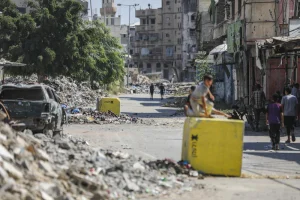
At the same time, the suffering in Gaza has been catastrophic. Civilians have endured displacement, hunger, destroyed homes, shattered families, ruined infrastructure, medical collapse, and the long misery of war. International investigators and human-rights bodies have leveled grave accusations against Israel; Israel rejects many of those accusations and argues that Hamas’s tactics and embedding among civilians are central to the tragedy.
A Christian need not accept every claim made in every report to recognize the moral weight of the suffering.
Nor should a Christian allow suffering to become propaganda.
October 7 must not be denied.
Gaza’s agony must not be minimized.
Jewish fear must not be mocked.
Palestinian grief must not be erased.
The Church must learn to speak truth in a world addicted to slogans.
Not spurious, but unfinished
The word “spurious” fails because it demands too little of Scripture and too much of the present.
If by “spurious” one means incomplete, morally compromised, secular in large measure, and still awaiting judgment, then the concern is understandable. But if “spurious” means outside God’s providence, covenantally meaningless, or merely a godless accident of political violence, then the word goes beyond Scripture.
The return is incomplete.
It is not spurious.
The state is secular.
That does not mean God is absent.
The people are largely in unbelief.
That is why Ezekiel 36 and Romans 11 matter.
Judgment is coming.
That does not cancel restoration.
Messiah alone will complete the kingdom.
That does not make every prior movement toward the land meaningless.
The better category is this:
Israel’s return is providential, partial, morally accountable, and not yet spiritually complete.
That category protects us from two errors. It protects us from making an idol of the state, and it protects us from denying the faithfulness of God.
The hope is not Herzl
In the end, the hope of Israel is not Theodor Herzl. It is not the Knesset. It is not the IDF. It is not American foreign policy. It is not evangelical enthusiasm. It is not the machinery of secular nationalism.
The hope of Israel is Yeshua.
He is the Son of David, the pierced One of Zechariah 12, the Shepherd-King of Ezekiel 37, the righteous Branch of Jeremiah 23, the light to the nations, the glory of Israel, and the only Savior of Jew and Gentile.
When He comes, He will not rubber-stamp anyone’s propaganda. He will judge the nations. He will purify the sons of Levi. He will expose every lie. He will vindicate the innocent. He will humble the proud. He will cleanse Israel. He will reign in righteousness. He will bring the peace no state can manufacture.
Until then, the Church should speak carefully.
Pray for the peace of Jerusalem.
Preach Messiah to Jew and Gentile.
Reject antisemitism.
Grieve Palestinian suffering.
Refuse to call evil good.
Refuse to call God’s covenant void.
Do not boast against the branches.
And remember the valley.
The bones came together before breath entered them.
That is why Israel’s present unbelief is not the defeat of prophecy. It may be the very condition the prophets told us to expect before the Spirit is poured out, before the mourning begins, before the cleansing is complete, before the King is seen in His beauty.
Israel has come home.
Not yet righteous. Not yet whole. Not yet at peace. Not yet under the visible reign of Messiah.
But home enough for the world to tremble.
Home enough for the Church to stop boasting.
Home enough for Ezekiel’s valley to feel less like ancient poetry and more like a dispatch from the God who keeps His word.
The bones are standing.
The breath is coming.
And the story is not finished.
Source Notes for Publication
Ezekiel 36:22–28; Ezekiel 37:1–14; Ezekiel 37:21–28; Ezekiel 20:33–38; Ezekiel 38–39; Deuteronomy 30:1–8; Jeremiah 23:5–8; Jeremiah 33:7–9; Amos 9:11–15; Zechariah 12–14; Malachi 3:1–6; Romans 9–11.
Andrew Crome, “Christian Restorationism Prior to 1900,” Critical Dictionary of Apocalyptic and Millenarian Movements, 2022.
Jewish Virtual Library, “Anti-Zionism Among Jews,” updated June 2024.
My Jewish Learning, “Ultra-Orthodox & Anti-Zionist.”
Israel Ministry of Foreign Affairs / Central Bureau of Statistics, “Israel at 78: A Statistical Glimpse,” April 2026.
Anti-Defamation League, “Audit of Antisemitic Incidents 2025,” June 2026; Associated Press reporting on the audit, May 2026.
United Nations Office for the Coordination of Humanitarian Affairs, “Humanitarian Situation Report: Gaza Strip,” June 2026.
Reuters reporting on Gaza violence and ceasefire violations, June 2026.
Reuters reporting on the June 2026 U.N. Commission of Inquiry findings concerning Palestinian children in Gaza and Israel’s rejection of those findings.
Emir J. Phillips, “Jews Have Come Home in Unbelief — Exactly as the Prophets Said,” All Israel News.
Support our independent, on-the-ground reporting from Israel. Become a $5/month Ally.

You might also like to read this: