‘We’re clear-eyed about risks’ – BoP official defends Gaza peace plan after Israel's rejection
US 'not bothered' by Netanyahu's statements 'as long as he continues to do what we ask'




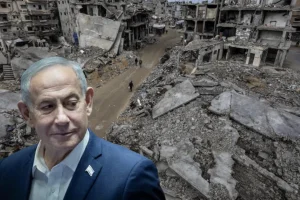
After Prime Minister Benjamin Netanyahu officially rejected the latest 15-point proposal for a Hamas disarmament plan, Gaza Board of Peace (BoP) High Representative Nickolay Mladenov pushed back on Israeli criticism, stressing that the plan is not built on trusting Hamas.
“I am not building any of this on trust. And none of us are doing that. We are very clear-eyed about the risks going forward,” he asserted.
In an interview with Channel 12 News on Sunday, Mladenov attempted to assuage Israeli concerns, noting that “no one is required to do anything before the steps are implemented on the ground,” and stressing that the plan would require the removal of all weapons and military capabilities from the Gaza Strip.
Mladenov also described Qatar and Turkey’s role as mediators as “critical,” saying they would be part of a mechanism to ensure implementation of the steps in the agreement.
On Monday, a senior Israeli official responded to this comment, telling Channel 12 that “there is no chance we will allow Qatar and Turkey to oversee our conduct in the Strip.”
Netanyahu previously said, “The IDF will not carry out any withdrawal until Hamas is disarmed. And when I say the disarming of Hamas, it means heavy weaponry, lighter weaponry, all weaponry. And we are talking about genuine disarmament, not fictitious disarmament.”
This appears to mean that Israel rejects any withdrawal of its forces, even partial, until Hamas is fully disarmed.
However, Mladenov once again brought up phased withdrawals, saying that “once each area has been demilitarized and the weapons have been handed over, stored and rendered unusable, Israel will be required to withdraw gradually, step by step, in stages, all the way back to the Gaza border.”
“If there is genuine disarmament – weapons are taken away from the factions, stored, and ultimately rendered unusable – then yes, Israel will withdraw from Gaza.”
Mladenov said that during negotiations with the Board of Peace, Hamas agreed to immediately halt all “military activities.” He said the council then turned to Israel to approve the framework based on that commitment.
Netanyahu’s critics have noted that, despite his ostensible rejection of the plan, Israel nevertheless has also halted its airstrikes in Gaza for almost a full week. Army Radio reported that, without any official announcement, Netanyahu and Defense Minister Israel Katz approved infrastructure work in eastern Rafah for the first time, with the work beginning about two weeks ago.
A senior U.S. official said the White House "is not bothered" by Netanyahu's statement "as long as he continues to do what we ask – especially regarding restraining attacks in Gaza," in comments made to Channel 12 News. "We understand Bibi's political needs," he added.
Prime Minister Benjamin Netanyahu at the Start of the Government Meeting:
— Prime Minister of Israel (@IsraeliPM) August 9, 2026
"Israel does not accept the 15-point document. The IDF will not carry out any withdrawal until Hamas is genuinely disarmed, and it will continue to thwart threats against our forces and citizens."
Full… pic.twitter.com/UrVY2FK9wO
Mladenov laid out three main components of the agreement, including full demilitarization, handing governance to the BoP, and the deployment of the International Stabilization Force (ISF).
The BoP plan requires Hamas not only to hand over its weapons “but also responsibility for governing Gaza – tunnels, infrastructure, governance, everything – to the Peace Council, to ensure that Gaza and Israel live in peace from this point forward,” he explained.
Regarding weapons, he said the deal would cover “those held by the police, those held by the armed factions, the militias, heavy weapons, production facilities – Hamas, everyone.”
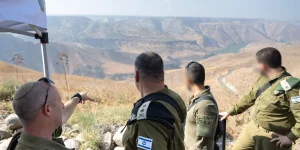
For now, the BoP has not asked the IDF to withdraw troops but wants the military to refrain from operating beyond the Yellow Line, which separates the Israeli-controlled area from the territory still held by Hamas.
“We want them to remain in those positions and ensure that they do not fire at people beyond the line, unless there is a genuine threat to Israeli soldiers,” Mladenov said, adding, “The Yellow Line will of course ‘move backward’ once there is disarmament in Gaza.”
“If the commitments are not fulfilled, the process stops. If the commitments of the next stage are not fulfilled, we do not move to the next stage,” he vowed.
“That is really the basic premise that I would want both sides to rely on – that through the implementation process, we genuinely have a chance. If it doesn’t work, the process stops.”
In response to a question about whether giving Turkey and Qatar significant roles in the process would be akin to “letting the fox guard the henhouse,” Mladenov said, “The henhouse will not be guarded by a fox. It will be guarded by the international security force – it will be guarded by the Peace Council and its institutions.”
“My experience over the past eight months is that without Egypt and the other mediators – Turkey and Qatar – we would not have reached a situation in which Hamas agreed to the roadmap. Their contribution was truly critical,” he said. “Now, honestly, if I have to talk to the devil, I will talk to the devil to make sure this happens and that we do not allow October 7 to happen again. That is the basic premise on which we are all operating.”
Meanwhile, Israeli security experts continue to criticize the BoP proposal in Gaza.
Dr. Dan Diker, president of the Jerusalem Institute for Foreign Affairs and Security, told GB News that the agreement must not show “tolerance for Hamas, either as a governing authority or as a terrorist organization.”
An agreement that would let Hamas store its weapons in warehouses would ultimately leave them in the terror group’s possession. “This way, Hamas remains both a governing authority and a terrorist organization inside Gaza, and that is a path leading to the next October 7,” he warned.
Jonathan Conricus, senior fellow at the Foundation for Defense of Democracies, said, "Hamas has no intention to disarm, and therefore misery, violence and war remain the foreseeable future of Gaza. This is just Arab posturing and strategic communications, not meaningful progress."
On the Israeli side, the former IDF spokesman said that "statements are weighted by domestic politics instead of care for its national security. Israel is in fact in compliance with UNSCR 2803, and has reduced eliminations of Hamas terrorists in Gaza at US requests. Gazan civilians remain trapped under Hamas terror and their situation will not improve in any meaningful way."
Please take a moment to join believers worldwide praying for Israel right now. Add your light to the live prayer map—and show the world one more watchman praying for the peace of Jerusalem.

You might also like to read this: