Cynical campaign ploy? Netanyahu's rejection of Trump's Gaza plan risks angering US, critics claim
National security advisor explains, 'there is continuous, daily, and hourly pressure' to approve the plan




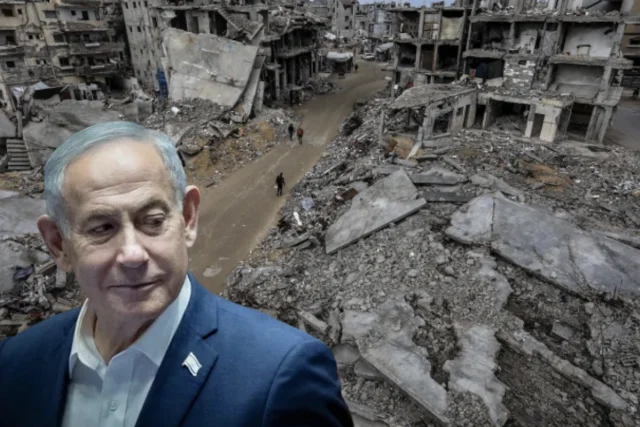
Prime Minister Benjamin Netanyahu’s announcement that Israel is rejecting the 15-point roadmap proposed for U.S. President Donald Trump’s Gaza plan was widely seen as surprising in both its publicity and its content.
The refusal has quickly drawn a range of reactions, with many accusing Netanyahu of using the situation to shore up his election prospects while endangering the alliance with the United States.
The Wall Street Journal quoted two informed sources who said Netanyahu’s announcement came despite “intense pressure, including from the U.S.,” for Israel to approve the Board of Peace (BoP) framework. It also noted that the announcement was an “unusual public break” and “risks angering” Trump.
According to Channel 12 News, Israeli National Security Advisor Shmuel Ben Ezra said at Thursday’s cabinet meeting that “there is continuous, daily, and hourly pressure” for Israel to agree to a 14-day complete ceasefire to initiate the disarmament process.
Several ministers reportedly strongly urged Netanyahu to reject the framework during the discussion, with Minister of Agriculture Avi Dichter stressing that it “contains no reference to destroying Hamas’s military capabilities.”
However, several Israeli commentators noted that, despite the declaration, Israel has already bowed to pressure, refraining from targeted strikes in Gaza for nearly a week. They suggested that Netanyahu may want to take credit with right-wing voters for publicly opposing the Trump administration while quietly going along with its roadmap behind the scenes.

According to i24 News, the IDF was instructed to halt the airstrikes in Gaza last Monday, and the military has not announced such a strike since then.
In addition, Army Radio reported on Sunday that, without any official announcement, Netanyahu and Defense Minister Israel Katz for the first time some two weeks ago gave the green light to begin infrastructure work in eastern Rafah.
This would mark the start of the “Green Rafah” initiative, which aims to establish a residential project for Palestinians in Israeli-held areas. The area is intended to remain outside Hamas control and under the authority of the new International Stabilization Force (ISF), whose entry into Gaza was approved by Israel at the same time.
In response to this report, the Prime Minister’s Office stated, “This is a known pilot project by the United Arab Emirates, deep inside the Strip and adjacent to the Yellow Line, which began several months ago for the purpose of establishing a tent compound free of Hamas rule.”
The PMO noted that the area had been cleared of infrastructure belonging to the terror group, including tunnels, and that “work on electricity, sewage and water will not be carried out by Gazan contractors and will be supervised by the IDF.”
Netanyahu’s right-wing coalition partners appeared to support his stance.
Finance Minister Bezalel Smotrich said that he “welcomed the prime minister's unequivocal clarification,” noting that “the destruction of Hamas militarily, civilly, and as a governing authority” was the war’s central goal.
“That means there can be no Hamas in Gaza the day after, and Gaza must not pose a threat to Israeli citizens and residents of the South for many years to come. This roadmap runs 180 degrees contrary to that objective,” Smotrich argued.
“The objective of the war to which we are committed is clear: a situation in which there is no Hamas in Gaza...we will not give up even a fraction of that objective,” he added.
Likewise, the Heroism Forum, a group of bereaved families advocating for full military victory in Gaza, also supported the prime minister in a statement.
“As we warned during the protest vigil outside the most recent Cabinet meeting, the roadmap is the next bloody map for the State of Israel. As people who lost those dearest to them in the war, we will continue to insist that no steps be taken until Hamas is disarmed and the war’s objectives are achieved.”

Meanwhile, senior Hamas official Basem Naim told Reuters that the terror group remains committed to the BoP framework and expects mediators and the U.S. to “press Netanyahu and his government to adhere” to it.
Mohammed Dahlan, an exiled former high-ranking Fatah official who now serves as a close advisor to UAE President Mohammed bin Zayed, said that after Netanyahu’s rejection, the mediators now “recognize Netanyahu as the obstacle to achieving security and stability.”
The Israeli prime minister's announcement was “a challenge, disdain, and deception toward the American administration and President Donald Trump’s team,” Dahlan claimed.
Channel 12 commentator Amit Segal explained on 𝕏 that the discussion around an Israeli troop withdrawal is partly a matter of semantics. Despite Israeli claims that it is expanding the area under its military control in the Gaza Strip, Segal said, “in reality there’s no advance of forces or new positions – only the widening of our troops’ firing line against approaching threats.”
“The gap between the original [ceasefire] lines and the current ones is what the fight over Gaza’s future now turns on. In principle, Israel doesn’t believe Hamas will disarm (or surrender its weapons to be melted down – a new American idea).”
“The Americans tell Israel… Pull the concrete blocks [marking the line] back a little, and we’ll use it to push Hamas into the next stage. Worst case, a few hours of crane work and you’re back where you started. In Jerusalem, they resist, fearing a return to the withdrawals-first pattern that paved the whole road to October 7.”
Segal also noted that “with less than three months to the election, any withdrawal or agreement hurts Likud and the coalition… The Americans were caught off guard when Israel dug in against a withdrawal they considered purely tactical. Israel reminded them of the electoral calendar – and of the fact that Netanyahu has no great desire to concede now and collect the reward, if ever, only when it’s already too late.”
Support our independent, on-the-ground reporting from Israel. Become a $5/month Ally.

You might also like to read this: