US Ambassador Barrack condemns Israeli strikes on Syrian military airport amid alleged Turkish presence
Barrack accuses Israel of 'unnecessary escalation that does not advance regional stability'




U.S. Ambassador Tom Barrack on Tuesday condemned airstrikes that the Israeli military allegedly carried out on a military airport in northern Syria overnight, amid reports that the strikes could be connected to the growing Turkish presence in the area.
In an unusual statement published before any Israeli official had commented on the reports, Barrack, who is the ambassador to Turkey and special envoy to Syria, said the United States is “concerned that the confirmed Israeli airstrikes on Abu al-Duhur Airbase constitute an unnecessary escalation that does not advance regional stability.”
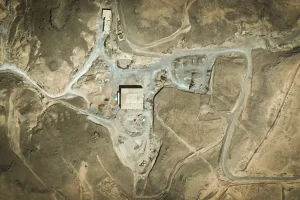
The airport is located in the Idlib province, some 300 kilometers (188 miles) from the Israeli border and around 70 kilometers (43.5 miles) from Turkey. It has reportedly been out of service since being damaged during Syria’s civil war, though reports suggested that recent attempts to rehabilitate the airport could be connected to Turkish efforts to establish a larger military and civilian presence in the area.
We are deeply concerned that the confirmed Israeli airstrikes on Abu al-Duhur Airbase constitute an unnecessary escalation that does not advance regional stability.
— Ambassador Tom Barrack (@USAMBTurkiye) August 18, 2026
The Al-Sharra government has neither adopted a predatory posture nor maintained proxy forces. It has, in fact,…
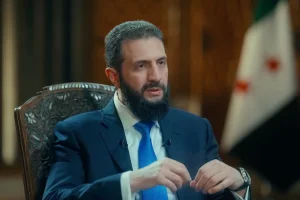
Barrack argued that the new Syrian government of President Ahmed al-Sharaa, previously a wanted terrorist who controlled an enclave in Idlib province for a few years before toppling the Assad regime in late 2024, “has neither adopted a predatory posture nor maintained proxy forces. It has, in fact, repeatedly indicated a preference for de-escalation with Israel.”
He added that the U.S. has hosted “discussions to encourage diplomatic cadence over kinetic frustration for both nations. Enduring de-escalation agreements are built through sustained dialogues with all concerned nations and principals. The United States continues to believe that restraint and engagement offer the more constructive course. We encourage all parties to prioritize logical discourse over further military incidents,” wrote Barrack.
Later on Tuesday, an unnamed senior Israeli official told Fox News that Israel was behind the strikes, stressing that Jerusalem shared “highly sensitive intelligence” with the U.S. beforehand.
Airstrike on Abu al-Duhur Airbase (August 18, 2026)
— Israel-Alma (@Israel_Alma_org) August 18, 2026
We do not currently know what was hit at the Abu al-Duhur Military Airbase. Assuming that the reports of the strike and the physical damage to the runway and several warehouses are accurate, we assess that, if warehouses were… pic.twitter.com/gQUuvx9PLr
“Al-Sharaa understands that he cannot operate like the previous Syrian regime, which maintained proxy forces. It’s possible that he didn’t understand what was going on, or didn’t know,” the official said, adding that “due to the highly classified nature of the intelligence” he couldn’t reveal further details about the strike.
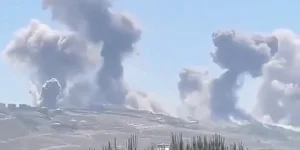
According to Syrian media reports citing Syrian military sources, Israeli fighter jets carried out eight strikes early on Tuesday morning, hitting the runway and abandoned aircraft hangars without causing any casualties.
The Qatari newspaper Al-Araby Al-Jadeed said that the strikes followed shortly after a visit by a Turkish military delegation to the site, reportedly as part of efforts to rehabilitate the runway.
The Syrian Foreign Ministry condemned the strikes, which it called an “unjustified” Israeli attack, urging the international community and UN Security Council to condemn Israel’s repeated violations.
According to a recent report by Israel’s Channel 13 News, Israel has been pushing the U.S. to approve more strikes in Syria, after identifying increasing Turkish attempts to take over airports and other infrastructure. The report noted that the White House consistently opposed Israeli strikes.
Jerusalem and Washington have been at odds about the new Syrian government since it was established, with Israel arguing that the former terrorist and his new government troops, which are largely made up of former jihadist fighters, continue to pose a threat to Israel.
The United States, on the other hand, has pushed Israel to sign a security arrangement with Damascus.
After building a new ground military force, reports suggested that the Syrian Defense Ministry has been advancing efforts to rebuild its air force as well. At the end of July, the Syrian Air Force College announced the graduation of the first 1,000 cadets since the fall of the Assad regime.
Earlier this week, Syria reportedly conducted its first air exercises in the north using Russian-made MiG-21 fighter jets.
Two weeks ago, Kan News reported that in Israeli security circles there are growing concerns about these developments.
Israel’s main concern in this context is reportedly the expanding Turkish presence, which could aim to boost the Syrian Air Force while deploying air-defense systems simultaneously, endangering Israel’s freedom of action in Syrian airspace, which has been critical in the fighting against the Iranian regime.
“We are monitoring developments in Syria and sharing our concerns with the United States,” a security official said.
According to Ynet News, during Trump envoy Jared Kushner’s visit to Israel on Monday, Shin Bet Director David Zini and IDF Military Intelligence Director Shlomi Binder also presented extensive intelligence on Hamas’ military buildup, including intelligence indicating that Turkey is financing Hamas.
Hamas spokesman Hazem Qassem also condemned the Israeli strike in Syria, describing it as “a continuation of the aggressive occupation policy toward the entire region.”
Please take a moment to join believers worldwide praying for Israel right now. Add your light to the live prayer map—and show the world one more watchman praying for the peace of Jerusalem.

You might also like to read this: