Turning Colombia’s Golan recognition into diplomatic action



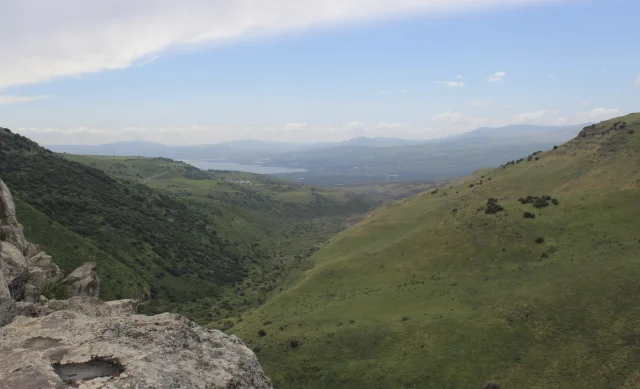
In the often-cynical arena of international diplomacy, moments of genuine clarity are rare. Colombia’s recent decision to formally recognize Israeli sovereignty over the Golan Heights is one such moment. By becoming only the second country, following the United States in 2019, to acknowledge this reality, Bogotá has not merely issued a statement; it has punctured a long-standing diplomatic fiction.
While the congratulations flowing from Jerusalem are deserved, they must be accompanied by a strategic pivot. For too long, Israel has treated the Golan as a settled military reality but a dormant diplomatic issue. As the situation in Syria deteriorates into a complex web of jihadist factions and Turkish influence, the threat of international pressure for an Israeli withdrawal is no longer abstract. It is tangible and growing.
The Strategic Imperative: Beyond Symbolism
Israel was late to understand that international recognition of its sovereignty over the Golan Heights is not a declarative or symbolic matter, but a strategic objective of the highest order. This is all the more true following the "reunification of Syria" under President Ahmed al-Sharaa.
The greater missed opportunity came with the rise of al-Sharaa’s government. Western countries rushed to open their doors to him, confer legitimacy on his government and ease sanctions. Israel should already have presented its allies with a clear equation: recognition of the new Syrian government in return for recognition of Israeli sovereignty over the Golan. If the West is strengthening Damascus and embracing the principle of "Syria's territorial integrity," it must not allow the Golan Heights to be implicitly included in that formula.
The growing ties between Ankara and Damascus, coupled with Syria’s explicit insistence on its claim to the Golan, should serve as a wake-up call. The more firmly the Syrian government establishes itself, the louder the voices will become calling for Syria's rehabilitation to be "completed" by reopening the question of the Golan.
The Biblical and Legal Foundation
The campaign for recognition must be rooted in more than just security—it must be anchored in history and international law.
The phrase "from Dan to Beersheba" appears multiple times throughout the Hebrew Scriptures, serving as the standard biblical expression to describe the full extent of Israelite territory. This geographic designation defined the complete heartland of the ancient Israelite nation. The city of Dan, the northern anchor of this phrase, is situated in the Golan region.
This biblical geography directly influenced the modern political boundaries of the Middle East. At the 1920 San Remo Conference, British Prime Minister David Lloyd George explicitly used this biblical map to define the territory of the Jewish National Home. The original Mandate for Palestine included the northern lands that constitute today’s Golan Heights, including Mount Hermon.
However, the final borders were not determined by scripture but by imperial realpolitik. Through the Paulet-Newcombe Agreement of 1923, Britain ceded the Golan to the French Mandate of Syria. This act was not based on historical or demographic justice but was a product of colonial trade-offs centered on oil concessions—specifically, securing British control over the Mosul oil fields.
Israel's presence in the Golan, secured after the 1967 Six-Day War, can be viewed as a restoration of a boundary that was previously recognized under international law at San Remo. When President Donald Trump recognized Israeli sovereignty in 2019, he was acknowledging a reality written a century earlier. He was stating the obvious: that some borders are drawn not just in diplomatic ink, but in the unchangeable stone of geography and history.
The Road Map: From a Single Achievement to Critical Mass
Colombia has shown that recognition can be done. Now a single achievement must be transformed into critical mass. Israel must wage a targeted diplomatic campaign, focusing on countries where the groundwork is favorable.
The natural targets are nations that have already demonstrated diplomatic courage regarding Jerusalem—a far more complicated issue due to its religious significance. Countries that have recognized Jerusalem as Israel's capital, moved their embassies there, or adopted an unusually supportive posture are the natural audience for this effort.
Immediate Priorities (The "Low-Hanging Fruit")
Argentina: President Javier Milei is one of Israel's greatest allies in the world. He has already announced his intention to move the embassy to Jerusalem. During his recent visit, Israel rightly honored him, but a strategic issue should also have been raised: a true friend should recognize the reality on the Golan. This is an unmissable opportunity.
Czech Republic: A stalwart friend in Europe, Prague has led on Jerusalem issues. They understand the threats of radicalism and the importance of territorial integrity.
The Next Tier (The "Pacific and Periphery Allies")
Fiji: A deeply religious nation with a strong Christian Zionist leaning. The Fijian government has consistently voted with Israel in the UN. The "Dan to Beersheba" biblical argument resonates deeply here.
Palau: Like Fiji, Palau has a history of unwavering support for Israel in international forums, often citing biblical heritage. These island nations are small in size but carry significant weight in UN voting blocs.
Azerbaijan: A strategic Muslim-majority ally. Baku understands the existential threats posed by Iran and the need for secure borders. Recognizing the Golan aligns with its security paradigm of prioritizing strategic partnerships over religious solidarity.
Paraguay, Honduras, and Guatemala: These nations have proven their friendship through Jerusalem embassy moves. The next logical step in solidifying that alliance is recognizing the strategic plateau in the north.
The American Lever
The United States, which recognized Israeli sovereignty over the Golan, invested significant diplomatic capital in strengthening the new Syria. Israel should have asked Washington to use its influence: any country receiving an American green light to move closer to Damascus should simultaneously be asked to recognize the irreversible reality on the Golan Heights.
Conclusion
The Golan Heights are not a bargaining chip. They are the biblical inheritance of Dan, the headwaters of the Jordan, and the high ground that protects the Galilee. For 60 years, Israeli control has guaranteed stability, security, and prosperity where there was once shelling and terror.
Colombia has joined the United States in acknowledging this truth. Now, Jerusalem must turn this duo into a chorus. By engaging friends like Argentina, Fiji, and the Czech Republic with a clear historical and legal case, Israel can ensure that the next generation of diplomats grows up knowing that the Golan is not "occupied," but is simply home.
You might also like to read this: