Israel’s strategic role grows as Iran and Russia forge closer military ties





This week brought renewed U.S. airstrikes on Iran and warnings from Israeli officials about the possibility of renewed hostilities, even as reports surfaced of a new submarine, with long-range strike capabilities, joining the Israeli Navy.
The developments highlight a broader and increasingly complex strategic contest. As Israel strengthens its ability to deter and respond to threats from Iran, its growing importance to NATO and European defense is also drawing it deeper into the broader confrontation between Russia and the West.
At the same time, Russia appears to be strengthening its military cooperation with Iran, potentially giving Tehran new capabilities to challenge Israeli and American air defenses.
This week’s departure of the INS Drakon from Germany’s Kiel shipyards and its voyage to its new home port in Haifa is both symbolic and highly practical. The submarine’s deployment in waters close to Iran is expected to become an important component of Israel’s strategic defense.
As Iran develops missiles capable of delivering warheads to targets at extremely high speeds, an Israeli submarine positioned close enough to monitor launches and potentially conduct retaliatory strikes within a relevant time frame provides Israel with a critical strategic capability.
At the same time, Israel’s value to NATO in general and Germany specifically is increasing as concerns grow over the possibility of a future Russian move against the European alliance. Israel possesses many of the technological capabilities that NATO members are seeking to strengthen their own defenses.
However, the Kremlin also possesses technologies that could address some of the military challenges facing Iran.
Signs are now emerging of a potentially significant alliance between Iran and Russia aimed at transferring technology that could help arm the Islamic Revolutionary Guard Corps with high-speed missiles capable of challenging the air defense systems used by the United States and its allies in the Middle East, including Israel.
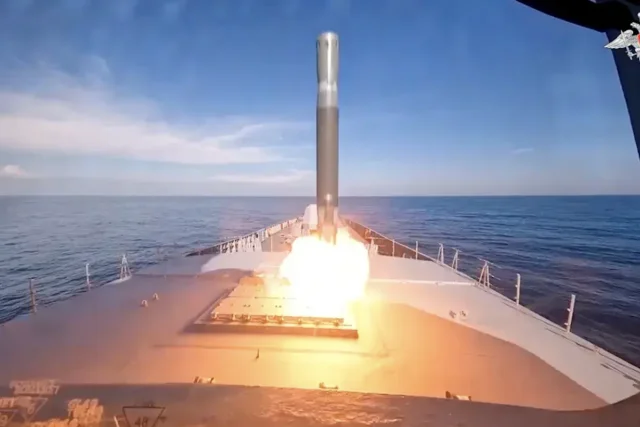
Intelligence reports indicate that Moscow has launched “Project C430L,” which involves sending technicians from the Russian aerospace firm NPO Mashinostroyenia to assist their Iranian counterparts in developing the “ramjet” propulsion system, which powers high-supersonic and low-hypersonic cruise missiles designed for land-attack roles.
The assessment is that Iran might be developing these capabilities to replace some of the strategic advantage it lost after severe Israeli and American attacks damaged its ballistic missile production capacity during recent rounds of conflict.
These weapons could give the IRGC new capabilities to challenge U.S. and Israeli air-defense systems that have been highly effective against ballistic missiles. Their ability to fly at high speeds and low altitudes could make them more difficult to detect, while their maneuverability could make them harder to track and intercept.
That could allow Iran to launch a salvo of such missiles against strategic infrastructure in Israel, potentially causing significant damage before Israel could respond. Such a scenario represents the classic “first strike” option that nuclear-war theorists have warned about for decades.
The INS Drakon and the follow-on Dakar-class submarines are designed to counter that possibility by providing Israel’s leadership with a survivable platform capable of ensuring that Israel retains the ability to launch a retaliatory “second strike” against Iran.
Finally, Israel’s increasing strategic value to NATO adds another layer to its defensive posture.
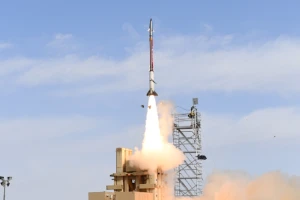
A recently announced $3.5 billion deal to build an air defense system for Greece, along with an earlier-summer deal to supply critical munitions to Romania, demonstrates the increasingly close defense relationship between Israel and NATO members.
That growing relationship could also provide an incentive for Russia, NATO’s main strategic rival, to deepen its cooperation with Israel’s enemies, particularly Iran.
You might also like to read this: