Israeli soldier killed in Humvee accident as IDF maintains security zone in southern Lebanon
Israeli military source: IDF will not withdraw from southern Lebanon for years

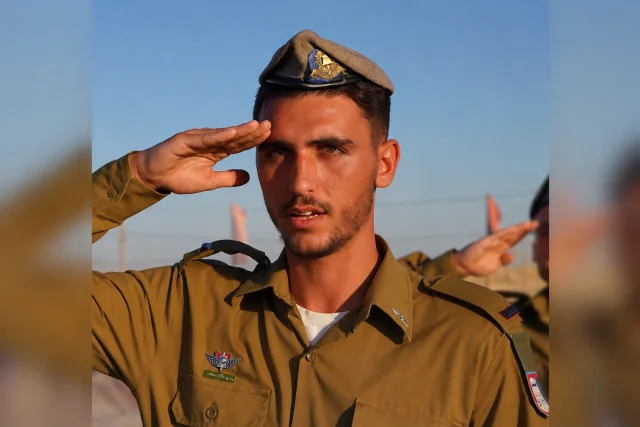
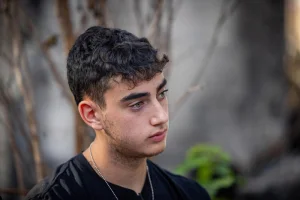
Twenty-one-year-old Cpt. Eliav Haim Tzapalamus was killed in an accident in southern Lebanon on Thursday, the Israel Defense Forces announced, as the Israeli military continues to hold a security zone stretching along the border to prevent Hezbollah from returning.
Tzapalamus served as a combat officer in the IDF’s 7th Brigade. He was killed and three other soldiers were lightly wounded when their Humvee overturned in southern Lebanon.
“We are all mourning the loss of Captain Eliav Haim Tzapalamus and praying for the recovery of three other soldiers who were injured in the serious accident in southern Lebanon,” Prime Minister Benjamin Netanyahu said on Thursday the evening.
Tzapalamus was the 41st IDF soldier killed in fighting against Hezbollah since the latest escalation began in late February. A civilian contractor working for the Defense Ministry was also killed.
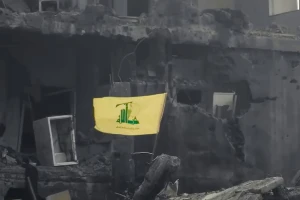
The front has remained relatively quiet in recent months, with IDF troops holding the security zone while continuing to search for and demolish Hezbollah infrastructure, amid occasional exchanges of fire and airstrikes against threats.
Lebanese news outlet Naharnet reported Israeli artillery shelling in several towns across the zone on Thursday, including Mais al-Jabal, Haddatha and Beraashit. Explosions, reportedly targeting Hezbollah infrastructure, were also heard in Kafr Kela, Taybeh and al-Khiam.
The IDF has neither confirmed the reports nor announced any other significant incidents in recent days.
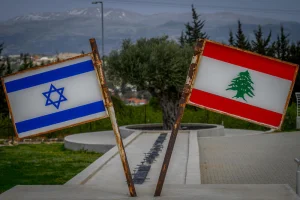
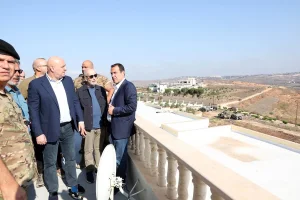
Jerusalem and Beirut signed a U.S.-mediated ceasefire framework in June aimed at disarming Hezbollah and requiring an Israeli withdrawal as the Lebanese army deploys in the same areas.
Both sides agreed to begin the process in several “pilot zones,” but Israeli officials have warned that the initiative has already failed, arguing that the Lebanese military has been unable to prevent Hezbollah from returning to the areas.
An IDF source told Sky News Arabia that terrorist infrastructure remains “everywhere” south of the ceasefire line and that search operations would continue for years. The source also accused the Lebanese military of failing to fulfill its role in the pilot zones.
Kan News reported this week that Hezbollah has managed to infiltrate the areas under civilian cover. According to the Alma Research Center, a security think tank, two Hezbollah-affiliated civilian organizations, the Islamic Health Organization and the Wataawano Association, entered the town of Zawtar al-Gharbiyeh to provide medical services, set up mobile structures to serve as a temporary office for the local council and a food distribution center, and operate a kitchen
“Even when the state provides budgets and resources, the body transferring part of the aid directly to residents is the South Council, ostensibly a state institution, but in practice one that serves as a mechanism of influence and control for Amal and Hezbollah in southern Lebanon,” Alma said.
A Lebanese political figure confirmed, “The Lebanese state is not doing what it is supposed to do. If Hezbollah enters every place Israel leaves, this only shows how critical the issue of disarming Hezbollah is, even before the Israeli withdrawal.”
Hezbollah has long relied on civilian services to maintain support among its Shiite base, particularly in southern Lebanon. In recent months, however, funding for these activities has dwindled amid intensified efforts by the Lebanese and Syrian governments to crack down on smuggling.
This week, Reuters reported that a shipment of $200 million in cash had arrived in Lebanon from Iran despite those efforts. The money was reportedly intended to help Lebanese families displaced by the war with Israel, with an initial payment of $3,000 planned for each of around 50,000 families whose villages had been destroyed or are inaccessible due to the IDF’s presence.
However, Washington is disputing Hezbollah’s claim. U.S. State Department Spokesperson Tommy Pigott said the money “is not there,” and accused Hezbollah of “trying to save face with fake stories about cash influxes from Iran.”
A State Department spokesperson told the Saudi Al Hadath news outlet: “Hezbollah will never recover under the Trump administration, and Hezbollah will not be able to rebuild its terrorist infrastructure.”
You might also like to read this: