Father of returned hostage says family's ongoing struggles reflect broader challenges for Oct. 7 victims
'We are divided into the family of before Oct. 7 and the family of after'

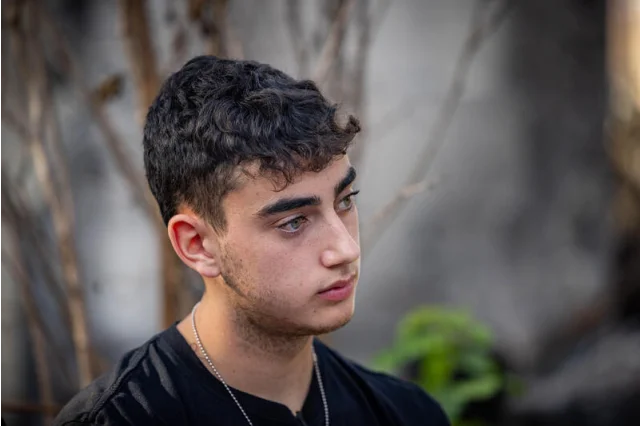
In an open and raw Interview, Yoav Engel used the Hebrew word for “distorted” several times to describe their family’s nightmare that began on the morning of Oct. 7, 2023.
Ofir, their then 17-year-old son, was kidnapped from Kibbutz Be’eri, along with his girlfriend’s father and another teen.
“No one taught us how to cope with a child who was kidnapped. And no one taught us, as a whole country, to enter into a fight to release the hostages,” Engel said. “Nothing about this was by the book.”
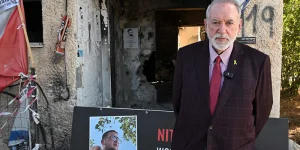
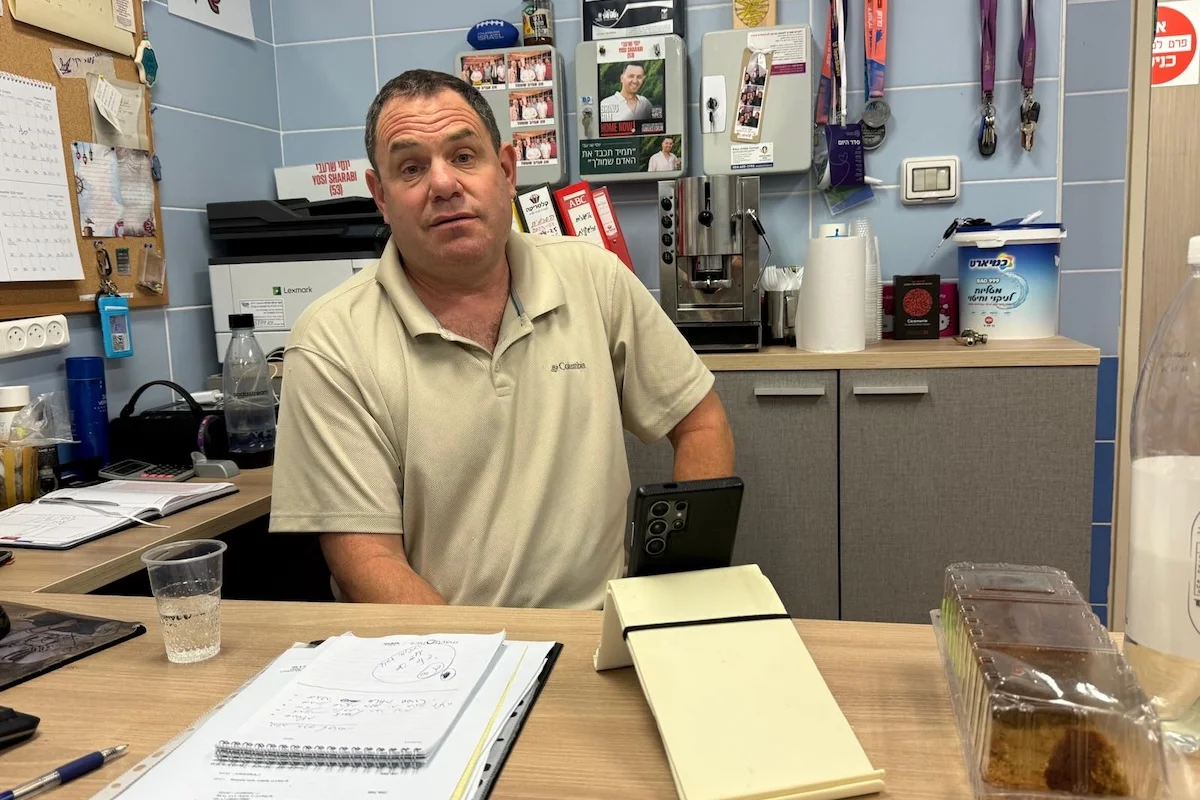
Engel spoke with All Israel News from his office where a poster of Yossi Sharabi – the man kidnapped with his son – still hangs.
The family lost contact with Ofir around 12:30 p.m. on Oct. 7. Later that day, Nira Sharabi called Yoav and his wife to say the last time she saw him, Ofir was taken by Hamas terrorists along with her husband.
Three years later, the hostages who returned and their family members remain suspended in a new and unresolved reality. For these families, Oct. 7 did not end when a hostage came home or a body was returned. Instead, they entered a state of prolonged, unresolved trauma for which there is no handbook.
Without a framework to guide them, the family has been stumbling through their new life ever since.
“I see the impact on myself, my wife and my daughters. Of course, what we went through is different from what Ofir went through – that’s completely different,” he said. “But the entire dynamic of our family has changed.”
Each member is coping in their own way. Engel eventually went back to his job as sports director for Shalva, an organization that helps children with special needs.
“But there is no doubt that I have changed inside. I understand that I am not the person I was. My self-confidence is lower,” he admitted.
Engel’s wife did not return to her job at the family’s kibbutz in Jerusalem. Unlike Engel, who feels a need to continue telling their story, Sharon keeps to herself and constantly checks the children’s locations. Their oldest daughter stopped going to school while the youngest poured herself into soccer. Ofir, the eldest, joined the army.
Then there’s the bickering amongst them – “Why does she not go to school but I have to?” – and, with teenagers on a journey of self-discovery, it is impossible to know whether such outbursts are normal for their age or the results of unresolved trauma.
“I feel disappointed in myself that I can’t seem to restore normalcy and get them back on track. Sometimes I feel the pressure of having no idea what to do. I know there’s a problem, but I don’t know what to do about it,” Engel admitted.
Hamas terrorists abducted 251 people from Israel on Oct. 7, 2023. Many who followed the news are familiar with the names of those there the longest, or of the dramatic rescues – like that of Noa Argamani – and crushing tragedies – such as Hersh Goldberg-Polin, who was executed in captivity along with five others.
But few are privy to the details of the “regular” victims still grappling with their own demons.
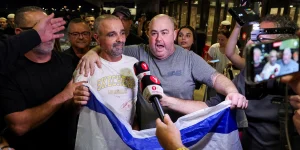
Ofir was released on Nov. 29, 54 days after his abduction. Engel notes different phases the family was swept into, from the uncertainty over Ofir’s fate to an ongoing struggle to return the hostages and the sudden end with many hostages returning in coffins.
For them, the aftermath feels haphazard. Engel recalled that when his brother, Yair Engel, died during his naval commando training in 1996, the military had a protocol and an existing support system for the family.
“It's hard for me to compare. I won’t say which is harder, but I will say these are two experiences that are totally different,” Engel said. “This event was like no other. The first day they didn’t even know what to tell me – was Ofir kidnapped or killed? And – you don’t even know which is worse.”
After their return, many of the hostages and their families continued to fight for others still in Gaza through weekly rallies in Hostage Square, lobbying in the Knesset and advocacy trips abroad.
Like the Engels, few paused to recover.
“When Ofir returned, we didn’t turn to someone for help because we were still dealing with getting Yossi back,” Engel recalled. “This wasn’t normal.”
While he was at the hospital after his return, Ofir donned a hostage bracelet next to his hospital band.
“He didn’t start his recovery. He immediately entered the fight,” Engel recalled. “We were working on behalf of others and I’m not sorry about that. I’d do it again, but it's not normal. Totally not normal.”
Years later, these families are still seeking recovery and recognition, but without a clear path forward.
“We are trying now to find our way, but you know, if you have a fracture and you don’t deal with it right away and only take care of it two years later, the arm will never get back to what it was, Engel said.
The hostage families want the government to recognize the unique aspects of this mass-trauma experience and create a law specifically for Oct. 7 victims which extends to family members, not just the direct victims.
“In essence, what they are offering is a ‘non-distorted’ way to deal with a distorted situation – and it just doesn’t suit the situation,” he explained. “The government is trying to use words for past events and apply them to what happened to us.”
“Right now, the government doesn’t even recognize me or what I went through. From its perspective, I wasn’t physically at the event, so I’m not eligible for anything,” Engel explained. “But if I show them all the text messages, if I tell them I went to the kibbutz looking for my son – how can they say I wasn’t part of the event? I was in the event.”
Engel fears that entire families will be lost – including his own.
“Today it's clear to us, to the kidnapped and their families, that this will define us forever,” said Engel.
However, this would require the government to take responsibility, “and that’s where the disconnect is,” Engel said. “When the government takes responsibility, things will start to move.”
In the midst of a new ongoing struggle and quest for recognition, Yoav is processing grief for someone he never met: Yossi Sharabi, the father of Ofir’s girlfriend, Yuval.
On the afternoon of Oct. 7, Engel and his wife were supposed to meet the Sharabis for the first time. Sharabi was killed inadvertently in an Israeli airstrike on Jan. 10, 2024, authorities believe.
“There’s no day I don’t think of Yossi and yet I never met him,” he said. “And yet he’s the one who was with Ofir in captivity. He was more of a father to him during those 54 days in captivity and then, in the end, he didn’t come back alive. I will never get the chance to thank him.”
You might also like to read this: