Israeli security agencies investigating suspects for espionage for Iran, manufacturing explosives
Despite current Iranian war, security agencies continue to arrest citizens involved in spying for money



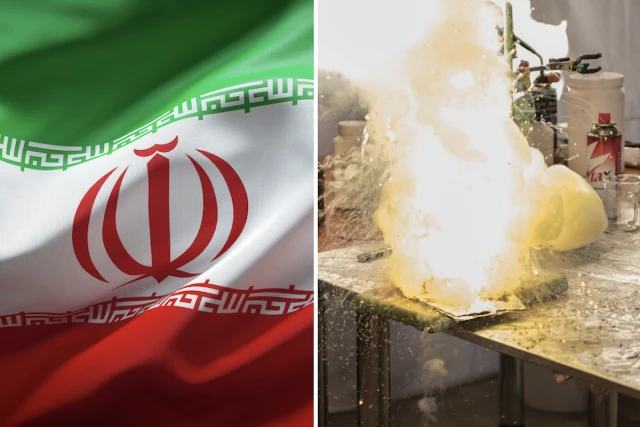
The Israel Police's unit tasked with combatting major crime, called Lahav 433, is investigating several suspects in connection with espionage activities for Iran, including the manufacturing of explosive materials.
The Magistrate's Court in Ashkelon allowed the publication of the investigation being conducted by the Israel Security Agency (Shin Bet) and Lahav 433, which is roughly equivalent to the American FBI, into a number of people suspected of providing "various services" to Iranian agents.
Following a request by Israeli news site Israel Hayom, some details of the investigation were allowed to be published, including the fact that the suspects appear to have worked to manufacture explosives, even conducting experiments, at the request of Iranian agents.
At present, a general gag order remains in place on the case, with few details surrounding the suspects being permitted for publication.
One of the suspects, a 21-year-old resident of Jerusalem, is suspected of committing serious security offenses related to conspiracy and espionage for Iranian intelligence officials. The investigation revealed that the suspect was in contact with Iranian elements from 2025, after being contacted via social media.
As part of the tasks he was given, the suspect took photographs and video documentation in several locations in Israel, and even purchased new photographic equipment for that purpose. Throughout his espionage work, the suspect was aware that he was dealing with hostile foreign elements and received payment in digital currency via online exchanges.
The suspect was arrested on March 26 during the current Operation Roaring Lion. Details regarding the other suspects remain under the gag order.
On Friday, indictments were filed against several individuals in similar espionage cases. One of the individuals, Mekdad Natour, 47, an Israeli Arab from Qalansawe, near Netanya, was accused of contacting foreign elements through a chat network of the Qatari Al Jazeera news channel while searching for work.
Natour, who had worked for years as a sign language interpreter for police and the judiciary, was tasked with collecting sensitive information, including missile impact sites, data on wounded and killed, and information on the mood of the Israeli public during the war. Natour received payment for his espionage.
Another indictment was filed against two Israeli Jewish residents of Modi’in Illit, who sent information related to security checkpoints, documented the path to the Lod District Court, and even documented the home of a reservist lieutenant colonel, sending all the information via the secure social media app Telegram. The two were paid over $US1,000 in digital currencies for their espionage work, and maintained contact even after the outbreak of the current war.
The prosecution asked the court to extend the suspects' arrest until the end of legal proceedings, as all were aware they were in contact with hostile elements.
The indictments highlight a growing number of cases of Israelis who have engaged in espionage activities on behalf of Iran for financial rewards. While some of the suspects have been Israeli Arabs, many have also been Jewish citizens who have cited financial incentives as the main reason for carrying out such activities.
You might also like to read this: