Israeli reservist builds IDF’s drone capabilities after brother killed in Lebanon





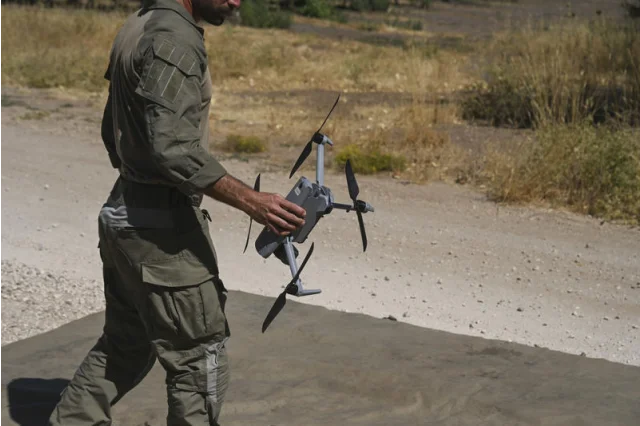
Israeli reservist and entrepreneur Udi Oster lost his brother in battle against Hezbollah terrorists in Lebanon after Hamas’ Oct. 7, 2023, attack on Israel. His longtime employee, Or Levy, was among the 251 hostages Hamas abducted to the Gaza Strip.
Despite these deeply personal experiences, Oster has channeled his wartime experiences into strengthening Israel’s military drone capabilities. Today, the 38-year-old heads Aitan (formerly eyesAtop), a drone company that has developed an integration system designed to allow the IDF to control multiple military drones.
Oster’s path into the drone industry began just one day after the Oct. 7, 2023, massacre, when he met IDF reservist Alon Dror at a makeshift meeting point.
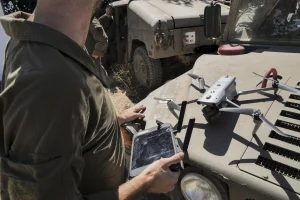
“He arrived in crumpled uniform at the junction where I was, only a few hours after being called up, and I was waiting for him with a bag containing two private drones I had at home that I was supposed to give him,” Oster said in an interview with Calcalist’s weekend magazine.
“I don’t even remember who connected us, but it was the day after the massacre and every drone that could reach the battlefield had to get there.”
That meeting convinced Oster that relatively simple commercial drones could play a significant role on the battlefield.
“Suddenly everyone understood that if a fighter has a surveillance drone, he can see a kilometer ahead and understand where the terrorists are, and that even if he has a drone you can buy at BUG or KSP, it changes the battle. Then you ask yourself: How can it be that he doesn’t have one?”
Israel has emerged as a global leader in drone development but Oster was surprised to discover at the beginning of the war that many IDF soldiers lacked access to relatively simple drones that could provide critical battlefield intelligence.
Oster initially donated two private drones. Dror, who now heads defense startup Kela, eventually asked him to help secure additional drones for Israel, with financial support from wealthy Jewish American donors.
Dror established a war room on behalf of the Defense Ministry’s Directorate of Defense Research and Development at Tel Aviv’s Sarona complex. Its goal was to create an organized system for channeling financial donations to Israel specifically for the purchase of drones.
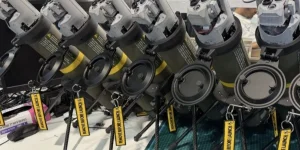
The improvised effort ultimately secured millions of dollars in donations and helped bring thousands of drones into Israel.
“We photographed their passports, wrote down who was taking what and sent them to Ben Gurion Airport,” Oster recalled. “Then we waited for them in Israel and took the equipment from them. That’s how the first shipments arrived."
Oster said the IDF had initially not been prepared for a large-scale ground operation because it expected the war to be fought primarily through air power.
“For years, the IDF’s concept was that there would be no ground maneuver and there was no reason to direct budgets to this field,” he assessed. “The money went to defense and strategic targets.”
Looking back, Oster estimates that the improvised war room helped bring between 3,000 and 4,000 drones into Israel during the first two months of the war. Three years after the war began, drones have become an increasingly important part of the IDF’s arsenal, and Aitan and Kela recently secured a large-scale IDF drone tender.
For Oster, the business venture is also deeply personal. His brother Eitan was killed in battle in Lebanon in 2024 amid fog and difficult weather conditions. Oster believes that greater access to advanced technology might potentially have saved his brother’s life.
“I don’t know what the battle in which they fell would have looked like if they had more tools,” Oster said. “But I do know that today there are technologies that can change battles like that."
Drones have become a major component of the conflict between Israel and Hezbollah in Lebanon, with multiple Israeli soldiers killed and wounded in Hezbollah drone attacks in recent months. Israel has responded by expanding its own drone capabilities.
Aitan now employs about 50 people in Ramat Gan near Tel Aviv. The company is working to simplify the control of multiple drone types so the technology can be deployed at the military company level.
“What we are trying to do is take capabilities that exist today in the Zik and bring them down to company level,” Oster concluded.
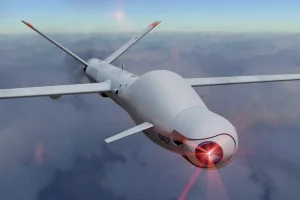
It was reported in May that the IDF plans to mass-produce thousands of suicide drones to counter the drone threat from Hezbollah.
You might also like to read this: