Israeli doctor who cared for Gaza children questions whether new reality renders cross-border treatment impossible
Cardiologist facilitated medical care in Israel for Palestinians right up to Oct. 7, 2023





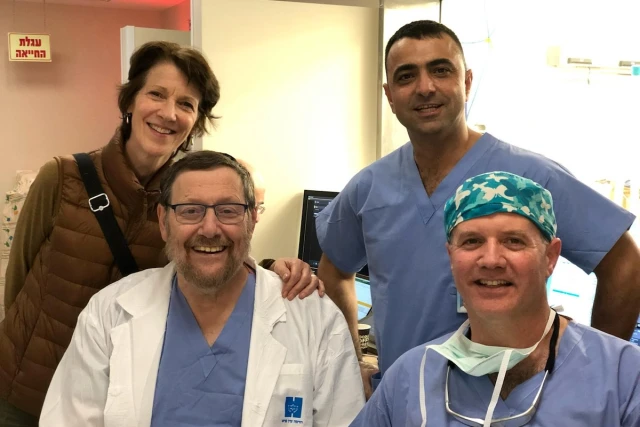
Since the Hamas invasion on Oct. 7, 2023, the possibility for Palestinians to get access to Israeli medical care through different aid organizations came to a sudden and obvious halt.
But will it ever pick up again, even as the two-year war finally shows signs of waning?
One Israeli cardiologist is uncertain that it can.
“That’s the thing I’m still struggling with,” said Dr. Sagui Gavri, the head of Pediatric Cardiology at Hadassah Hebrew University Medical Center, who had for years been actively facilitating access to medical care in Jerusalem for Palestinian children.
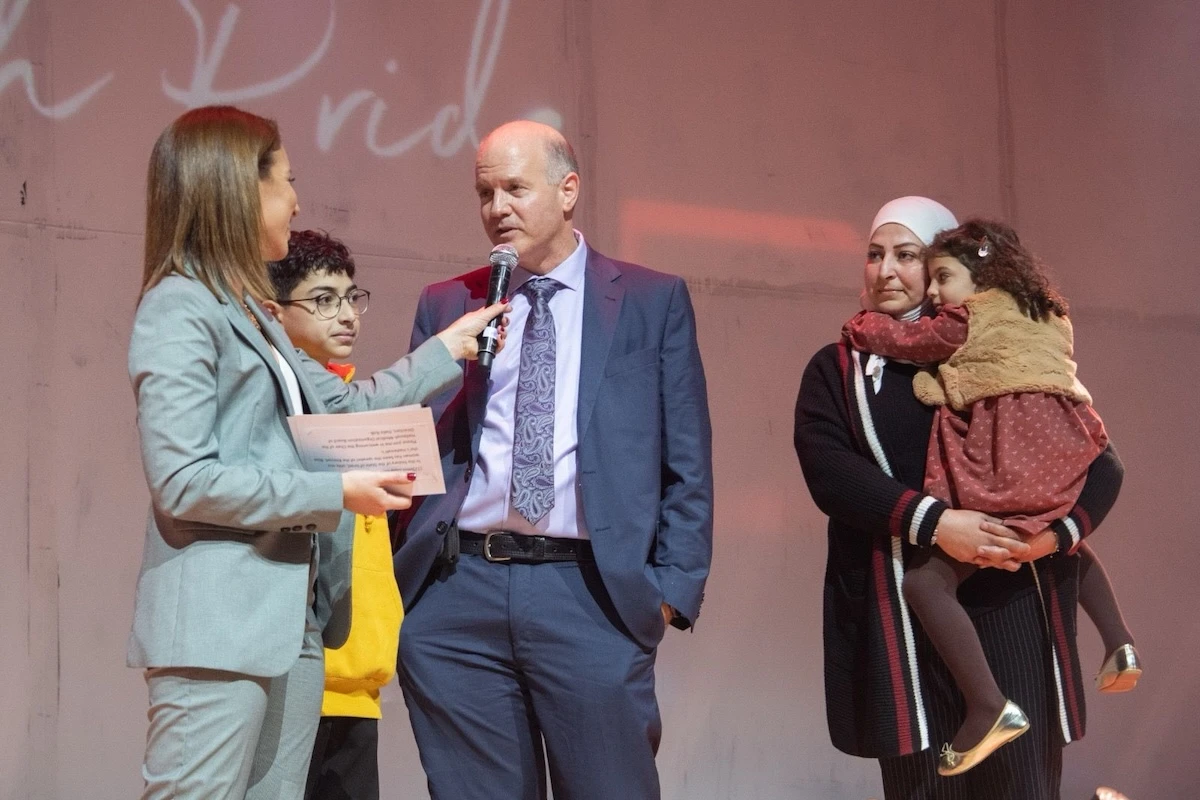
Through an initiative known as Un Coeur pour la Paix – One Heart for Peace – Gavri and his colleagues provided life-saving cardiac care to Palestinian children who had no access to advanced treatment.
The organization, based in France and founded by French-Israeli Prof. Azaria Rein and Muriel Haim, was even nominated for a Nobel Peace Prize for its charitable work. Its philosophy was that children are not responsible for the crimes or politics of their parents or neighbors and that treating them was not only a moral obligation, Gavri believed, but a way to humanize both sides and create relationships that could transcend borders.
That belief was another victim of Oct. 7.
Israel came under three waves of attacks on that day: First, elite Hamas military units broke through the fence and invaded Israeli-border communities – including Gavri’s own Kibbutz Nir Am. They were followed by regular units and Islamic Jihad operatives and then “civilians who came to rape, plunder and burn. And they were the worst,” Gavri noted in a wide-ranging interview.
“October 7 has shown me that this was not as clear cut as there’s Hamas and then all the innocent people around,” he said. “Gaza is practically a country by itself. They chose Hamas in a 'democratic' election, so-called, and even if they regretted it since, (Israeli hostages were) held by families that are not Hamas soldiers. And many of the captives who came back talked about torture.”
Since its inception until 2023, some 720 Palestinian children received treatment through One Heart for Peace, including over 230 cardiac surgeries for patients from Gaza. But whether the work will continue is now subject not only to there being a closed military border, but also in that it poses a moral predicament.
“So far, I did not face this dilemma because we didn’t have any patients to treat,” Gavri said. “As a sworn physician, I’ll treat any patient who needs treatment. But certainly, I’m not looking to create such a program again right now.”
Since Oct. 7, many Israelis are dealing with their own wounds. Even before that, Gavri and his family experienced wars and sporadic rocket fire from Gaza that impacted the border communities more than other regions of Israel.
With the onset of a conflagration between Israel and Islamic Jihad in May 2021, Gavri was in the middle of treating a child from Gaza in the catheterization lab in Jerusalem when incessant rocket alerts began coming in back at home, indicating something more than a one-off attack. He immediately handed the case to a colleague and sped from Jerusalem to Nir Am – more than an hour away – to his wife and two sons.
That night, his wife stayed at the house with their dogs while Gavri took the boys to a nearby shelter at his parents’ home. In the middle of the night, a missile slammed directly into their home, blowing the roof apart and shattering windows. Gavri’s wife happened to be in the bathroom and stepped out onto a sea of glass shards. Had she been elsewhere in the house, she might have been killed.
The family was displaced for weeks as the house was rebuilt. At the time, it wasn’t too difficult a decision to return. Gavri grew up in Nir Am, a kibbutz his grandfather helped establish – a rural setting with a sense of community, green space and fresh air.
“When it’s quiet, it’s great,” he said.
Gavri said sirens and rocket attacks since 2000, compounded by a sense of abandonment on Oct. 7, 2023, have taken a psychological toll on people in the region, especially children. A high percentage of teens from the region are disqualified from combat service because of mental health issues.
“There is a big cost for living in these areas,” he said.
A mile from Gaza and surrounded by other kibbutzim and cities that were devastated, Nir Am itself remained relatively unscathed on Oct. 7, 2023, though some members were killed elsewhere. The quick actions of a military unit and the kibbutz’ first response team prevented the entry of terrorists into the kibbutz.
For most of the day, residents were cut off from electricity, internet and news, while they heard rockets and shooting all day. After 12 hours, the family heard for the first time from Gavri’s older son, who sheltered at a friend’s house in the city of Sderot.
Less than 24 hours later, they were ordered to evacuate, still unaware of the full scope of what had occurred. Gavri and his wife fled with their younger son, uncertain which route was safest, and warning their son not to look out the window at the apocalyptic scenes unfolding outside. The family was reunited only two days later and eventually joined the rest of the kibbutz members in Tel Aviv, where they remained displaced for a year.
To this day, Gavri has no information on the fate of many of his former patients from Gaza.
He does believe coexistence can occur on a human level.
“I know many Palestinians. I had some friends among them, I had many patients among them and I know for a fact these are people that you can talk to, relate to, create connections to depend upon, get help from, for sure,” he said. “I trained six Palestinian doctors in my profession for One Heart for Peace foundation so that they can be independent and we still work together and help each other.”
And while he acknowledges the suffering of Gazans as a result of the war, Gavri isn’t sure that any aspiration for peace exists between the two people groups anymore.
“Children are still not to be blamed for what their parents have done, but it is for (the Palestinians) to decide what their fate will be,” he said.
Is All Israel News’ faithful reporting important to you? Be part of it—help us continue by becoming a $5/month supporting partner.
You might also like to read this: