How the biblical Temple’s 7-branched menorah became the 9-branched hanukkiah




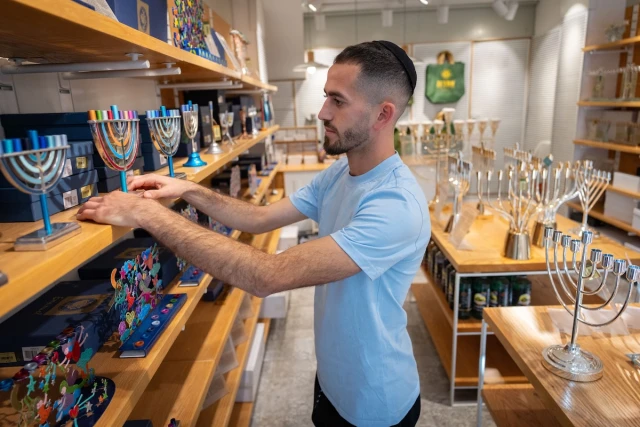
The ancient symbol of the menorah is well known around the world, and some would argue more Jewish than the Star of David. It’s certainly more biblical.
“You shall make a lampstand of pure gold,” God told Moses according to Exodus 25:31, when giving His instructions for building the tabernacle. Each piece was described in detail, according to the pattern shown to Moses on Mount Sinai. God’s directions were very precise:
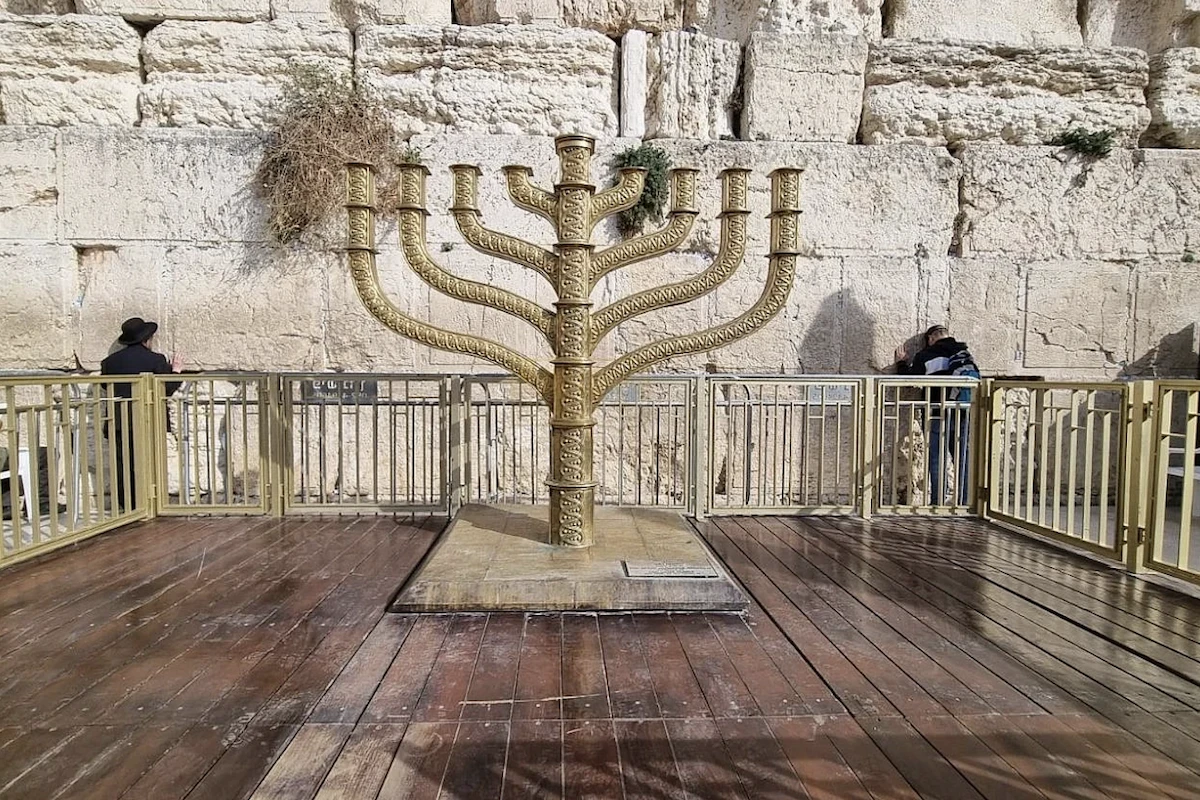
“The lampstand shall be made of hammered work: its base, its stem, its cups, its calyxes, and its flowers shall be of one piece with it. And there shall be six branches going out of its sides, three branches of the lampstand out of one side of it and three branches of the lampstand out of the other side of it; three cups made like almond blossoms, each with calyx and flower, on one branch, and three cups made like almond blossoms, each with calyx and flower, on the other branch – so for the six branches going out of the lampstand” (Exodus 25:31-33).
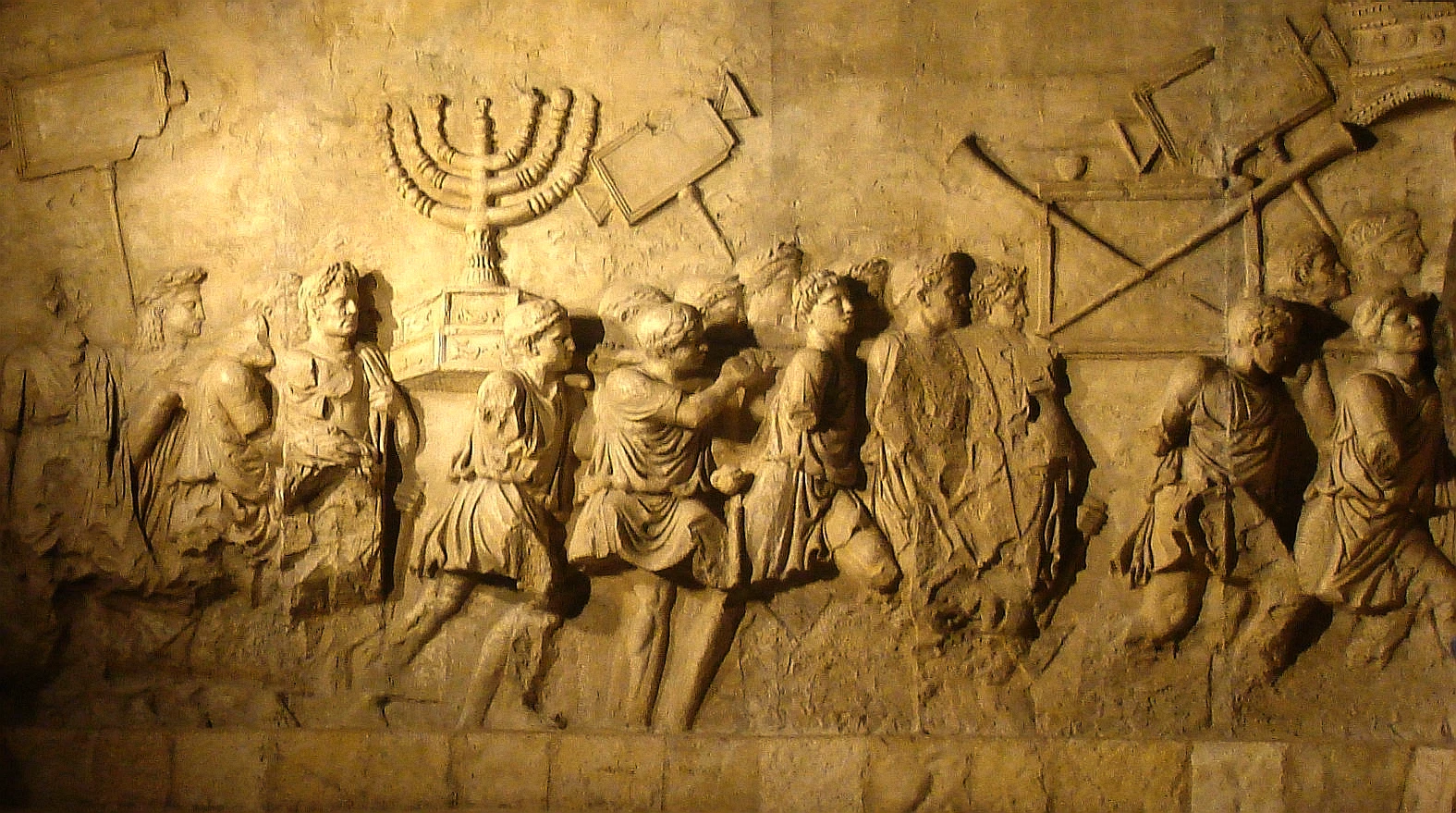
That’s seven branches altogether, three on each side, and one in the middle. So how did the Hanukkah menorah, now known as a hanukkiah, suddenly get nine branches?
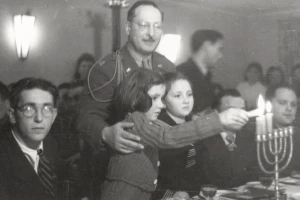
The answer is to do with the significance of the number 8 in the Hanukkah holiday, with the ninth being the “shamash” or “servant light” with which the other eight candles or lamps are lit.
The reason eight is so central to Hanukkah is often connected to the Talmudic story of the miraculous lamp oil that didn’t run out for eight days:
“On the twenty-fifth of Kislev, the days of Hanukkah are eight,” the Babylonian Talmud explains. “What is the reason? When the Greeks entered the Sanctuary they defiled all the oils that were in the Sanctuary by touching them. And when the Hasmonean monarchy overcame them and emerged victorious over them, they searched and found only one cruse of oil that was placed with the seal of the High Priest, undisturbed by the Greeks. And there was sufficient oil there to light the candelabrum for only one day. A miracle occurred and they lit the candelabrum from it eight days. The next year the Sages instituted those days and made them holidays with recitation of hallel and special thanksgiving in prayer and blessings” (Babylonian Talmud, Tractate Shabbat 21b).
However, even in the Talmud there are hints that the reason might actually be connected to the eight-day long Feast of Tabernacles. There’s a discussion between the houses of Hillel and Shammai later on in the same Tractate about how to light the eight candles – whether to add one each day or reduce the number over the holiday period:
“Beit Shammai say: On the first day one kindles eight lights and, from there on, gradually decreases the number of lights until, on the last day of Hanukkah, he kindles one light. And Beit Hillel say: On the first day one kindles one light, and from there on, gradually increases the number of lights until, on the last day, he kindles eight lights.”
The reason given for reducing a candle each day “corresponds to the bulls of the festival of Sukkot: Thirteen were sacrificed on the first day and each succeeding day one fewer was sacrificed (Numbers 29:12–31).”
The reason behind Hillel’s thinking, on the other hand, was the principle of increasing holiness, not decreasing it. “One elevates to a higher level in matters of sanctity and one does not downgrade.” Hillel won that round, and so we add a candle for eight days. But the link with Sukkot, the Feast of Tabernacles, was in the minds of the rabbis even around the time of Jesus.
“It's Tabernacles phase two” explained Messianic Jewish pastor from Jerusalem, Dr. Meno Kalisher explained to Dr. Erez Soref on TBN. “You missed the first one. I'll give you another chance. That's the idea behind it.”
The apocryphal book of 1 Maccabees, chapter 3, describes the Hanukkah story of how Judah Maccabee led the people to rise up in the wintertime and reclaim the temple from the Greeks.
They gathered at Mizpah, just outside Jerusalem (very close to the ALL ISRAEL NEWS office in fact), bringing all their equipment to serve God and cried out to Him saying, “What shall we do with these, and where shall we take them? For your sanctuary has been trampled on and profaned, and your priests are in mourning and humbled. Now the Gentiles are gathered together against us to destroy us. You know what they plot against us. How shall we be able to resist them unless you help us?” (1 Maccabees 3:51-53)
God heard their cry and gave them victory, and the temple was back in the hands of God’s people in the month of Kislev, which falls in December.
“It took time to clean the temple,” Kalisher explained. “They finished all the cleaning two months after October… we missed Tabernacles, that was two months earlier."
He explained that this principle of having a second chance to celebrate a festival is laid out in the Law of Moses, with the provision of “Second Passover” for those who missed it (Numbers 9:10-11). Similarly, in Nehemiah chapter 8, the Feast of Tabernacles is celebrated after the event, since they had not been able to celebrate it before in Babylon.
“Listen, I do believe God can perform miracles. I honestly believe so, but this miracle [of the oil lasting for eight days] has no literary foundation, no support whatsoever,” he said. “The real support is what is written in First and Second Maccabees… Hanukkah, the Feast of Dedication, is the second option to celebrate Tabernacles.”
Kalisher also added that Yeshua going to celebrate the Feast of Dedication in John 10:22 was an embodiment of the “second chance” principle in Scripture. As the Jewish Messiah, He is the Prophet like Moses, the Good Shepherd, and God’s Son who came to serve – the true light of the world to whom the temple menorah points.
So, whether there really was miraculous oil that burned for eight days solid, or whether it was really about the eight days of Tabernacles celebrated after reclaiming the temple, Hanukkah is very much an eight-day holiday. But there’s also the extra “shamash” – the servant light. And that’s why the temple menorah adds extra branches for Hanukkah.
Want to help more people find our reporting from Israel? Leave a quick Google review of our website here.
You might also like to read this: