Hanukkah’s enduring message of courage




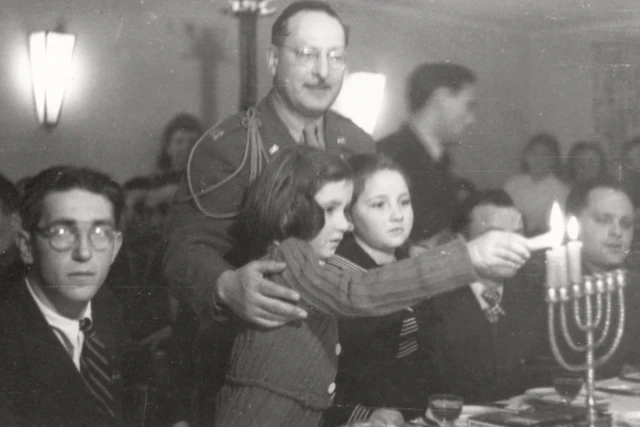
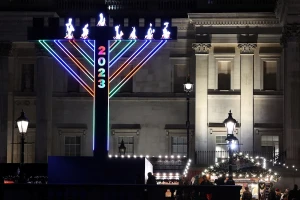
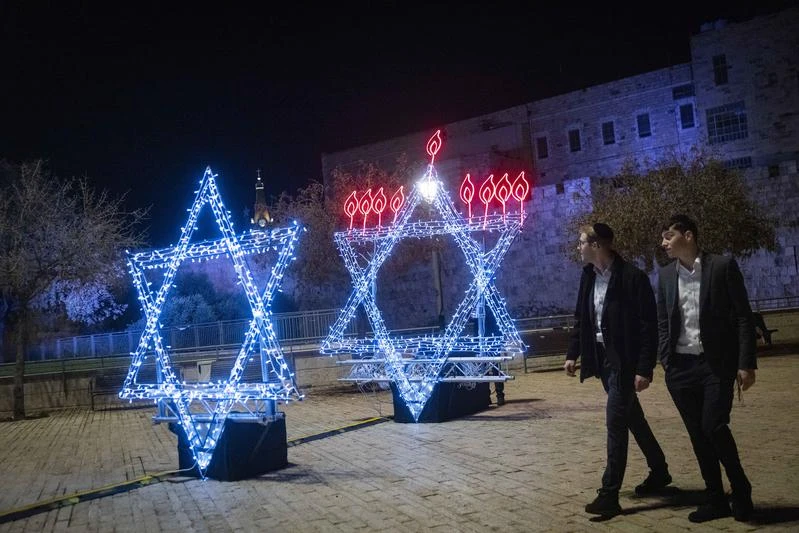
The nine-branched menorah – the hanukkiah – is a symbol of courage. The story behind the holiday of Hanukkah is a tale of great Jewish heroism. Even today, the tradition of lighting the holiday candles and displaying them in the window is going to take an act of courage for many.
But back to the beginning. In 167 BC, Jewish elders were forced by the Greeks under Antiochus IV to eat swine flesh, sacrificed on the altar in God’s temple in Jerusalem. It was the spark that lit the powder keg built up over several years of cruel repression, and it ignited the Jewish revolt against the Greeks.
Despite being heavily outnumbered, Judah and the Maccabees rose up to lead the fight against their oppressors and reclaim the temple in Jerusalem. They removed all the Greek idols and rededicated the temple to God, hence the name “Hanukkah” which means “dedication.” The sweet donuts and little candles we enjoy today stand in stark contrast to the horrendous history that fueled their death-defying courage.
But the heroism continues. A hanukkiah menorah is displayed in the Yad Vashem Holocaust Museum, made famous by a photo taken in 1932. In the picture, the hanukkiah stands on a windowsill, with a Nazi flag hanging from a building on the opposite side of the street.

The photograph was taken by Rachel Posner on the last day of Hanukkah in Kiel, Germany. She wrote these words on the back of the picture in German: “Chanukah 5692 (1932). ‘Death to Judah,’ so the flag says. ‘Judah will live forever,’ so the light answers.”
The building in the background was the headquarters of the local Nazi Party, according to the National Library of Israel (NLI), and Rachel was the wife of Rabbi Akiva Posner, the head of Kiel's small Jewish community at the time.
Dr. Akiva Baruch (Arthur) Posner was a rabbi, scholar, librarian, and bibliographer. He was also an outspoken and courageous critic of Nazism. After being forced to leave Germany, they emigrated to Belgium in 1933, and then on to what was then Mandatory Palestine in 1934 according to the Library’s archives.
“Rabbi Posner would often clash with the Nazi thugs, but once the party came to power in January 1933 it became clear that the city was no longer a safe place for the Rabbi and his family,” the NLI explains. “Upon his departure he urged those of his fellow Jews who could to leave Germany as soon as possible, warning them that they had no future in the country.”
There were 522 Jews living in Kiel in 1933. Following Rabbi Posner’s warnings, over 200 fled leaving less than 300 by 1939. All those remaining in the city were taken off to the death camps in 1940.
It’s hard to imagine having the bravery of the Posner family, lighting their hanukkiah in 1930s Germany and putting it on full display right opposite the Nazi HQ. Yet even today publicly declaring yourself to be Jewish requires courage.
Back in 1993, during the Hanukkah holiday, the Schnitzer family of Billings, Montana, experienced a vicious antisemitic attack. Recognizing the Jewish candlestick in their window, the KKK targeted their house, and threw a cinder-block through the bedroom window of the family’s five-year old son. Many residents of the town were horrified, and made the brave decision to all put hanukkiahs in their own windows as well, reasoning that the antisemetic thugs can’t target them all. They were right. The attacks soon stopped.
Their move was reminiscent of the decision by the Danish king to encourage all Danes to wear the yellow star. It took remarkable courage to make themselves an equal target, but completely negated the attempt to isolate and victimize the Jewish people.
Similarly, a Christian man named Ian posted on 𝕏 in the months following Oct. 7, 2023, that he wanted to put a hanukkiah on display to show his solidarity with the Jewish community. He wasn’t sure if it was appropriate, asking:
“A question for my Jewish friends on here: would it be offensive to you if I get a menorah to add to our usual Christmas decorations this year as a show of support?”
A question for my Jewish friends on here, would it be offensive to you if I get a Menorah to add to our usual Christmas decorations this year as a show of support? pic.twitter.com/BIwUPe1dIC
— IanG 🎗️ (@IanGee2023) December 2, 2023
Many grateful responses flooded in:
“Ian, what a lovely gesture. Just enjoy lighting it and post a picture. Your support is so appreciated.”
“It’s the exact opposite of offensive! I find it heartwarming and incredibly comforting in these difficult time for our people! We need as much light as possible these days to overcome the darkness we are all facing. Thank you for your kind and very thoughtful gesture!”
“Personally as a Jew I would be honored. I wouldn’t care if you did it in the wrong order or just lit 1 candle. It’s the symbolism that’s important. I’m very touched.”
“Love it, your gesture brings a lot of comfort to know there are people out there who get it and care.”
Displaying a hanukkiah seems to have become a way of identifying with the Jewish people and expressing solidarity. It takes courage to stand with the Jewish people these days, and making yourself a target by putting a hanukkiah in your window can be a very brave thing to do.
The Posner’s own menorah, that icon of courage and defiance, made its way from Germany and is now kept at Yad Vashem, but it still gets used every Hanukkah. Akiva and Rachel Posner's grandchildren come to collect it each year. They light the candles and put it proudly in their window for all to see, a testimony to Jewish resilience and the miracles of God.
“For the Lord will not forsake his people; He will not abandon his heritage” (Psalm 94:14).
Is All Israel News’ faithful reporting important to you? Be part of it—help us continue by becoming a $5/month supporting partner.
You might also like to read this: