Fearing 'new regional explosion,' US continues pressure on Israel to grant more time for Hezbollah disarmament
Israeli military identified 1,925 separate incidents of Hezbollah violating ceasefire



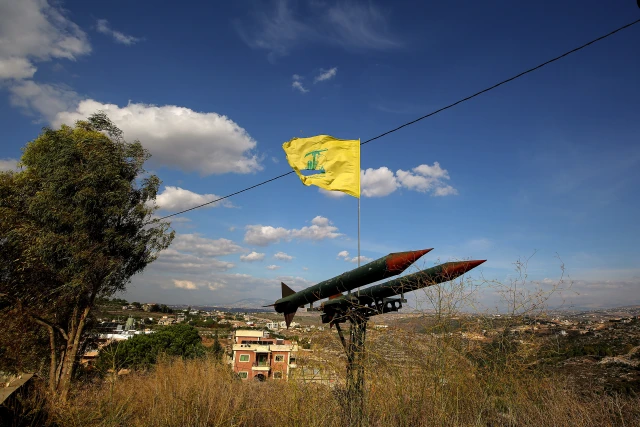
Despite strong U.S. pressure on both sides, the situation between Lebanon and Israel continues to be highly tense.
According to a report by the Washington Post (WaPo), Lebanon was warned by several foreign envoys who came to visit the country, including from the U.S., that there is still the possibility of a new, large-scale attack from Israel against Hezbollah.
The last weeks have been relatively calm after the U.S. pressured Beirut and Jerusalem into sending civilian representatives to a meeting of the ceasefire monitoring mechanism for the first time.
An Israeli official told the Washington Post that “Trump has already told everyone that he achieved peace in the Middle East. This would go against the agreement.” Another Israeli official told the paper that “the U.S. would not like to see this part of the world ‘explode.’”
The Lebanese government has committed to completing the disarmament of Hezbollah south of the Litani River by the end of the year, and Israel last week postponed a strike on a Hezbollah site after the Lebanese military asked the IDF to hold off and allow it to dismantle the site.
Despite this positive sign, the Israeli military has since then continued to enforce the ceasefire terms through several airstrikes, killing three Hezbollah operatives on Sunday alone.
On Monday, the IDF published a map showing where it had killed over 40 Hezbollah operatives in some 30 villages in southern Lebanon since October.
“These militants join more than 380 militants eliminated since the ceasefire came into effect, during which the Hezbollah terror organization violated the agreement more than 1,900 times,” the IDF spokesperson said.
The operatives who were killed “took part in terrorist activities in the southern Lebanon area, including the rehabilitation of terrorist infrastructure, weapons smuggling, and coordination between village residents and Hezbollah headquarters. This is further evidence of the presence and activity of the Hezbollah terror organization in the area, in complete contradiction to the understandings between Israel and Lebanon,” the military said.
According to the IDF’s statistics, the Lebanese Army only enforced some two-thirds of the 875 violations that Israel reported through the ceasefire monitoring mechanism.
Out of a total of 1,925 incidents identified by the Israeli military, 575 were addressed by the Lebanese army, while the IDF handled 998 incidents by itself. However, this means that 350 incidents where Hezbollah violated the terms, for example, by moving ammunition or trying to restore destroyed infrastructure, went unresolved.
“The large number of untreated violations (350, known to Israel) explains why a ‘round of fighting to weaken’ Hezbollah is deemed necessary in Lebanon,” explained Army Radio’s military correspondent, Doron Kadosh.
Israel reportedly estimates that the Lebanese military can enforce incidents in open areas more easily, but is afraid of confronting them within villages out of concern for the risk of provoking clashes with the Shiite population, which often supports Hezbollah.
The Lebanese army claims it is progressing with the disarmament of Hezbollah and the deployment of its own troops in southern Lebanon.
On Monday, it held a tour for ambassadors from the U.S., Saudi Arabia, France, and Egypt—but also including an Iranian official—showing a tunnel it seized from the terror group and signaling that it will meet the deadline set for the end of the year.
According to the Lebanese channel Al-Jadeed, the delegation “expressed satisfaction with hearing the Lebanese point of view, which differs from the Israeli point of view.”
At the same time on Monday, Israel’s Prime Minister Benjamin Netanyahu received the American envoy on Syria and Ambassador to Turkey, Tom Barrack.
According to Ynet News, the U.S. is asking Jerusalem to grant Beirut more time to complete the demilitarization of southern Lebanon and to hold off on a new large-scale operation. At the same time, the U.S. has been using the looming threat of an Israeli invasion to pressure Beirut to complete the action.
Israel reportedly conveyed to both Washington and Beirut that it “won’t wait forever,” emphasizing that it is seriously considering an intensified operation.
While officials in Jerusalem reportedly estimate that the Lebanese government wants to go through with disarming Hezbollah, assessments are that it is afraid of triggering a new civil war if the military confronts the terror group too strongly or tries to disarm it by force.
Netanyahu is set to further discuss the issue during his upcoming meeting with U.S. President Donald Trump in two weeks. By that time, it could become clear whether the U.S. will give the green light for a new large-scale operation in Lebanon.
You might also like to read this: