After exile-state and scattered tribes



What does it mean to belong to a people that cannot agree on where it “is”? Who gets to pronounce the word “we” without smuggling in an ultimatum? And what sort of modernity is it that asks Jews to be at once a nation, a confession, a memory, a moral experiment, and, when convenient, a suspect category?
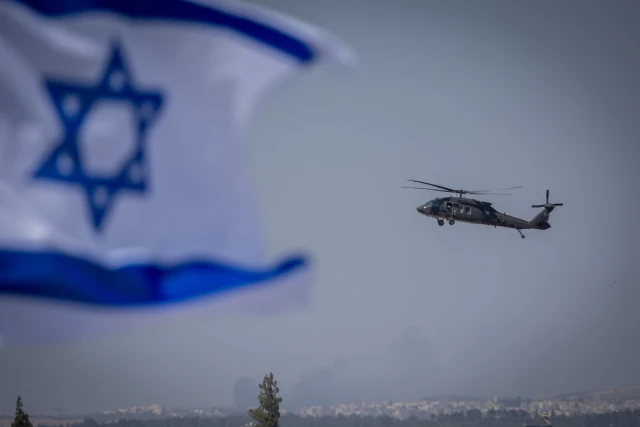
A small, persistent quarrel sits at the centre of modern Jewish life and rarely troubles the front page. It is the unfinished conversation between those who live in Israel and those who live everywhere else. On one side stands a state with an army, traffic jams, coalition farce, and a flag that needs no introduction. On the other stand communities in London, New York, Johannesburg, or Buenos Aires who pray towards Jerusalem, donate to it, rebuke it, defend it, and raise children who may never see it.
For many outside, Israel is less a country than a compressed symbol, a surface onto which older fears and newer hopes are projected with the confidence of people who will not have to live with the consequences. It becomes shorthand for survival and shame, for moral testing and pride. Flights into Ben-Gurion land heavy with invisible luggage. The place is expected to act at once as refuge and rebuke: proof that “never again” meant something and the reminder that history has not finished with the Jews.
This imagination is not innocent, and it is certainly not neutral. To some, Israel is the last redoubt of a persecuted people on a narrow strip of coast. To others, it is the scene of an unforgivable transformation, where Jews have become too powerful, too normal, too implicated in the brutal business of borders and guns. Both views reveal the beholder. The suburban Australian or American Jew who has never heard a siren outside a drill can demand flawless conduct in war and speak of “proportionality” as if it were a mathematical proof rather than a moral defence. The French Jew who walks his children past soldiers at the school gate watches the same footage with the older knowledge of what happens when Jews lack force, and how readily the world makes its sympathy conditional.
From Israel, the gaze returns, and it arrives with its own mix of tenderness and contempt. Diaspora Jews are admired, pitied, resented, and needed, often within the same sentence. They are those who remained in exile when the gates opened, and those whose money built hospitals and schools, whose public voices sometimes shield Israel abroad, whose influence is sought when useful and dismissed when inconvenient. When condemnations arrive from comfortable cities, there is a natural irritation at sermons delivered from safety. When support appears, there is an equally natural expectation that it should be unconditional, as if loyalty were a utility bill rather than a moral position.
Beneath these differences lies the more serious fear, the one nobody enjoys naming: that the two halves of this story may one day fail to recognise each other. A teenager in Berlin for whom Jewishness is a fragile minority identity and a teenager in Haifa for whom it is the background noise of life do not inhabit the same mental world. When they meet, online or in person, they are not only arguing about a state. They are testing whether the word “we” still has any content, or whether it has become a polite fiction, like so many other modern solidarities.
The honest answer may be that neither side owns that word. Both are improvised attempts, after catastrophe, to turn an ancient name into some kind of future. The line between Tel Aviv and the suburbs of Melbourne is not only a flight path. It is a measure of how long that attempt can continue before the arguments exhaust the family that is still, for now, having them.
Israel is not the immaculate completion of a promise, and the Diaspora is not a gallery of grief. Both are improvisations made after disaster; both are ways of keeping a bruised inheritance from collapsing into folklore. Yet Israel is also something more basic than a political arrangement. For the Diaspora, especially the quieter and half-concealed sort, it functions as a psychological necessity: a visible spine behind a life spent negotiating glances, rumours, and the old talent the world has for turning Jews into a lesson. It is an assurance, not that the past will be redeemed, but that it will not be erased; not that hatred has retired, but that it will not be met only with pleading. It gives memory permanence and, in doing so, offers protection from that familiar treachery of history in which Jews are invited to trust the civilised mood of the age, right up until the mood changes.
The distance between Tel Aviv and the suburbs of Sydney is therefore not merely geographical. It is the space between sovereignty and vulnerability, between the burden of decision and the luxury of judgement. If that distance widens, the danger is not only that arguments will intensify. It is that the arguments will stop, and the old, difficult word “we” will be replaced by two smaller, colder words: “them” and “us”.
You might also like to read this: