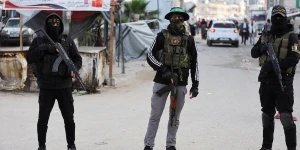
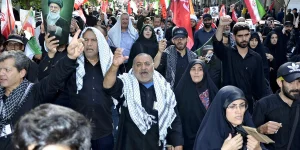
Hamas again rejects disarmament, says US-backed int’l security force in Gaza should remain on the border
Terror group acknowledges Israel’s elimination of senior leader Sa’ad



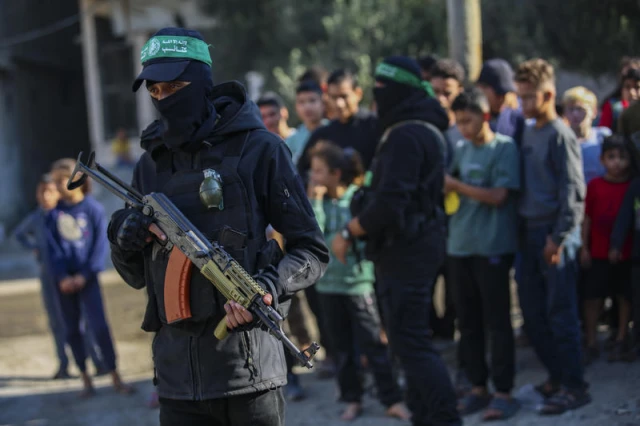
A senior Hamas official on Sunday doubled down on the terror group’s refusal of several key components of the U.S.-backed Gaza Peace Plan, including its disarmament and the introduction of an international security force.
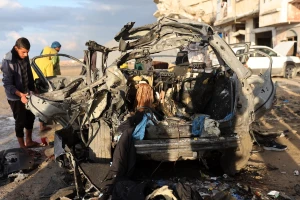
In a speech given to mark the 38th anniversary of the terror group’s establishment, Khalil al-Hayya, the deputy chief of Hamas’ politburo in Qatar, also acknowledged that Israel had killed senior terror leader Ra’ed Sa’ad in Gaza on Saturday.
Sa’ad, who was one of the last senior military leaders remaining in the enclave, “was martyred alongside his brothers who were with him,” said Hayya.
Despite rejecting key parts of the U.S.-backed ceasefire, Hayya urged that the its first phase should be completed, particularly the entry of aid.
However, he strongly rejected the introduction of the International Stabilization Force (ISF) that is planned to take over security in the enclave after Hamas lays down its weapons.
The terror group’s arms are “a right guaranteed by international law,” he claimed, while repudiating the peace plan that received the approval of the UN Security Council only weeks ago.
He granted that the ISF could play a diminished role limited to “maintaining the ceasefire and separating the parties along the Gaza Strip’s border,” and stressed that Hamas rejects “all forms of custody” over the Palestinian people, echoing comments made by other Hamas leaders that the group would not allow a foreign party to exercise security authority on its territory.
“We affirm that the resistance and its weapons are a legitimate right guaranteed under international law to all nations under occupation,” Hayya emphasized. “We are open to studying any proposals to preserve this right while guaranteeing the establishment of an independent Palestinian state, and self-determination for our Palestinian nation.”
Hayya said Hamas would agree to transfer some of its powers and “facilitate the work” of the technocratic Palestinian committee that the ceasefire envisions would take over the civilian side of the administration, under supervision of the Board of Peace.
He also called on Hamas’ rival Fatah Party, which dominates the Palestinian Authority, to “reach common ground and agree on a joint national program,” including “reviving Palestinian political life via the ballot box.”
PA President Mahmoud Abbas has postponed planned elections for over a decade, in part because Hamas has consistently been projected to beat Fatah in Gaza as well as the West Bank.
Concluding his speech, Hayya praised the Oct. 7 invasion and massacre, thanked Arab and Muslim countries for sending humanitarian aid, and commended international supporters.
These included Russia and China, whom he thanked for their pro-Palestinian stance at the UN Security Council; Turkey, Egypt and Qatar for mediating in the negotiations; and South Africa, for launching the case accusing Israel of genocide at the International Court of Justice.
Also on Sunday, another senior official vowed that Hamas planned to respond to Israel’s killing of Sa’ad.
“Hamas’s field leadership will choose the appropriate time and place,” Hamas official Mohammad Nazzal told the Egyptian Al-Ghad TV.
“When Hamas’s field leadership finds the appropriate time, it will not hesitate to respond to this ‘cowardly act’ carried out in the Gaza Strip,” he threatened.
This would not breach the ceasefire, Nazzal added, as Israel has broken it from the start while Hamas has been committed to the agreement.
You might also like to read this: