UN food monitor says Gaza food levels ‘remain critical,’ Israel rejects findings as biased



The UN-affiliated Integrated Food Security Phase Classification (IPC) famine monitor released a new report on Friday claiming that the levels of food in the Gaza Strip “remain critical.” The latest report covers the period from the second half of October until the end of November. Despite the Gaza ceasefire and the ongoing flow of goods into the coastal enclave, the report classifies Gaza to be in the “Emergency” Phase 4 category – the fourth highest of its five levels measuring food insecurity.
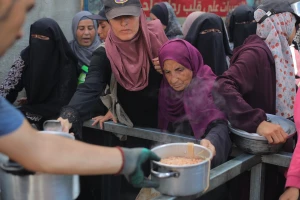
“Despite the improved situation, the population of the Gaza Strip still faces high levels of acute food insecurity and acute malnutrition. Although humanitarian assistance, including food aid, has increased, only basic survival needs are being met,” the IPC report stated.
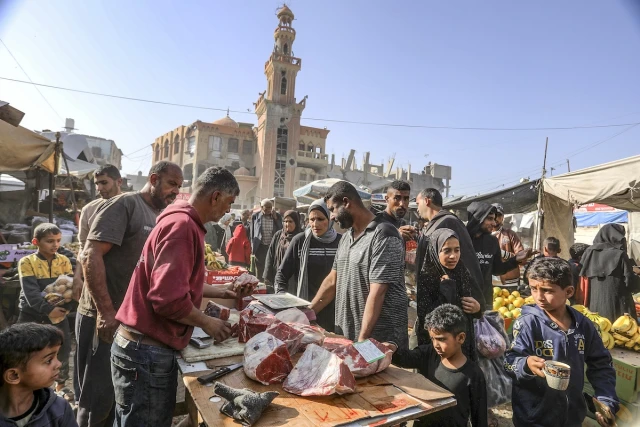
The report added that, in Gaza, the “people’s diets remain poor” and that while “more nutritious foods, such as fresh vegetables and fruits, are available in markets, most families cannot afford to buy them.”
The report also stressed that the sanitary conditions in Gaza “continue to be very poor, accelerating the spread of acute respiratory infections (ARIs), diarrhea and skin infections, especially among children.”
While raising the alarm, the new IPC report simultaneously acknowledged an improvement compared to August 2025, when the UN-affiliated monitor controversially declared “famine” in Gaza by lowering the conventional malnutrition measures, stating that “mounting evidence shows that widespread starvation, malnutrition and disease are driving a rise in hunger-related deaths.”
At the time, Israel condemned the IPC famine report as “fabricated to fit Hamas’ fake campaign.”
“The IPC has just published a ‘tailor-made’ fabricated report to fit Hamas’s fake campaign,” the Israeli Foreign Ministry stated, adding, “Unbelievably, the IPC twisted its own rules and ignored its own criteria just to produce false accusations against Israel: the IPC changed its own global standard, cutting the 30% threshold to 15% for this report only, and totally ignoring its second criterion of death rate, solely to serve Hamas’s fake campaign.”
By contrast, the latest IPC report admits that famine conditions are no longer present in Gaza.
The IDF Coordinator of Government Activities in the Territories (COGAT), the agency responsible for coordinating the entry of goods into Gaza, dismissed the latest IPC report as “distorted" and "biased."
“COGAT strongly rejects the claims and conclusions presented in the IPC report published today (Friday), which once again portrays a distorted, biased and unfounded picture of the humanitarian situation in the Gaza Strip.”
“The report relies on severe gaps in data collection and on sources that do not reflect the full scope of humanitarian assistance. As such, it misleads the international community, fuels disinformation, and presents a false depiction of the reality on the ground,” COGAT stated.
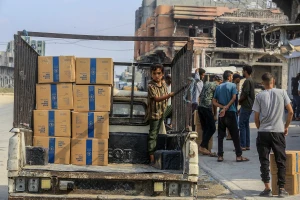
The agency emphasized that approximately 500,000 metric tons of food have reached Gaza since Oct.10, an amount it said exceeds the needs of the local population based on World Food Programme metrics.
COGAT further stressed that between 600 and 800 aid trucks have entered Gaza daily since late October. Some 70% of the trucks reportedly contained food supplies.
“In this context, nearly 30,000 food trucks carrying more than 500,000 tons of food entered the Gaza Strip throughout the ceasefire period,” the agency stated. “The manner in which the IPC conducted itself during the preparation of the report raises serious questions regarding its credibility and professional integrity.”
The IPC report authors eventually agreed to meet with representatives of the U.S. Civil-Military Coordination Center (CMCC) and Israeli professional officials, but only after the report’s controversial conclusions were published.
“During the meeting, the authors were presented with complete, daily and verified data regarding the volume of food trucks entering the Gaza Strip,” COGAT explained. “Despite this, the IPC chose to present a series of excuses regarding the use of the data and relied only partially on the information provided. This conduct does not reflect a legitimate professional disagreement, but rather biased writing based on partial and skewed data, indicating that the report’s conclusions were determined in advance.”
You might also like to read this: