Jerusalem & Cairo sign massive $34 billion deal to supply Egypt with Israeli natural gas
PM Netanyahu: 'Deal strengthens Israel's status as a regional energy power'



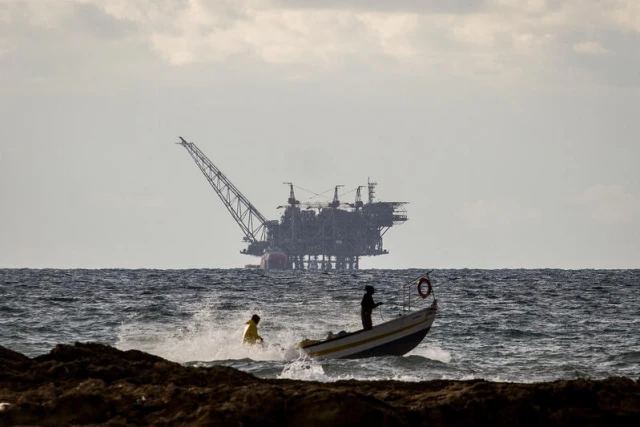
Prime Minister Benjamin Netanyahu announced his approval for the largest gas export deal in the country’s history on Wednesday. Egypt will buy Israeli gas for the amount of NIS 112 billion ($34.7 billion), Netanyahu said.
The premier announced the approval in a video alongside Energy Minister Eli Cohen, stressing that NIS 58 billion ($18 billion) would go to the state treasury and “strengthen education, health, infrastructure, security, and the future of coming generations.”
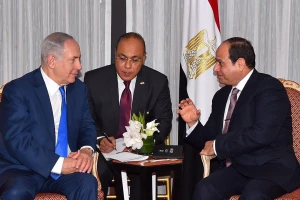
The deal came about under heavy pressure from the U.S., which has tried to push Egypt and Israel to mend ties through the gas deal and reportedly agreed to host a summit meeting between Netanyahu and President Abdel Fattah el-Sisi, on the condition that Israel approve the deal, according to Axios.
The meeting could reportedly happen during Netanyahu’s U.S. visit at the end of the month, but it hasn’t yet been confirmed as Egypt wants more Israeli concessions in return.
"This is a huge opportunity for Israel. Selling gas to Egypt will create interdependence, get the countries closer together, create a warmer peace and prevent war," a U.S. official told Axios last week.
In the video announcement, Netanyahu and Cohen touted the deal’s benefits for the country: “Initially, in the first four years, we will receive about half a billion shekels for the state treasury,” said Netanyahu.
“During this time, the companies will be investing massive sums to develop infrastructure: they are expanding the pipeline and doing many other things. Afterward, it begins to rise, and within a few years, it reaches NIS 6 billion every year for the state treasury.”
The prime minister stressed that he approved the deal after ensuring Israel’s “security interests and other vital interests.”
“This deal greatly strengthens Israel's status as a regional energy power and contributes to stability in our region. It encourages other companies to invest in gas exploration in Israel’s economic waters. More gas will be found, but first and foremost, this deal obligates the companies to sell gas at a good price to you, the citizens of Israel,” he said.
He also addressed the “endless demonstrations” against gas exploration, emphasizing that “it is clear that extracting the gas from the depths of the sea has brought a massive blessing to the State of Israel.”
“This evening is the fourth night of Hanukkah, and on this day, we have brought an additional jar of oil to the people of Israel. But this time, the flame will burn not just for eight days, but for decades to come. Happy Festival of Lights, citizens of Israel.”
Energy Minister Cohen added that “The deal establishes our status as a regional energy power and a leader that its neighbors rely upon.”
He also noted that “the approval of the agreement comes after several months of intensive negotiations, and only after we had secured Israel's security and economic interests,” in a thinly veiled reference to his months-long opposition to the deal.
In October, U.S. Energy Secretary Chris Wright canceled a planned six-day visit to Israel after Cohen had refused to sign the deal.
“This is the first export approval that guarantees priority for the local market, and mechanisms were agreed upon that will improve the price of gas for the Israeli market,” Cohen said, vowing that the government would “continue to work toward bringing in additional local and international companies to invest in Israel, in order to increase reserves for the local market and for export.”
The Leviathan gas field, around 130 kilometers (81 miles) west of Haifa, was discovered in 2010 and began supplying gas to Israel’s domestic market in December 2019.
Exports to Egypt began in January 2020 with a deal for 60 billion cubic meters.
The new deal includes 130 billion cubic meters, some 22% of the reservoir and around 13% of Israel’s total gas capacity, and would provide around a quarter of Egypt's electricity supply.
The profits from the deal are intended to finance infrastructure projects that are expected to increase annual production rates at Leviathan.
“Approval of the export guarantees attractive prices and energy security for Israel, and paves the way for billions of dollars in investment to expand Leviathan,” said Yossi Abu, CEO of NewMed Energy, the Israeli partner firm in the deal.
The largest partner is the American Chevron Mediterranean Limited (CML), which stated: “This significant milestone, which is a key condition for investing in the expansion of Leviathan’s production capacity, reflects the strong partnership between Chevron and the State of Israel and underscores our shared commitment to advancing the energy security of the State of Israel and the Eastern Mediterranean region, where we have a large and important presence.”
You might also like to read this: